







Click here to share on social media
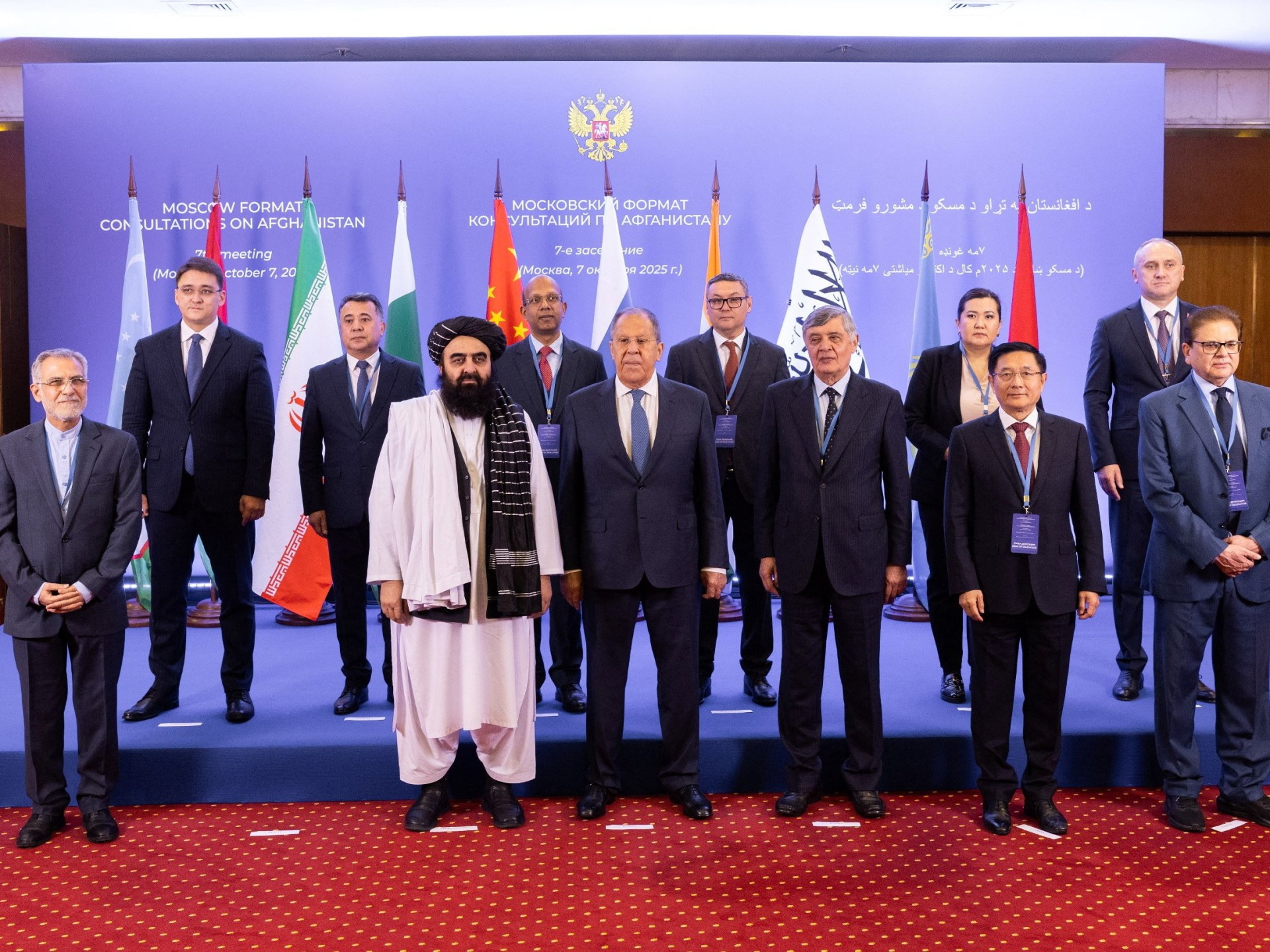
Moscow – The final statement issued on Tuesday from the seventh meeting of the so-called “Moscow Format” consultations on Afghanistan emphasized the importance of developing political, trade, and economic cooperation between Kabul, regional countries, and the international community, as well as effectively integrating Afghanistan into regional economic systems.
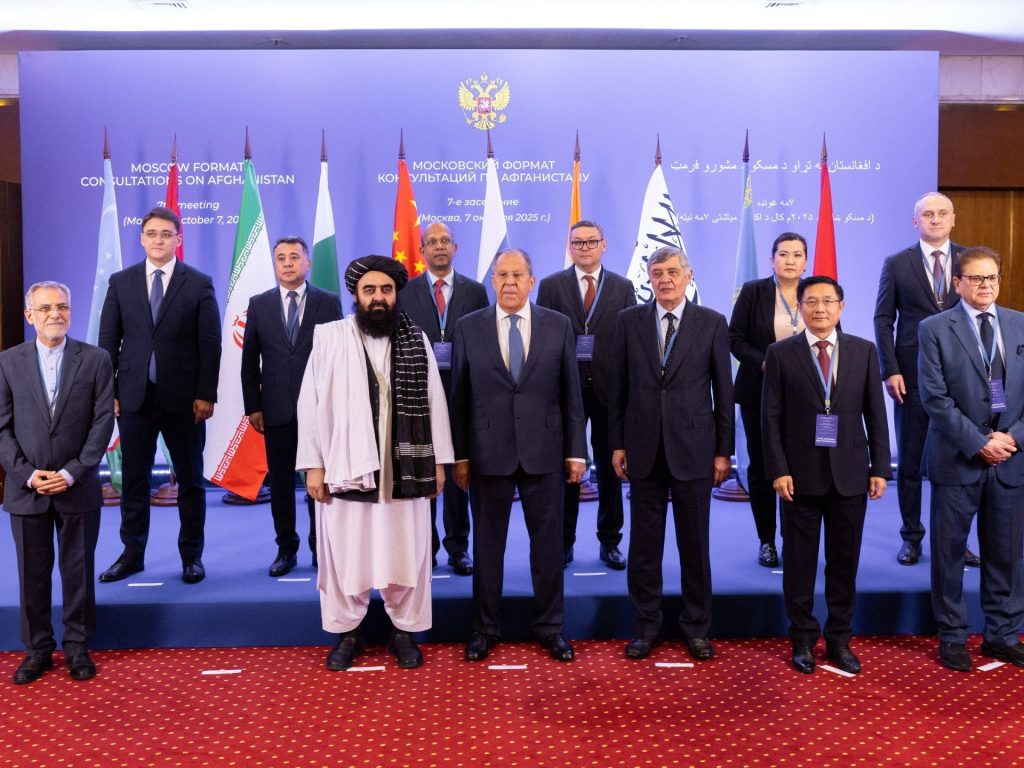
The statement of the meeting held in Moscow, attended by special representatives and senior officials from Russia, Afghanistan, India, Iran, Kazakhstan, Kyrgyzstan, China, Pakistan, Tajikistan, and Uzbekistan, stressed support for Afghanistan emerging as an independent and peaceful state, free from terrorism and drugs, and readiness to assist it in enhancing regional security.
The “Moscow Format” also confirmed the necessity of providing international humanitarian aid to Kabul without politicizing it, and emphasized the importance of developing trade exchanges, economic cooperation, and investment cooperation with Afghanistan.
This meeting was an occasion to express various positions regarding developments in Afghanistan, particularly the announcement by US President Donald Trump of his country’s desire to regain control of Bagram Air Base and his warning that Kabul might face “serious consequences” if it refused.
The Russian President’s special envoy for Afghanistan, Zamir Kabulov, said that Russia condemns the deployment of military bases in Afghanistan and has no plans for such. He revealed that Afghan Foreign Minister Amir Khan Muttaqi assured his Russian counterpart Sergey Lavrov that Kabul would not allow any foreign bases on its territory, including Bagram Air Base.
Earlier, the Taliban emphasized they would not hand over Bagram to the United States despite the US president’s threats. Taliban spokesman Zabihullah Mujahid stated that this base “is no different from any other part of Afghan territory, and the Taliban will not agree to hand over any inch of their land.”
The current consultative meeting comes amid Russia’s bet on strengthening relations with the Taliban government and pushing it further in all fields. However, Trump’s threats to Kabul if it refused the return of US forces to Bagram dominated Russian observers’ readings and analyses.
According to Central Asia affairs expert Sergey Kurtov, it is unlikely that the US will invade Afghanistan because of this base. He told Al Jazeera that this idea is “absurd” as during the eight months since Trump’s return to the White House, “the world has gotten used to his exaggerated ideas.”
Kurtov added that the US president formulated his demand to “return Bagram Air Base to those who built it,” forgetting that Soviet experts built it in the 1950s during King Mohammed Zahir Shah’s reign.
Kurtov further noted that even if a miracle happened and the Taliban agreed to hand over their main airbase to the Americans, it would be a nightmare for the Pentagon in terms of costs, logistics, security, and preventing potential “terrorist” attacks.
He cited military experts’ estimates that at least 10,000 troops would be needed to operate and fully protect the facility, questioning “how to transport, supply, and rotate them? Would they negotiate again with Russia about using the Ulyanovsk jump airport, as they did in 2001 when former US President George W. Bush launched the war on the Taliban?”
He confirmed that repeating this is impossible because relations between Moscow and Washington were completely different then.
International affairs analyst Sergey Bersanov said, “If we believe US media reports that Washington was secretly negotiating with the Taliban about the possibility of using Bagram, then after Trump’s warning, the chances of successful dialogue are slim, because politicians cannot lose face, surrender, or show weakness when subjected to public pressure and threats.”
He explained that once “loudspeaker diplomacy” starts and they begin to publicly twist your arm, reaching a settlement becomes impossible, just as when Trump asked India to stop buying Russian oil, but apparently, this story did not teach him much.
If the US president’s words are taken literally and his threat to the Taliban of “bad things” is considered, Bersanov wonders, “How will he act if they reject his offer?”
He believes it is impossible to seize Bagram Air Base by force and then hold it in a hostile environment, which would effectively restart the war in Afghanistan that former President Joe Biden ended.
This is especially true given the lack of logistical supply routes, neither the northern route through Russia and Central Asian republics nor the southern route through Pakistan; as Islamabad today, unlike in 2011, “is under Beijing’s influence,” according to analyst Bersanov.
The “Moscow Format for Consultations on Afghanistan” was established following trilateral consultations between Russia, China, and Pakistan in December 2016 to promote the national reconciliation process in Kabul and facilitate rapid peace in the country.
In February 2017, six-party consultations on Afghanistan were held in Moscow, including Moscow, Kabul, Islamabad, Beijing, Tehran, and New Delhi.
In April of the same year, the first meeting of the format was held in Moscow, attended by deputy ministers and special representatives from 11 countries including Russia, Afghanistan, India, Iran, China, Pakistan, and five Central Asian republics.
The United States was invited to attend the first three consultation meetings but participated only in the second meeting in November 2018 as an observer.

Recommended for you
Al-Jaghbeer: The Industrial Sector Leads Economic Growth
Egypt Post: We Have Over 10 Million Customers in Savings Accounts and Offer Daily, Monthly, and Annual Returns
Alternative to UNIFIL Forces
Talib Al-Rifai Chronicles Kuwaiti Art Heritage in "Doukhi.. Tasaseem Al-Saba"
Exhibition City Completes About 80% of Preparations for the Damascus International Fair Launch
Trump Advisor: Disarming Hamas is Central.. Palestinian Authority to Take Over Gaza After Required Reforms