










On October 7, 2023, Hamas brigades launched a land, air, and sea assault on settlements in the Gaza envelope area in a military campaign named (Al-Aqsa Flood), resulting in hostage-taking and killing many Israeli citizens.
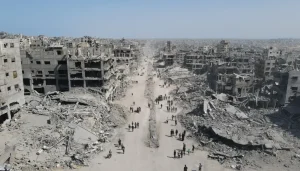
Since that day, the war between Israel and Hamas has been ongoing, causing casualties on both sides, but the greatest victim is the Palestinian people living in the Gaza Strip, who have suffered heavy losses including deaths, displacement, and destruction of entire residential areas.
After two years of war, Gaza has been almost completely destroyed, and its people severely affected. Hezbollah in Lebanon, along with forces in Iraq and Yemen, supported Hamas under what is called the (Unity of Arenas) axis by launching rockets, accelerating Gaza’s destruction and prolonging the war, which led to the loss of this axis in aiding Gaza or achieving victory for Hamas against Israel.
Instead of supporting Gaza, the countries launching rockets have been devastated. Lebanon, already suffering from administrative corruption and public fund waste, faces Hezbollah’s dominance over state sovereignty and economy, with the party refusing to disarm, especially after the death of its Secretary-General Hassan Nasrallah and other members.
Iraq, also part of the Unity of Arenas axis, suffers political and administrative crises threatening state sovereignty, widespread corruption, sectarian quota systems, and weak institutions. Political parties allied with the axis have delayed reforms, weakening public trust in the political system.
Yemen and Syria also face economic and political hardships. The Syrian people continue to suffer from wars and alliances that have exhausted the state economically and politically despite the fall of Bashar al-Assad’s regime.
Iran, the main supporter of the Unity of Arenas axis and Hamas, has seen its power reduced locally and internationally, no longer providing rocket support to Hamas after the twelve-day war with Israel, leaving Gaza alone to bear the cost of the conflict.
Former US President Donald Trump proposed a ceasefire plan for Gaza, including conditions for Hamas to accept. Qatar and Turkey, who had supported Hamas since the conflict began, agreed to Trump’s terms before Hamas, playing a role in persuading Hamas to accept and enter negotiations with Israel in Cairo to implement the peace plan.
A key point in Trump’s plan is the complete removal of Hamas from Gaza, turning the Strip into a demilitarized zone governed by a technocratic Palestinian government.
The article raises questions about the future of the Unity of Arenas countries (Lebanon, Iraq, Yemen) that support Hamas, the fate of Iran-backed parties and militias within them, and whether these states will face instability or undertake political and economic reforms to curb these forces’ dominance.
The potential peace in Gaza will undoubtedly impact the Unity of Arenas axis, possibly enabling these countries to break free from party dominance and enter a realistic phase of reforms ensuring state sovereignty and military control.


Recommended for you
Al-Jaghbeer: The Industrial Sector Leads Economic Growth
Egypt Post: We Have Over 10 Million Customers in Savings Accounts and Offer Daily, Monthly, and Annual Returns
Alternative to UNIFIL Forces
Talib Al-Rifai Chronicles Kuwaiti Art Heritage in "Doukhi.. Tasaseem Al-Saba"
Exhibition City Completes About 80% of Preparations for the Damascus International Fair Launch
Trump Advisor: Disarming Hamas is Central.. Palestinian Authority to Take Over Gaza After Required Reforms