









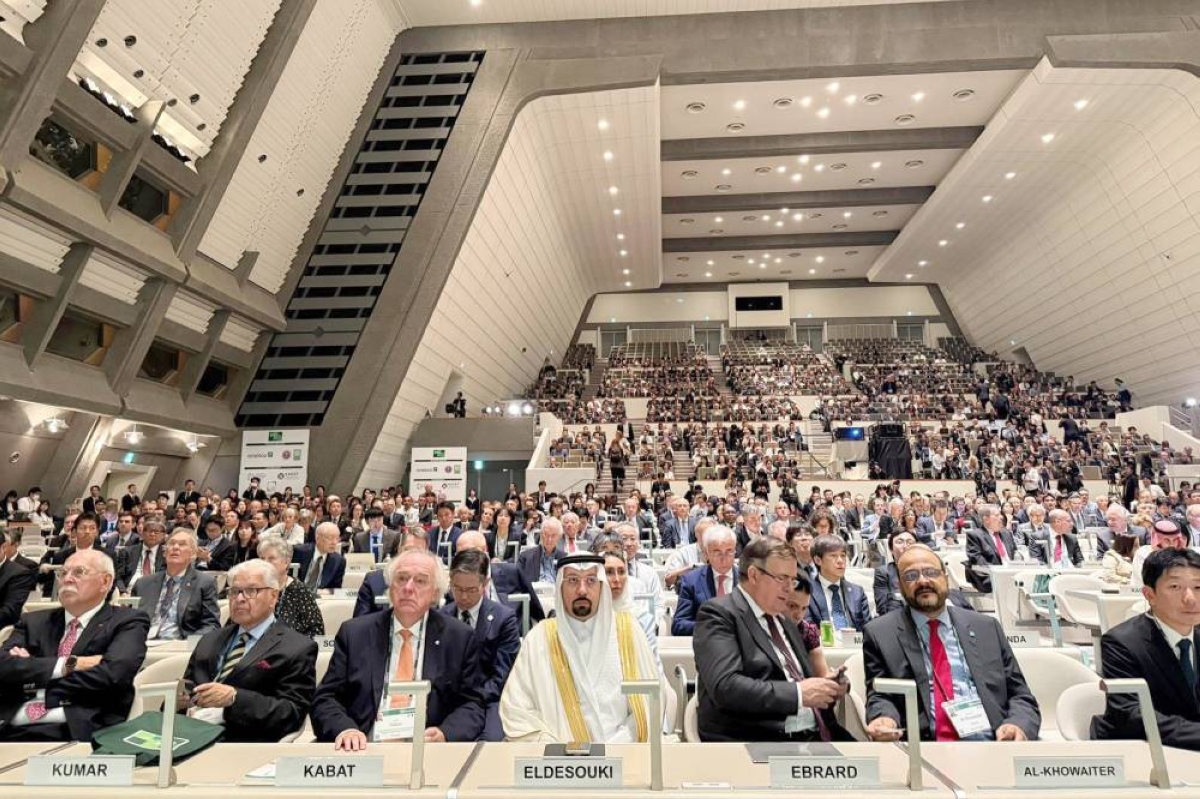

Dr. Muneer Mahmoud Al-Dosouki, President of King Abdulaziz City for Science and Technology (KAUST), affirmed Saudi Arabia’s commitment to achieving net zero by 2060 through a national innovation strategy focused on expanding clean energy solutions and investing in deep technologies that represent 40% of future emissions reductions, aiming for sustainability within Vision 2030 targets.
This was stated during his participation in a panel titled “The Road to Sustainability Towards a Carbon-Free Society” at the Science and Technology in Society (STS) Forum, which discusses scientific and technological progress and its impact on humanity’s present and future. The forum is held annually in Kyoto, Japan, attended by Emperor Naruhito of Japan, former Prime Minister Shigeru Ishiba, honorary chairman of the forum, elite leaders of research and innovation institutions, industrial sector leaders, and representatives of international organizations.
Al-Dosouki said: “Saudi Arabia adopts a circular carbon economy approach as a practical and comprehensive framework to achieve its national targets under Vision 2030. The Kingdom aims to reach net zero by 2060 through qualitative initiatives including reducing 278 million tons annually of carbon emissions, planting 10 billion trees as part of the Saudi Green Initiative, capturing 44 million tons annually of carbon dioxide by 2035, and achieving a 50% clean energy mix by 2030.”
He explained that Saudi Arabia launched several pioneering projects such as the carbon capture center at Aramco, large battery storage systems in Bisha, and green hydrogen and ammonia facilities in NEOM, all contributing to enhancing energy security and industrial competitiveness. He also highlighted international partnerships with the University of California, Berkeley in clean energy research, water desalination, and carbon capture, as well as supporting local AI applications during the Hajj season to enhance real-time monitoring and more efficient decision-making.
Al-Dosouki emphasized that research and development are the main drivers for sustainability. KAUST, as the national laboratory and innovation oasis, leads research programs to convert carbon waste into hydrogen fuel, develop technologies to extract water from desert environments, increase solar panel efficiency in desert climates, and adopt future technologies in semiconductors, artificial intelligence, and satellites to monitor desertification, emissions, and water management.




Recommended for you
Al-Jaghbeer: The Industrial Sector Leads Economic Growth
Alternative to UNIFIL Forces
Egypt Post: We Have Over 10 Million Customers in Savings Accounts and Offer Daily, Monthly, and Annual Returns
Talib Al-Rifai Chronicles Kuwaiti Art Heritage in "Doukhi.. Tasaseem Al-Saba"
Exhibition City Completes About 80% of Preparations for the Damascus International Fair Launch
Trump Advisor: Disarming Hamas is Central.. Palestinian Authority to Take Over Gaza After Required Reforms