








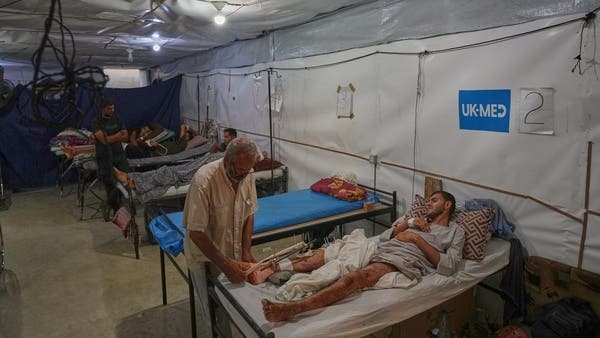
The World Health Organization announced on Thursday that approximately 42,000 people in Gaza, a quarter of them children, suffer from “disability-causing injuries” due to the ongoing war for two years and will require healthcare for many years.
The UN agency revealed in a report that a quarter of the injured counted since October 2023 (about 167,376 people) suffer from permanent injuries, including more than 5,000 amputations.
Other serious injuries sustained by Palestinians since the war in Gaza, which broke out on October 7, 2023, include over 22,000 limb injuries, more than 2,000 spinal cord injuries, around 1,300 brain concussions, and over 3,300 severe burns.
The WHO explained that “these injuries lead to a high demand for specialized surgical and rehabilitation services, but they also turn patients’ and their families’ lives upside down,” noting that “one in every four injured is a child.”
Richard Peberkorn, WHO representative in the Palestinian territories, said at a press conference that “lifelong rehabilitation will be necessary” for these injured individuals.
The health system capacity in Gaza has been exhausted and is unable to meet the enormous urgent needs generated by the crisis. Only 14 out of 36 hospitals remain partially operational, and rehabilitation services have shrunk to one-third of what they were before the war. No service “operates at full capacity despite efforts by medical staff and partners,” the report stated.
The number of specialized staff has also sharply decreased. Gaza had about 1,300 massage therapists and 400 occupational therapists before the war, but many were displaced and at least 42 were killed, according to WHO, which noted that only eight prosthetics specialists remain today to meet the huge number of amputations.
Peberkorn emphasized the “vital role of rehabilitation, not only for conflict victims but also for those with chronic diseases and disabilities.”
He pointed out that “conflict-related injuries also leave a profound psychological impact as the injured cope with injuries, loss of relatives, and daily hardships, while psychological support services remain scarce.”
The WHO called for immediate support to preserve healthcare services. The organization stressed the “need to protect health facilities and ensure unhindered access to fuel and medical supplies, and to lift restrictions on the entry of essential materials” into Gaza.
It also called for an immediate ceasefire, stressing that “the people of Gaza deserve peace, the right to health, and a chance to recover.”




Recommended for you
Al-Jaghbeer: The Industrial Sector Leads Economic Growth
Alternative to UNIFIL Forces
Egypt Post: We Have Over 10 Million Customers in Savings Accounts and Offer Daily, Monthly, and Annual Returns
Talib Al-Rifai Chronicles Kuwaiti Art Heritage in "Doukhi.. Tasaseem Al-Saba"
Exhibition City Completes About 80% of Preparations for the Damascus International Fair Launch
Trump Advisor: Disarming Hamas is Central.. Palestinian Authority to Take Over Gaza After Required Reforms