








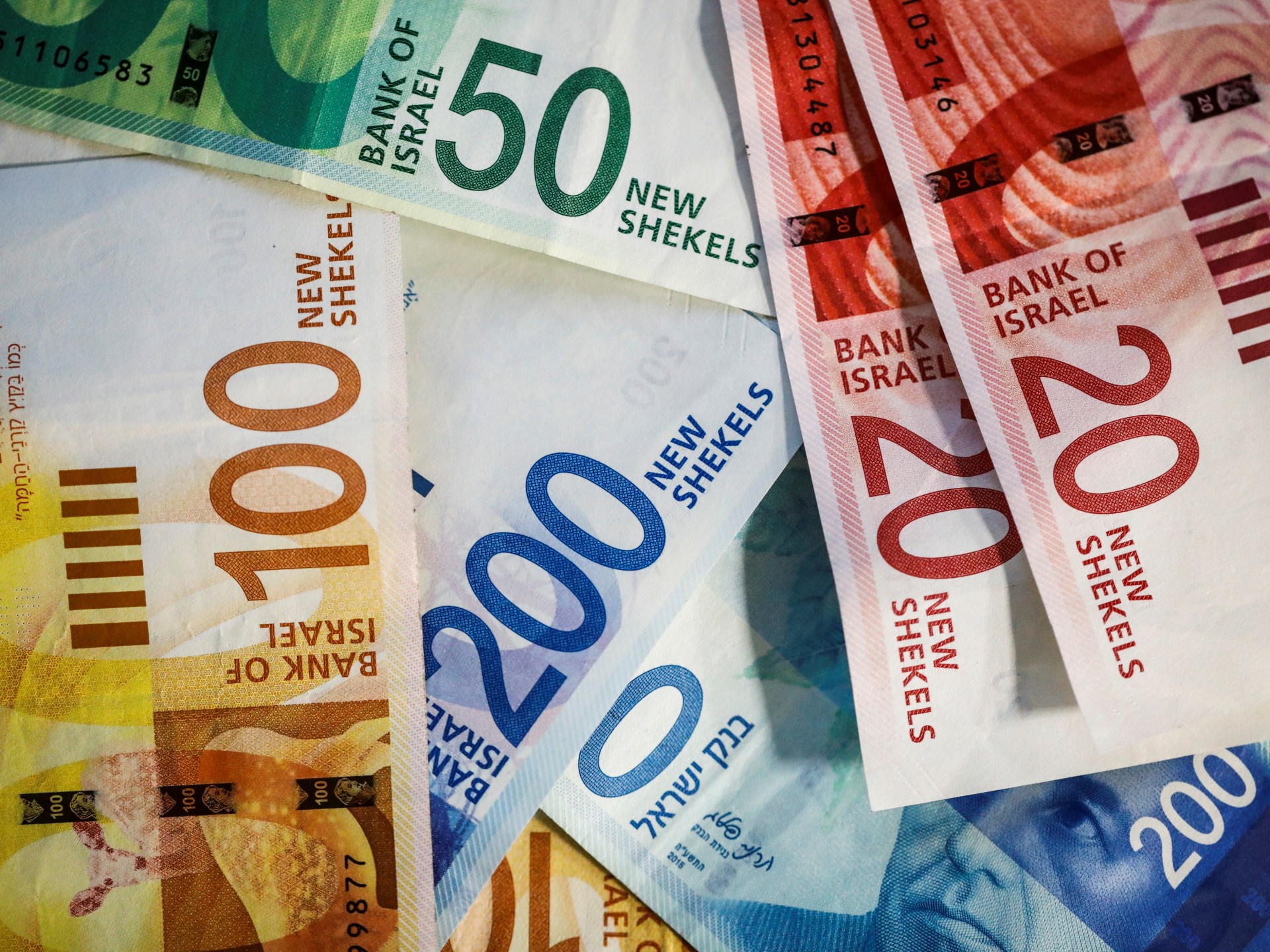
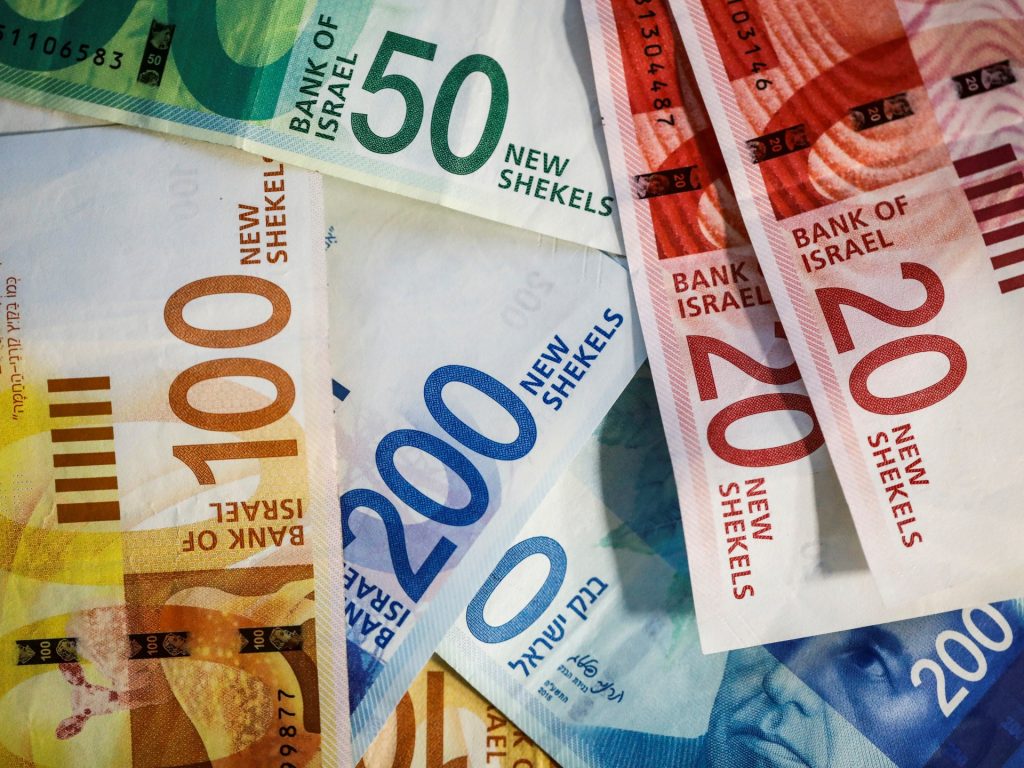
The Israeli newspaper “Globes” observed a temporary rise in the Israeli currency today, with the shekel increasing by 0.71% against the dollar to 3.321 shekels per dollar, and 0.81% against the euro to 3.887 shekels per euro.
This rise comes ahead of the scheduled meeting between US President Donald Trump and Israeli Prime Minister Benjamin Netanyahu, where Trump will present his plan for a ceasefire in Gaza. However, behind this superficial improvement, economic voices warn that the market is teetering on the edge of serious risks.
Edit Moscovich, trading floor manager at First International Bank, explained that the reasons for the shekel’s rise are temporary, due to “optimism about a comprehensive ceasefire in Gaza,” along with gains in US markets over the weekend and some Israeli economic data for July. However, these indicators, according to observers, do not conceal the fragility of the fundamentals.
According to estimates from the Bank of Israel, as reported by “Globes,” its composite index reflects growth approaching 5% in the third quarter, after a contraction of about 4% in the second quarter, while industrial production in July rose by 5% compared to the first quarter average.
These figures have been used to justify short-term optimism, but they do not remove the political uncertainty that remains the decisive factor in the markets.
Yotav Kostika, head of investments at More Mutual Funds, clearly warned that the Israeli market is experiencing a “whirlwind reflecting geopolitical events,” noting that the stock market moved from sharp declines following Netanyahu’s “Spartan” speech to temporary gains due to expectations of an agreement on Gaza.
He added, “If we do not see an agreement, we must consider that the risks to the Israeli market will increase due to the global boycott trend we have witnessed in recent weeks.”
According to Kostika, these risks “are not fully reflected in current stock prices,” meaning the current currency rise may be just a temporary bubble that will quickly fade if the Trump-Netanyahu meeting fails to produce a tangible agreement.
Amid growing international boycott and increasing talk of sanctions and declining political legitimacy for Israel, analysts see the shekel and Israeli markets as a whole stuck between fragile bets and a fractured economic and political reality.

Recommended for you
Al-Jaghbeer: The Industrial Sector Leads Economic Growth
Egypt Post: We Have Over 10 Million Customers in Savings Accounts and Offer Daily, Monthly, and Annual Returns
Alternative to UNIFIL Forces
Talib Al-Rifai Chronicles Kuwaiti Art Heritage in "Doukhi.. Tasaseem Al-Saba"
Exhibition City Completes About 80% of Preparations for the Damascus International Fair Launch
Trump Advisor: Disarming Hamas is Central.. Palestinian Authority to Take Over Gaza After Required Reforms