









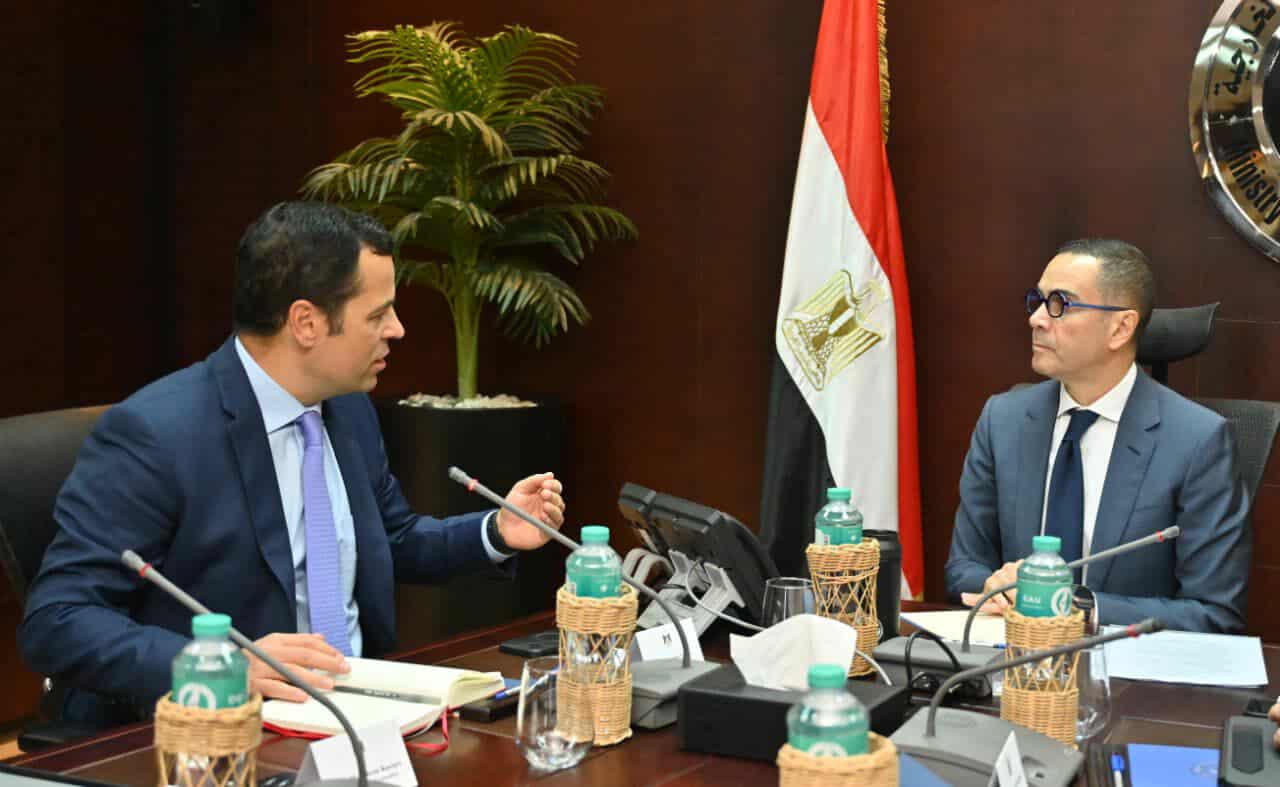
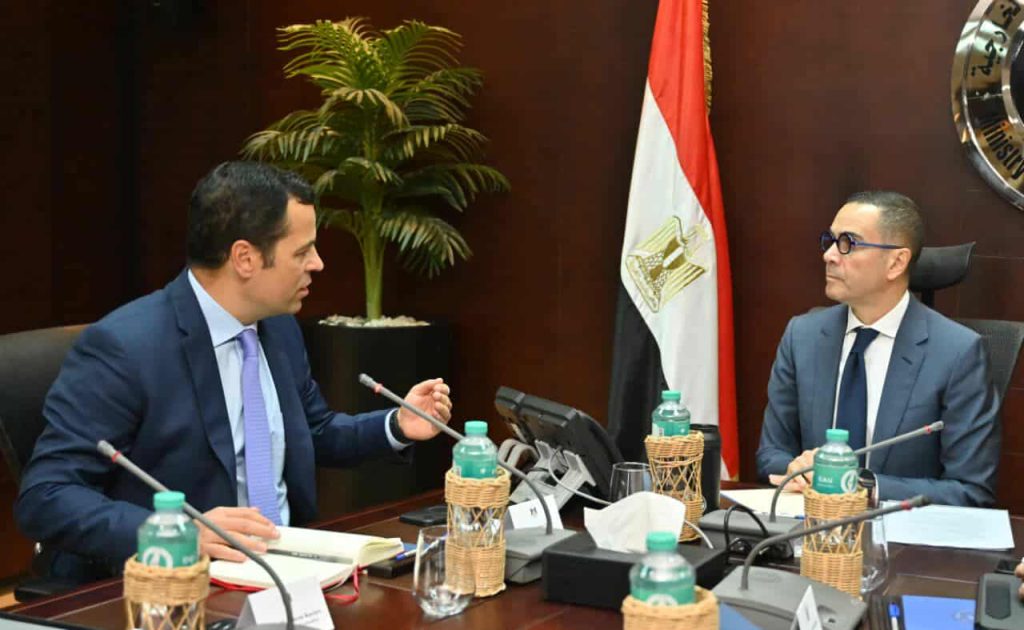
Engineer Hassan El Khatib, Minister of Investment and Foreign Trade, received a delegation from the International Monetary Fund (IMF) including Alex Segura, the IMF’s Resident Representative, and Ms. Moshira Karara, Senior Economic Expert at the Fund, to review the main features of the ongoing financial, institutional, and trade reform programs as well as the activities of the Sovereign Wealth Fund.
The minister confirmed that the reform vision currently adopted by the state is based on well-studied and defined policies aimed at achieving the desired economic growth through various reform plans in monetary and financial policies, alongside enhancing private sector participation, with significant focus on trade to raise the competitiveness of the Egyptian economy regionally and internationally.
El Khatib pointed out that the government adopts a clear and effective trade policy aimed at encouraging national investments and providing necessary facilities for exporters, stressing the need to link trade with investment, as they are two sides of the same coin, aiming to address the trade deficit and achieve a distinguished export position by directing the economy towards export and increasing the added value of Egyptian products.
The minister confirmed that Egypt formulated the national trade policy for the first time to serve as the strategic direction for trade at both local and international levels, aiming to enhance trade openness, increase export capacity, integrate into global value chains, expand market access, and diversify exports, contributing to creating a clear and stable business environment for local and foreign investors, supporting local manufacturing, and maximizing the added value to the economy.
El Khatib emphasized that digital transformation is one of the most prominent tools for reforming and improving the investment environment in Egypt, reviewing the ministry’s achievements in this path, including the launch of the unified licensing platform which, in its first phase, covered 389 licenses from 41 governmental entities, ensuring completion of procedures within only 21 days, in addition to launching the economic entities platform which serves as the unified digital interface for investors at all project stages.
Regarding financial reforms, the state is implementing many well-studied reforms in this field, especially tax reforms and non-tax financial reforms, all aiming to reduce the financial burdens on investors and reach an effective tax rate that achieves full transparency for investors through digital platforms linking governmental entities.
IMF officials expressed their optimism and appreciation for the government’s financial, trade, and structural reforms that contribute to gaining investors’ confidence and improving the business environment in Egypt through digital transformation and linking trade with investment, confirming the clarity of Egypt’s reform vision and achieving effective positive results.



Recommended for you
Al-Jaghbeer: The Industrial Sector Leads Economic Growth
Alternative to UNIFIL Forces
Egypt Post: We Have Over 10 Million Customers in Savings Accounts and Offer Daily, Monthly, and Annual Returns
Talib Al-Rifai Chronicles Kuwaiti Art Heritage in "Doukhi.. Tasaseem Al-Saba"
Exhibition City Completes About 80% of Preparations for the Damascus International Fair Launch
Trump Advisor: Disarming Hamas is Central.. Palestinian Authority to Take Over Gaza After Required Reforms