







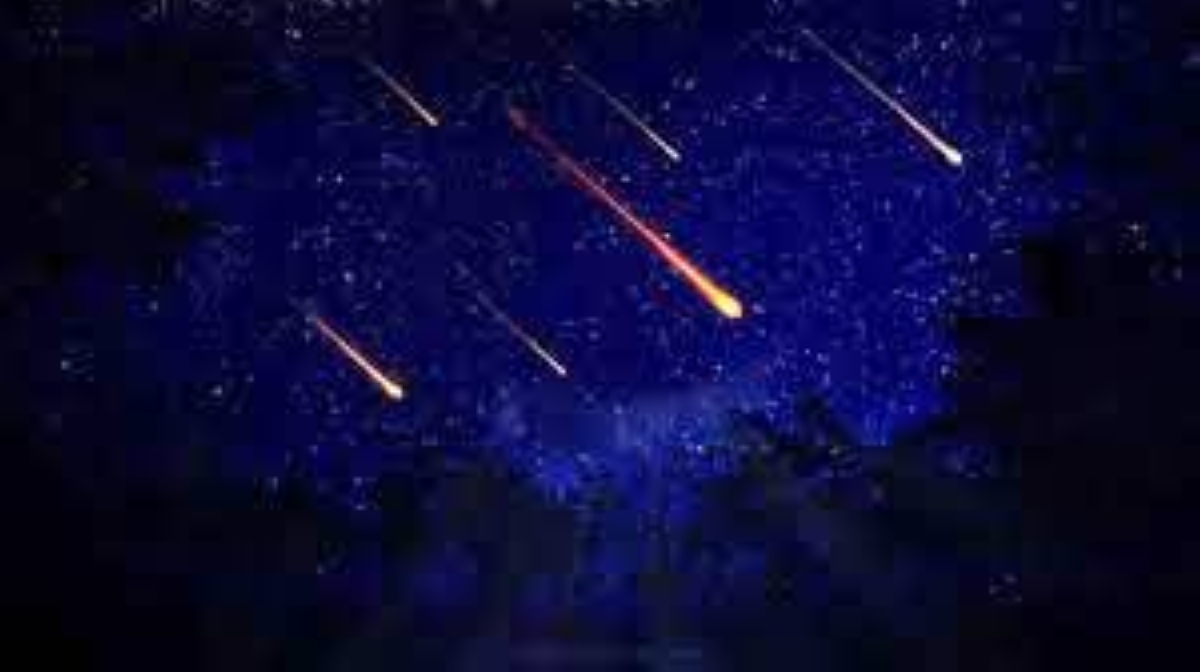
The head of the Jeddah Astronomy Society, Engineer Majid Abu Zahra, confirmed that the circulating news about the possibility of the newly discovered comet causing a new meteor shower in early October remains a weak possibility and is not based on confirmed scientific data so far.
He explained that some predictions indicated the possibility of Earth passing through the orbital path of the comet’s debris between October 4 and 6, which might provide an opportunity to observe meteors resulting from the burning of debris left by the comet.
He added that 3D computer simulations showed that the comet’s orbit does not actually intersect with Earth’s orbit but passes above it at a distance estimated at about 7 million kilometers, meaning that this debris will not enter Earth’s atmosphere and thus will not be seen as meteor showers.
He further noted that the occurrence of any meteor shower requires Earth to pass directly through the dust cloud left by the comet, which current calculations do not confirm. He pointed out that the comet may emit a higher proportion of gases compared to dust, which further reduces the chances of a meteor shower. He emphasized that predicting comet behavior remains complex due to many factors such as nucleus fragmentation, evaporation rate, and dust dispersion.
Abu Zahra said that despite the low chances of a meteor shower linked to the comet, “Swan R2” represents a prominent astronomical event, as its brightness is expected to reach a level from mid to late October that may allow it to be observed with the naked eye, or at least clearly through binoculars and telescopes in dark locations.
He stressed that the comet will appear in the Arab world’s sky starting early October after dusk towards the southwestern horizon. Its visibility will be difficult in the first days due to its low position, before its brightness gradually increases around mid-month. The best observation period will be between October 20 and 23, coinciding with its approach to Earth, when it can be seen as a small fuzzy nucleus with a faint tail possibly extending across the sky.
Abu Zahra advised those wishing to follow the comet at its early appearance to look for it after sunset in an open location to the west, use astronomy apps to locate it, and use binoculars to facilitate observation, with the possibility of photographing it with digital cameras or through small to medium telescopes during mid to late October when it becomes clearer.
The head of the Jeddah Astronomy Society concluded by emphasizing that comet orbital calculations are subject to continuous updates with new observations, meaning all predictions remain subject to change. He noted that the appearance of comet “Swan R2” offers a unique opportunity for the community to contemplate the beauty and dynamics of the sky and enhances the importance of following astronomical phenomena as part of spreading scientific culture and encouraging new generations to take interest in space sciences.



Recommended for you
Al-Jaghbeer: The Industrial Sector Leads Economic Growth
Alternative to UNIFIL Forces
Egypt Post: We Have Over 10 Million Customers in Savings Accounts and Offer Daily, Monthly, and Annual Returns
Talib Al-Rifai Chronicles Kuwaiti Art Heritage in "Doukhi.. Tasaseem Al-Saba"
Exhibition City Completes About 80% of Preparations for the Damascus International Fair Launch
Trump Advisor: Disarming Hamas is Central.. Palestinian Authority to Take Over Gaza After Required Reforms