








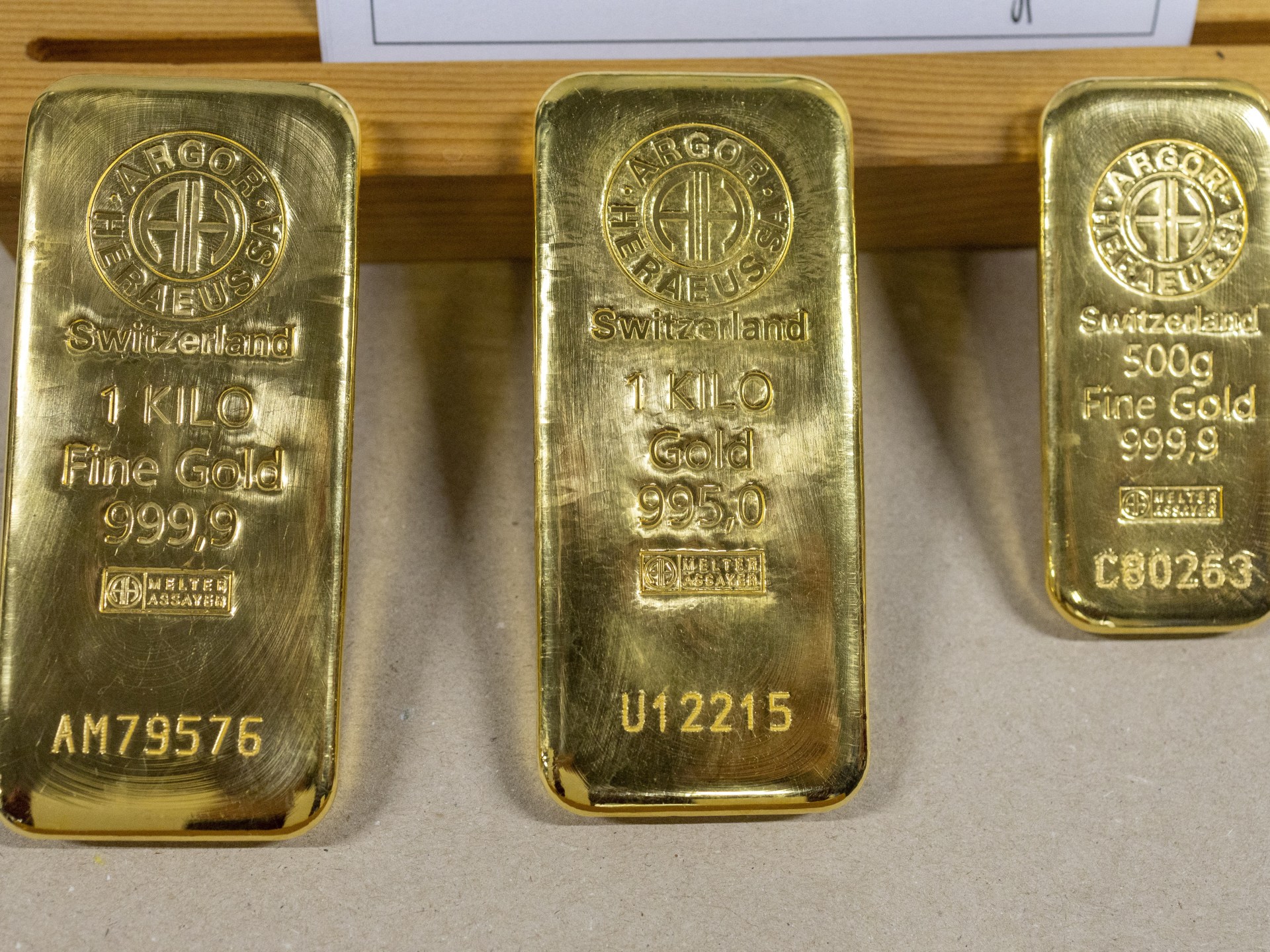
The value of the US Treasury’s gold reserves has surged to over one trillion dollars after gold prices hit a historic high of $3,824.50 per ounce, marking a 45% increase since the beginning of the year, according to a Bloomberg report.
Bloomberg noted that the official value of these reserves remains fixed at about $11 billion, based on the legal price of $42.22 per ounce set by Congress in 1973, which is more than 90 times less than their actual market value.
According to Treasury data, the US holds about 261.5 million ounces of gold, with more than half stored in deep vaults near the US Army base at Fort Knox, Kentucky, while the rest is distributed among warehouses in West Point, Denver, and a vault beneath the Federal Reserve headquarters in Manhattan.
Analysts believe the exceptional price surge is due to several factors.
Bloomberg pointed out that offhand remarks by Treasury Secretary Scott Beisent earlier this year sparked speculation about a possible revaluation of the reserves at current prices, which could release about $990 billion additional funds into the state treasury. However, the Secretary later denied any actual intention to do so, confirming that the matter is not under serious consideration.
Bloomberg emphasized that updating the market value of the reserves might seem tempting amid US debt ceiling constraints, but it would have long-term consequences, including flooding the financial system with massive liquidity and hindering the Federal Reserve’s efforts to reduce its balance sheet.
The agency also noted that other countries such as Germany, Italy, and South Africa have undertaken similar revaluations of their gold reserves in recent decades.
The debate over US gold did not stop at numbers; in February, statements by former US President Donald Trump and billionaire Elon Musk fueled conspiracy theories about whether the gold stored at Fort Knox actually exists.
Trump said at the time: “We will go to Fort Knox, the legendary fortress, to make sure the gold is there. And if it is not, we will be very angry.”
While the United States sits atop the list of the world’s largest gold holders, Bloomberg confirms that ongoing global demand for the yellow metal, driven by political and economic factors, will keep these reserves at the heart of discussions about US financial and economic security.




Recommended for you
Al-Jaghbeer: The Industrial Sector Leads Economic Growth
Alternative to UNIFIL Forces
Egypt Post: We Have Over 10 Million Customers in Savings Accounts and Offer Daily, Monthly, and Annual Returns
Talib Al-Rifai Chronicles Kuwaiti Art Heritage in "Doukhi.. Tasaseem Al-Saba"
Exhibition City Completes About 80% of Preparations for the Damascus International Fair Launch
Trump Advisor: Disarming Hamas is Central.. Palestinian Authority to Take Over Gaza After Required Reforms