






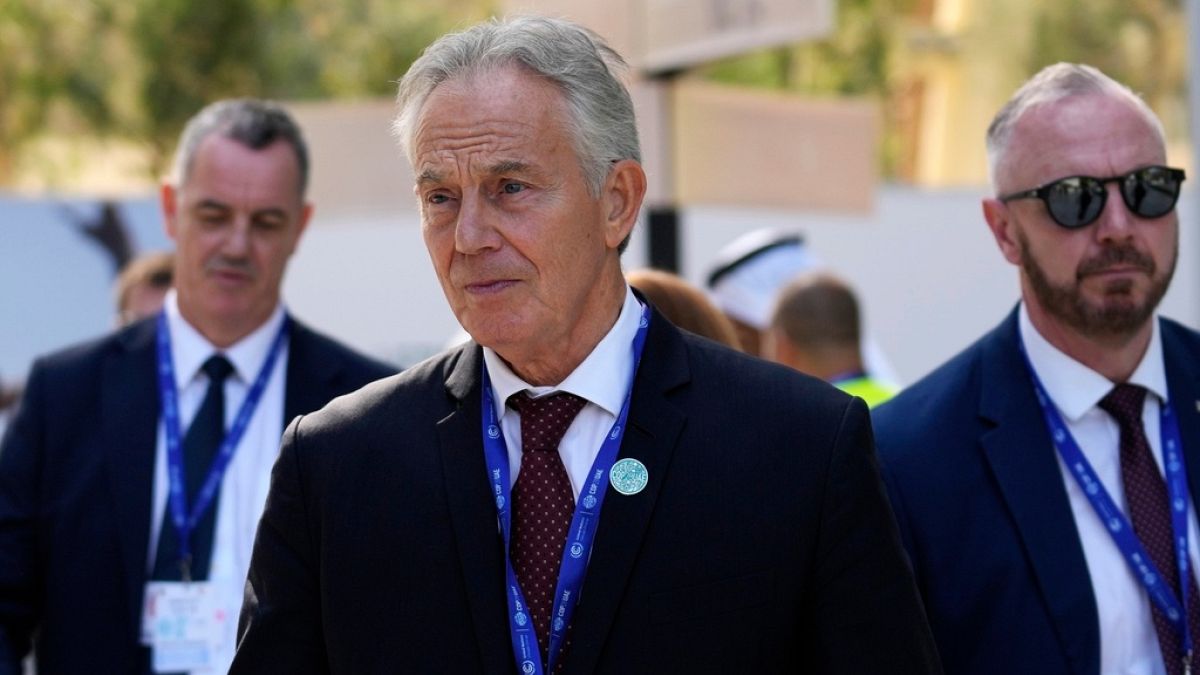
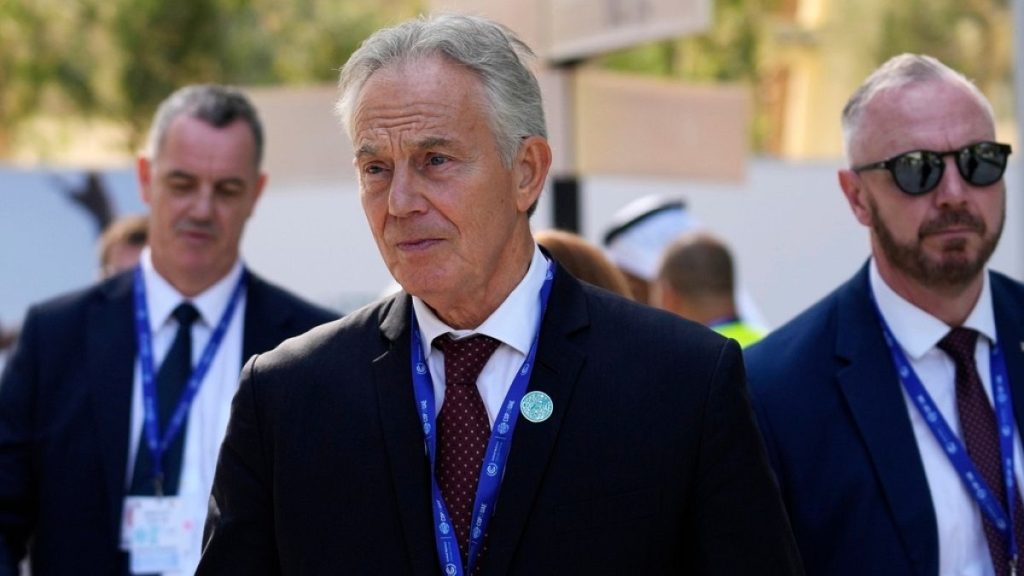
In October 2015, Tony Blair apologized in an interview with CNN for his “mistakes” in the Iraq War and acknowledged “elements of truth” in the view that the invasion helped the rise of ISIS, but he did not retract his support for the United States nor apologize to it.
Once again, the name of former British Prime Minister Tony Blair has emerged as a pivotal figure in the Arab world with President Donald Trump’s “peace plan” to end the war in Gaza, which includes 20 clauses. One of these clauses calls for the establishment of an international supervisory body called the “Peace Council,” chaired by Trump himself, with Blair as a member and partner. The two leaders would oversee a technocratic, non-political Palestinian committee that would govern Gaza after Hamas is removed from power.
Several reports viewed Trump’s announcement as granting Blair new rule and influence in the Arab world, where he has never truly left even after resigning in 2007 due to declining popularity following his support for the 2003 US invasion of Iraq. The Israeli newspaper Yedioth Ahronoth said Blair returned to the region as if he had never left. So who is this figure who has remained a constant presence in the Middle East?
Blair was born in 1953 in Edinburgh, educated at Oxford University, and became a lawyer. In 1983, he was elected as a Labour Party member of Parliament for the Sedgefield constituency.
He gained fame as a skilled Labour speaker, using his oratory skills to boost popularity among voters through various local issues, eventually becoming the ideal candidate to lead the party after the sudden death of then-leader John Smith.
In 1997, the Labour Party won a landslide victory in the legislative elections, making Blair, at age 43, the youngest British Prime Minister since Lord Liverpool in 1812.
At the start of the millennium, Blair renewed his mandate twice after the events of September 11, 2001, but faced a turbulent leadership period. His military support for the US “War on Terror” in Afghanistan under President George W. Bush, along with the 2003 invasion of Iraq to overthrow former President Saddam Hussein under the pretext of preventing the spread of weapons of mass destruction, caused concern within his party and contributed to his declining popularity after London failed to prove the existence of such weapons, ultimately leading to his resignation in 2007.
The British newspaper The Guardian reported that Blair at the time did not realize the extent of how his foreign interventions would impact British politics. It cited that on April 28, 2003, weeks after Baghdad fell, Sir John Scarlett, head of the Joint Intelligence Committee, entered the office of Blair’s press secretary Alastair Campbell and asked, “How difficult will it be if it turns out we found no evidence of Saddam’s WMD program?”
Although the answer was clear, Blair did not foresee that this experience would create a long-lasting popular trust crisis among successive Labour leaders and intelligence agencies, paralyzing the authorization process for the use of force abroad.
Blair faced accusations of war crimes in Iraq by several figures, including former Malaysian Prime Minister Mahathir Mohamad.
In October 2015, he apologized in a CNN interview for his “mistakes” in the Iraq War and acknowledged “elements of truth” in the view that the invasion helped the rise of ISIS, but he did not retract his support for the United States or apologize to it.
After his resignation, he was immediately appointed as Middle East envoy in the Quartet, which includes the United Nations, the United States, the European Union, and Russia. His mission was to support the building of Palestinian institutions, promote economic development, and coordinate reforms in security and governance.
Although he resigned in 2015, he maintained close ties in the Arab world and never left the region. He worked as an advisor after founding the “Blair Institute,” which is believed to have generated significant, if not enormous, profits. The Guardian states that the former British Prime Minister exploited his position within the Quartet to create a “shadowy” network of interests extending from the UAE to Kazakhstan and America.
In 2011, Blair mediated between Saudi Arabia and China to strike a deal benefiting “PetroSaudi,” owned by Prince Turki bin Abdullah, son of the late Saudi King Abdullah bin Abdulaziz, in exchange for £41,000 monthly fees paid to his company and a 2% commission on any contracts he helped secure, estimated to be worth millions of pounds.
The Telegraph estimates he provided advice to Riyadh under deals worth up to £9 million, as well as to the UAE, which allocated large sums from its sovereign wealth fund.
Additionally, reports from The Sunday Times reveal that Blair was appointed as an advisor to Crown Prince Mohammed bin Salman after the assassination of journalist Jamal Khashoggi at the Saudi consulate in Istanbul in 2018, an incident the Crown Prince was accused of involvement in despite his denial. Sources confirm Blair supports and participates in the “Saudi Vision 2030” program.
Egyptian President Abdel Fattah el-Sisi also benefited from Blair’s political acumen. Campbell says Blair agreed to advise the Egyptian president, who came to power after a military coup, as part of a program funded by the UAE through an investment company in Cairo.
Recommended for you
Al-Jaghbeer: The Industrial Sector Leads Economic Growth
Egypt Post: We Have Over 10 Million Customers in Savings Accounts and Offer Daily, Monthly, and Annual Returns
Alternative to UNIFIL Forces
Talib Al-Rifai Chronicles Kuwaiti Art Heritage in "Doukhi.. Tasaseem Al-Saba"
Exhibition City Completes About 80% of Preparations for the Damascus International Fair Launch
Trump Advisor: Disarming Hamas is Central.. Palestinian Authority to Take Over Gaza After Required Reforms