









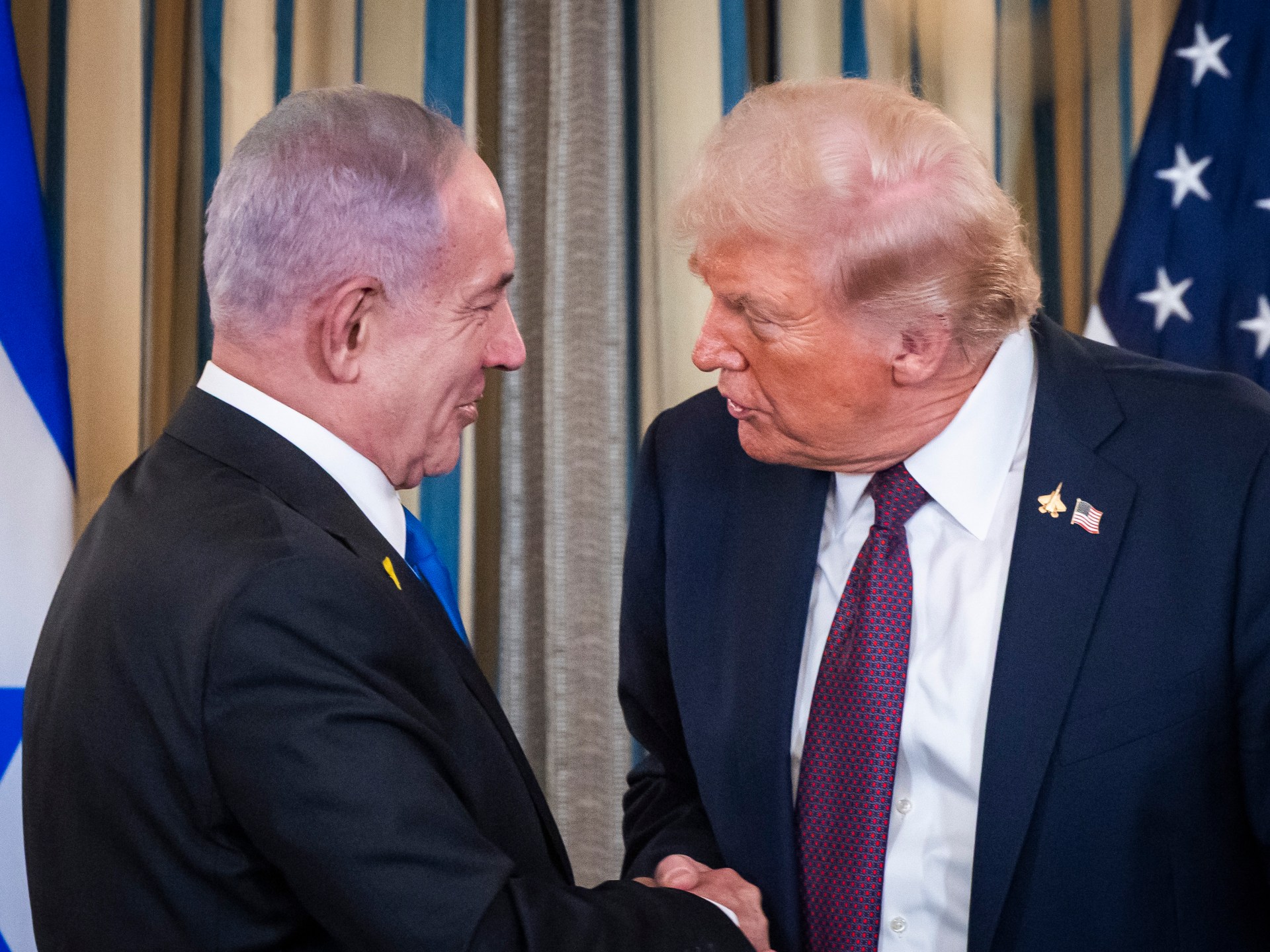
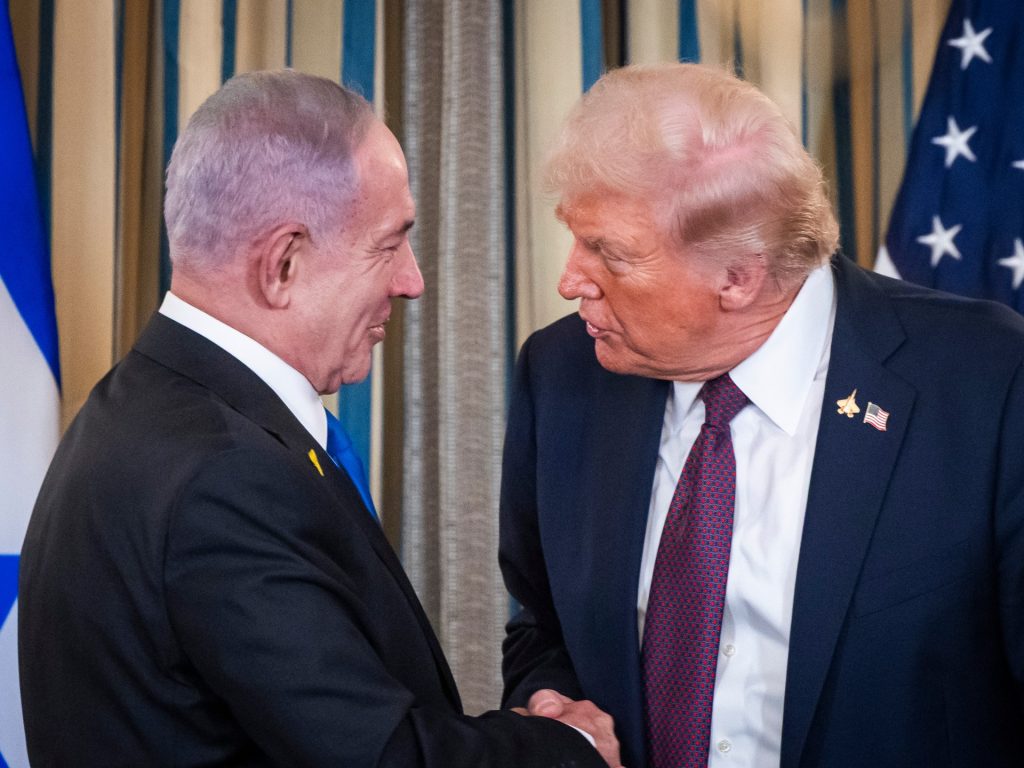
Israeli newspaper Haaretz, in a report by its Washington correspondent Lisa Rozovsky, stated that Qatar emerged as a clear and major winner from the meeting between US President Donald Trump and Israeli Prime Minister Benjamin Netanyahu.
Despite the ambiguity surrounding the joint press conference and the fundamental difficulties in implementing Trump’s plan to end the war on Gaza, the political gain achieved by Doha appeared tangible and prominent.
The paper explains that Trump’s 21-point plan to end the war was effectively reduced to 20 points after point 21 was implemented during the Trump-Netanyahu meeting, thus it was removed from the agreement announcement.
The Israeli Prime Minister was forced to issue a clear apology to Qatari Prime Minister Sheikh Mohammed bin Abdulrahman Al Thani, pledging that Israel would no longer attack Qatari territory. Haaretz described this scene as an “unprecedented political achievement” for Doha, which Netanyahu had long accused.
Rozovsky adds that President Trump himself acted as Qatar’s “public relations officer” during the press conference, lavishly praising its Emir, which was clearly visible on Netanyahu’s face as he tried to hide his tension with a forced smile, wiping sweat from his forehead with a handkerchief while listening to the compliments.
According to the report, the meeting also marked a turning point in the US discourse towards Israel. After two years of using the phrase “time is running out” regarding the suffering of prisoners and their families, the White House sent an implicit message to Netanyahu that the time allowed for continuing the war in Gaza, with its “spreading death and destruction,” was over.
However, the correspondent notes this message came “in small print” and its results will only become clear in the coming days and weeks.
Retreat
Haaretz points out that Netanyahu had repeatedly stated over the past two years that the war could only end with a “complete victory” over Hamas, including its full surrender and disarmament, but he was forced in front of Trump and cameras to accept a plan that does not explicitly achieve this goal.
The plan allows for the possibility of a “credible framework for self-determination and the establishment of a Palestinian state,” although Netanyahu usually says the Palestinian state is a “reward for Hamas.” Despite the joint announcement with Trump being supposed to mark a starting point for ending the war, many details remained vague, potentially hindering implementation.
According to the plan, Hamas must release all hostages within 72 hours of Israel’s public approval, and in return, the movement must dismantle its infrastructure, including tunnels and weapons production facilities, and begin a “disarmament process of Gaza under independent observers’ supervision.”
However, this process will not be immediate and is not easy to complete, the report says, noting that “the proposal is not bad for Hamas” as it gives it a chance to maintain influence and dignity in the Strip even while entering new arrangements.
Article 17 is one of the controversial points in the plan published by the US administration, seemingly to embarrass Netanyahu. It states that Israel will transfer “terror-free areas” to an international stabilization force even if Hamas rejects the plan.
This force is supposed to include Arab and international elements and have advisory support from Egypt and Jordan, but the report points out many unanswered questions such as the definition of “terror-free areas,” the limits and powers of this force, and how the international community will respond if Hamas refuses to implement the agreement.
Dispute
Rozovsky focuses on the map of the stages of Israeli withdrawal from Gaza attached by the White House to the plan. She sees the first stage, described as “modest,” as a partial withdrawal from populated areas including parts of Gaza City, but Netanyahu quickly reassured his voters that “Israel will remain in most of the Strip.”
The second stage is linked to the deployment of the international stabilization force, while the final stage is postponed until the “terrorist threat is eliminated,” a vague definition allowing indefinite delay of withdrawal.
Haaretz notes that what Netanyahu today describes as an achievement could have been reached months ago, but with a fundamental difference: at that time, there were more hostages alive and far fewer Palestinian casualties and destruction in Gaza.
The paper cites a statement by US envoy Brett McGurk, who oversaw the negotiations, saying the current proposal is very close to what was supposed to be the second phase of the ceasefire agreement last January.
In conclusion, Rozovsky describes the overall scene at the press conference, saying Trump made long statements about “global peace in the Middle East,” while Netanyahu stood beside him nervously trying to hide his displeasure with a faint smile. While Trump spoke about Israelis who “want the hostages returned and the war ended,” it seemed the message reached the Israeli Prime Minister that he could no longer continue indefinitely in a war costing tens of thousands of lives.
The paper sums up the situation by saying that despite all contradictions and ambiguities, the diplomatic community in Washington saw the meeting’s clear outcome: Qatar emerged as the biggest winner, having secured a public apology from Netanyahu and strengthened its position as a key party in any future settlement. Meanwhile, Israel appeared forced to comply with a US plan that implicitly recognizes the idea of a Palestinian state, even if Netanyahu verbally rejects it.


Recommended for you
Al-Jaghbeer: The Industrial Sector Leads Economic Growth
Egypt Post: We Have Over 10 Million Customers in Savings Accounts and Offer Daily, Monthly, and Annual Returns
Alternative to UNIFIL Forces
Talib Al-Rifai Chronicles Kuwaiti Art Heritage in "Doukhi.. Tasaseem Al-Saba"
Exhibition City Completes About 80% of Preparations for the Damascus International Fair Launch
Trump Advisor: Disarming Hamas is Central.. Palestinian Authority to Take Over Gaza After Required Reforms