





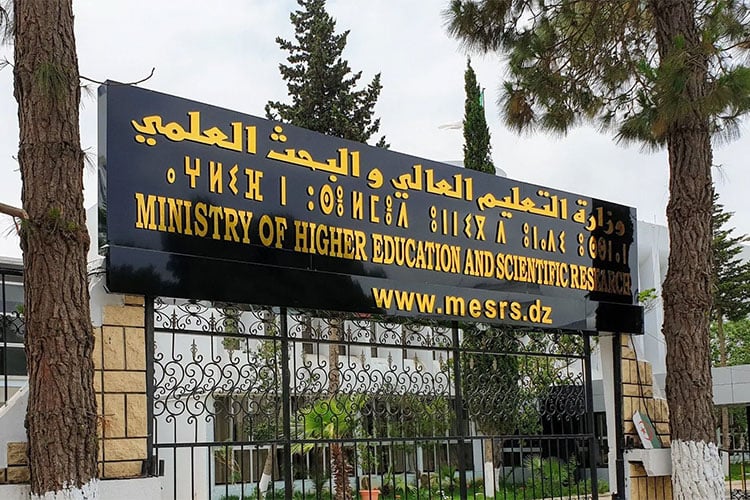
The National Laboratory for Housing and Construction signed a cooperation protocol with the Directorate General for Scientific Research and Technological Development at the Ministry of Higher Education and Scientific Research, aiming to establish a national network of incubators in the fields of housing, construction, and geotechnical engineering to enhance innovation and support university students.
The signing ceremony took place on Monday during the first day of the International Forum on Geotechnical Risks and Sustainable Construction, organized under the patronage of the Minister of Housing, Urbanism, and Urban Planning, on the occasion of the 47th anniversary of the laboratory’s founding.
On this occasion, the Director General of the National Laboratory for Housing and Construction, Faisal Boukadoum, explained that the first phase includes launching eight incubators across seven university hubs in the provinces of Algiers, Oran, Constantine, Bechar, Ouargla, Skikda, and Souk Ahras. He pointed out that this “ambitious” initiative will allow the transformation of scientific research results into practical solutions and enhance applied innovation in housing, construction, and geotechnical engineering.
These incubators will enable the laboratory to “provide an innovative environment for university students, with opportunities for outstanding students to join the laboratory, ensuring the transfer of expertise to future generations, as well as keeping pace with profound transformations in digitization, artificial intelligence, and sustainability,” Boukadoum added.
In a related context, the official indicated that the laboratory has prioritized accelerating digital transformation by adopting geographic information systems, integrated management systems, and using artificial intelligence in processing technical data, alongside strengthening partnerships with universities and research centers, and diversifying intervention fields to include applied studies, environmental studies, and metrology development.
Meanwhile, Attia, during the opening of the forum held under the slogan “Prevention and Planning in Facing Natural Risks,” emphasized the importance of technical studies to reduce, control, and manage risks to achieve the desired goals of sustainable buildings and protection of people and property.
He recalled Algeria’s achievements in housing, which made it a “distinguished” regional model, both in terms of the number of housing units distributed and the monitoring, expertise, and diagnostics that accompanied the implementation of this program, as well as major structural facilities and public amenities.
The housing sector attaches “utmost importance” to ensuring quality, safety, and standards in the construction process, Attia added, praising the “expertise and professionalism” of the National Laboratory for Housing and Construction, thanks to its technical studies for many strategic and structural projects, with hopes for its contribution to realizing the program to build two million housing units by 2029.
The Secretary-General also praised the “qualitative leap” the laboratory has witnessed in recent years in diagnostics and expertise, thanks to the enhancement of its equipment with high-precision tools, the launch of an innovative digital platform, and the establishment of a comprehensive continuous training program to enable it to conduct accurate and effective studies.
On the first day of the forum, Algerian and foreign specialists discussed topics related to geological risks, the importance of monitoring to improve geotechnical risk management, the impact of climate change on the construction sector, and the importance of relying on modern technologies to confront natural risks.
It is noteworthy that the forum’s work continues on Tuesday, its second and final day, where topics related to innovative materials, sustainability of geotechnical structures, building rehabilitation, advanced technologies applied to geological risks, and other subjects will be addressed.



Recommended for you
Al-Jaghbeer: The Industrial Sector Leads Economic Growth
Talib Al-Rifai Chronicles Kuwaiti Art Heritage in "Doukhi.. Tasaseem Al-Saba"
Exhibition City Completes About 80% of Preparations for the Damascus International Fair Launch
Unified Admission Applications Start Tuesday with 640 Students to be Accepted in Medicine
Egypt Post: We Have Over 10 Million Customers in Savings Accounts and Offer Daily, Monthly, and Annual Returns
His Highness Sheikh Isa bin Salman bin Hamad Al Khalifa Receives the United States Ambassador to the Kingdom of Bahrain