







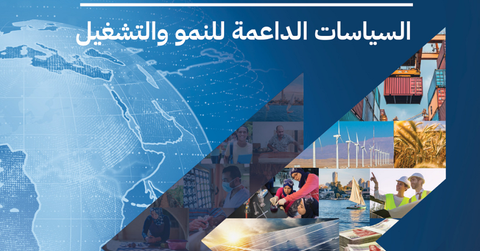
The Ministry of Planning, Economic Development, and International Cooperation reviewed the key features of the first chapter of the “National Narrative for Economic Development: Policies Supporting Growth and Employment,” focusing on macroeconomic stability as an essential condition for the success of development efforts in Egypt. Economic stability forms the foundation from which state policies launch to achieve inclusive growth, boost confidence among local and foreign investors, reduce economic risks, support employment opportunities, and enhance the national economy’s competitiveness.
Dr. Rania Al-Mashat, Minister of Planning, Economic Development, and International Cooperation, emphasized that macroeconomic stability is a fundamental condition to create a favorable environment for growth and investment. This is achieved through adopting disciplined fiscal and monetary policies that enhance confidence and stability, controlling public finances by rationalizing spending, expanding the tax base, and improving resource allocation efficiency to ensure fiscal policy stimulates economic growth and is based on an effective partnership with the private sector.
Public Investments
She pointed out that governance of public investments is a pivotal tool to ensure capital expenditure is directed towards developmental priorities, open space for private sector investments, and maximize the economic and social impact of public spending.
Dr. Al-Mashat explained that, as part of the state’s commitment to enhancing macroeconomic stability, the General State Planning Law No. 18 of 2022 and the Unified Public Finance Law No. 6 of 2022 were enacted as key steps to strengthen strategic planning, public spending effectiveness, and link development policies with the budget in a more integrated and transparent manner.
Sustainable Development
The government works to enhance integration between the sustainable development plan and the medium-term budget to ensure public resources are directed towards developmental priorities and achieve maximum efficiency in public spending. A new methodology for preparing the plan within a medium-term framework extending until 2028/2029 has been adopted. Institutional coordination is underway between the Ministry of Planning and the Ministry of Finance based on the relevant laws.
Al-Mashat added that the government aims to implement more than 100 structural reform measures in fiscal and planning policies and efforts to transition to a green economy. These are carried out by several entities including the Ministry of Planning, Ministries of Finance, Labor, Social Solidarity, the Financial Regulatory Authority, and others.
Restructuring Economic Authorities
These measures include restructuring economic authorities, issuing a consolidated final account for the government including authorities, preparing a guide on the methodology for preparing and aggregating general government data, an analytical report on government performance, applying participatory budgeting in three governorates, publishing a medium-term financial strategy, and preparing a draft procedural guide for program and performance budgeting.
Also included are updating and publishing a medium-term debt management strategy, expanding statistical reports on government debt, taking necessary measures to allow individual investments in government debt instruments, applying a unified and simplified tax system for small and medium enterprises, and generalizing the electronic tax platform.
Additionally, issuing the executive regulations of the General Planning Law, the medium-term planning report, publishing the procedural guide for preparing the medium-term development plan, semi-annual and annual follow-up reports on public investments, preparing and publishing the national employment strategy, and completing the national strategy for integrating the informal sector.
National Development Narrative
The Ministry of Planning, Economic Development, and International Cooperation launched the “National Narrative for Economic Development” on September 7, 2025, under the patronage and attendance of Dr. Mostafa Madbouly, Prime Minister.
The narrative is a comprehensive framework that integrates the government’s work program and Egypt’s Vision 2030 in light of rapid regional and international developments. It aims to shift towards an economic model based on consolidating macroeconomic stability, focusing more on the most productive sectors and those with the greatest access to export markets, benefiting from advanced infrastructure, and redefining the state’s role in the economy to enhance the competitiveness of the Egyptian economy and stimulate private sector participation, continuing the path of economic reform.
The narrative also serves as an economic reform program and a promotional tool for the pillars of the Egyptian economy, reflecting policies and structural reforms supporting growth, employment, investment attraction, enhancing private sector participation, highlighting available financing alternatives, and spotlighting promising sectoral opportunities.
The ministry also launched community dialogue sessions within the framework of the narrative with broad participation from ministers, multilateral and bilateral development partners, the private sector, and all relevant parties, alongside the “Share Your Opinion on the Narrative” campaign, which allows specialists to view and contribute opinions on various chapters via the ministry’s website.



Recommended for you
Talib Al-Rifai Chronicles Kuwaiti Art Heritage in "Doukhi.. Tasaseem Al-Saba"
Exhibition City Completes About 80% of Preparations for the Damascus International Fair Launch
Unified Admission Applications Start Tuesday with 640 Students to be Accepted in Medicine
Al-Jaghbeer: The Industrial Sector Leads Economic Growth
Egypt Post: We Have Over 10 Million Customers in Savings Accounts and Offer Daily, Monthly, and Annual Returns
His Highness Sheikh Isa bin Salman bin Hamad Al Khalifa Receives the United States Ambassador to the Kingdom of Bahrain