





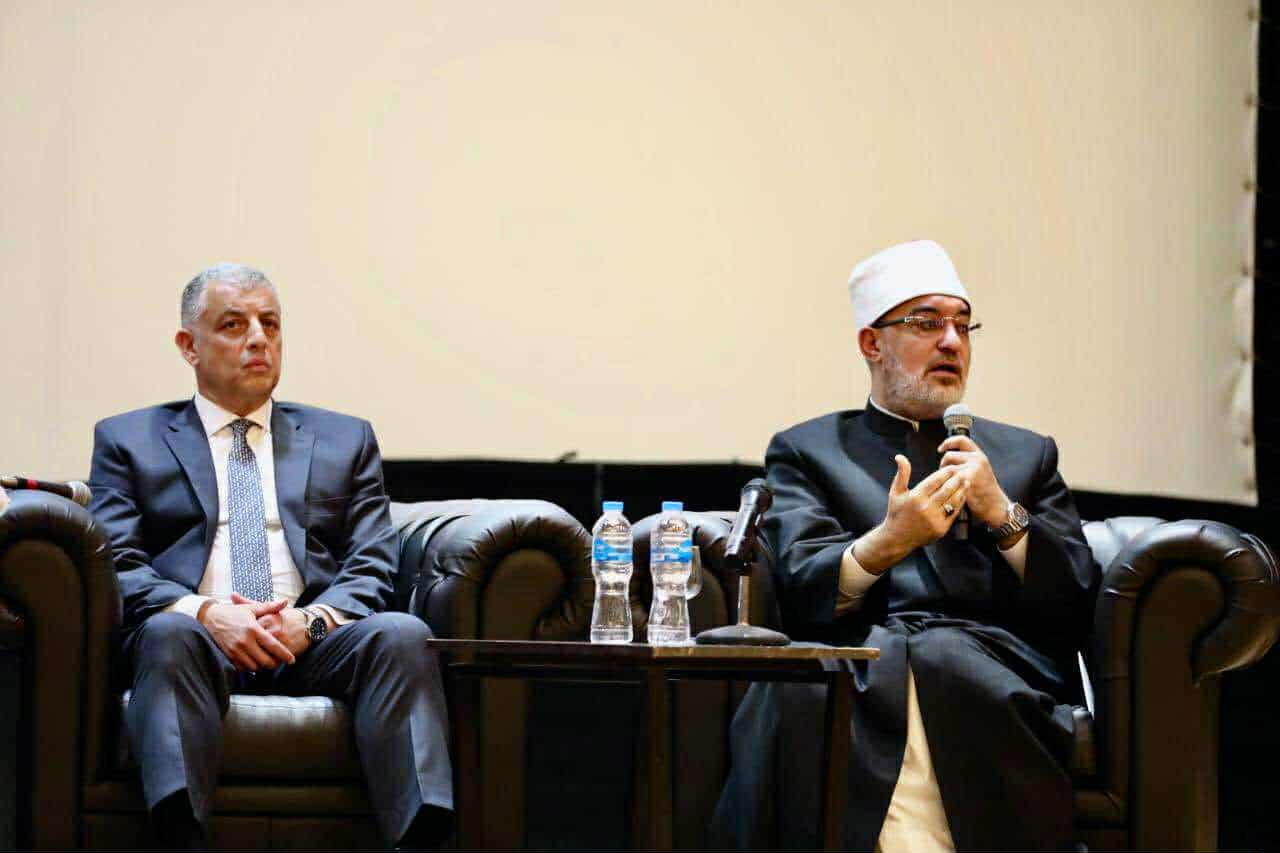
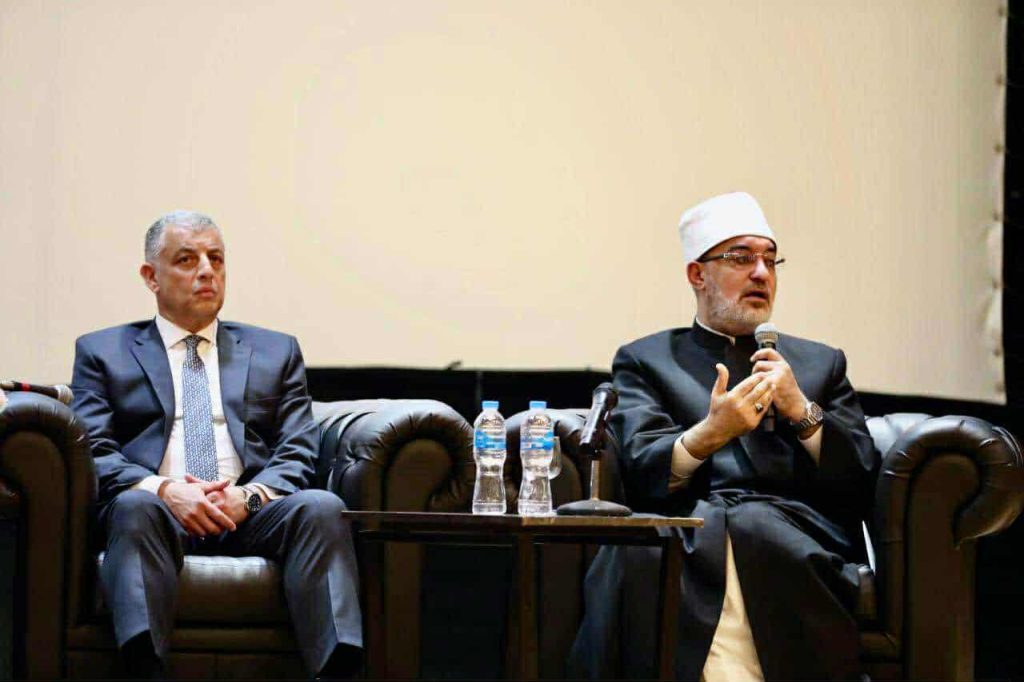
Dr. Nazeer Mohamed Eyad, the Grand Mufti of Egypt and Secretary-General of the International Union of Muslim Scholars, affirmed that the October victory was not a coincidence but the result of comprehensive preparation of the Egyptian person; religious, moral, intellectual, physical, and psychological preparation. Victory is not achieved by wishes or slogans but by firm determination, sincere faith, and continuous work. He pointed out that building the human being is the foundation upon which nations are built, a cause that the Egyptian state under President Abdel Fattah El-Sisi pays great attention to.
This was stated during his speech at the major educational seminar held at the Ismailia Cultural Palace, attended by the Governor of Ismailia, the Minister of Endowments, the Chairman of the National Media Authority, the President of Suez Canal University, the Director of Ismailia Security, and several political and religious leaders, as part of Ismailia Governorate’s national day celebrations.
The Grand Mufti explained that religion is not a rigid ritual but a comprehensive way of life that organizes the relationship between man and his Lord, himself, and society around him. It instills in the soul the highest values that preserve human dignity and protect from deviation and extremism. He cited the Egyptians’ slogan in the October War, “Allahu Akbar,” which expressed sincere faith and certainty in God’s victory, establishing true servitude and sincere work for the homeland. He confirmed that sound religious construction is the foundation that nourishes morality, directs thought, and controls behavior in all aspects of life.
He clarified that moral construction was one of the most important pillars of victory, as values of sacrifice, solidarity, and coexistence prevailed among the nation’s people, achieving unity of purpose and destiny. The Egyptian society then became like one body. He pointed out that sound morals build individuals and advance societies, and that raising generations on noble morals represents a protective shield for nations against fragmentation and deviation.
He also highlighted the importance of psychological and intellectual construction, stating that a straight soul and a conscious mind together form the pillar of progress and advancement. He emphasized that refining the soul and correcting thought are the path to a balanced society that knows its duties and rights and puts matters in their right place. He stressed that organized thinking and sound planning are among God’s greatest blessings to humans, through which successes are achieved and nations are built. He noted that intellectual construction is not complete unless based on enlightened religious awareness that distinguishes between the fixed and the variable and protects humans from extremism.
His Eminence added that physical construction is no less important than all the above, as it enables a person to work, give, and fulfill their mission in building the earth. He affirmed that strong faith is inseparable from a strong body and that maintaining health and fitness is an essential part of worship encouraged by Sharia.
The Grand Mufti concluded his speech by emphasizing the importance of scientific construction as the cornerstone of nations’ renaissance and progress, citing the verse: “And prepare against them whatever you are able of power” and the Prophet’s hadith: “The strong believer is better and more beloved to Allah than the weak believer.” He clarified that the intended strength is not limited to physical power but includes scientific, intellectual, and technological strength, which enables humans to innovate, produce, and compete in all fields of life.
The seminar was attended by Major General Pilot Akram Mohamed Galal, Governor of Ismailia; Dr. Osama Al-Azhari, Minister of Endowments; Mr. Ahmed Al-Muslimani, Chairman of the National Media Authority; Dr. Nasser Mandour, President of Suez Canal University; Lieutenant General Ashraf Atwa, Vice Chairman of the Suez Canal Authority; Major General Mohamed Amer, Director of Ismailia Security; Brigadier General Mohamed Farag Shaalan, Military Advisor to the Governorate; Sheikh Moamen Al-Hawari, Head of the Central Administration of the Al-Azhar Ismailia Region; and a host of religious, executive, and cultural leaders, along with youth and university students.
Recommended for you
Talib Al-Rifai Chronicles Kuwaiti Art Heritage in "Doukhi.. Tasaseem Al-Saba"
Al-Jaghbeer: The Industrial Sector Leads Economic Growth
Exhibition City Completes About 80% of Preparations for the Damascus International Fair Launch
Unified Admission Applications Start Tuesday with 640 Students to be Accepted in Medicine
Egypt Post: We Have Over 10 Million Customers in Savings Accounts and Offer Daily, Monthly, and Annual Returns
His Highness Sheikh Isa bin Salman bin Hamad Al Khalifa Receives the United States Ambassador to the Kingdom of Bahrain