









A report from the heads of British intelligence agencies warns that the United Kingdom’s national security is severely threatened by the climate crisis and the imminent collapse of vital natural ecosystems, with potential food shortages and economic disaster within a few years.
However, the release of the report, which was scheduled for last Thursday at a major event in London, has been postponed, and The Guardian expressed concerns that the Prime Minister’s office may have suppressed it.
The Joint Intelligence Committee report highlighted that the “destabilizing” impact of the climate and nature crises on national security represents one of the greatest risks facing Britain.
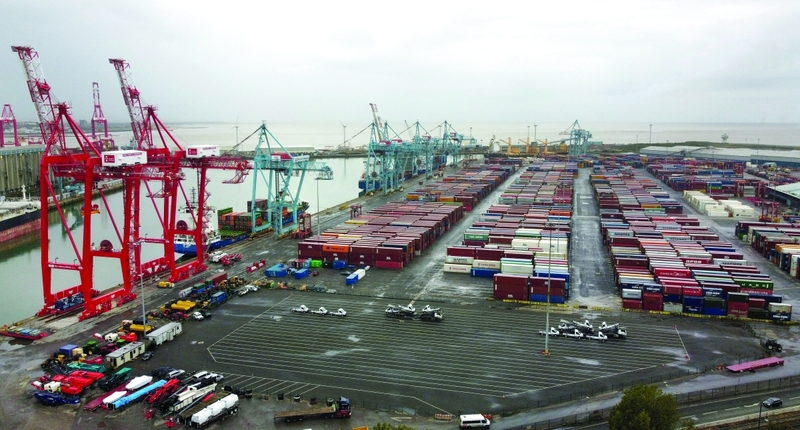
Food supply chains are already under pressure, with rising prices for some goods. Defense experts warned this situation could worsen soon due to the UK’s heavy reliance on imports.
Other industries will also be affected by ecosystem collapse in places like the Amazon and the worsening effects of extreme weather worldwide. Ministers reported that these impacts are not as distant as some had complacently assumed but are already being felt and will grow in significance as temperatures rise above 1.5 degrees Celsius above pre-industrial levels.
The scathing report was due to be published last week in a capital event, but The Guardian learned that the report, prepared by experts over many months, has been temporarily withheld.
A source told The Guardian that they and others fear it was suppressed because the government does not want to confront the issues raised. Official development assistance, which could help stabilize countries most at risk from the climate crisis and avoid some warned effects, has been cut.
Another source familiar with the content told the paper: “This is a very stark warning, and it is very clear that the impacts on national security are deeply concerning.” Food disruption is the greatest risk, as the UK imports an increasing proportion of its food from abroad, some from areas known for climate disaster risks and ecosystem collapse. The clothing and fashion industry is also under increasing pressure, as many fabrics come from vulnerable regions.
Migration from countries most affected by climate and biodiversity crises will impact society and the economy, with some of the hardest-hit countries likely to see government collapses and rising social unrest, leading to political instability.
Officials have warned about the climate crisis for two decades, and the UK was the first country to bring this issue to the UN Security Council in 2007. However, little has been done since to address the impacts of climate and ecosystem collapse on national security.
Defense experts’ concerns about inaction have grown, with some calling for climate funding to be considered part of national security spending. The upcoming UN climate summit, COP30, scheduled next month in Brazil, is expected to show most countries are far behind in achieving significant greenhouse gas emission reductions needed to prevent global temperatures from exceeding 1.5 degrees Celsius above pre-industrial levels.
Prime Minister Keir Starmer was expected to attend COP30, where the UK can boast some of the world’s most ambitious targets and strong achievements in emission reductions. However, The Guardian learned some of his advisers want him not to attend, fearing attacks from the Reform Party. A government spokesperson said, “This government is taking decisive action to enhance food security in the UK and reverse nature’s decline, as well as prepare for the impacts of climate change, including providing £11.6 billion in an international climate bill by the end of 25/26.”
Former Conservative minister under Boris Johnson, Zac Goldsmith, said, “Addressing the nature crisis must be given equal priority to the climate crisis as a defense issue.” He added, “There are many nature supporters in the Labour Party, but with David Lammy moved from the Foreign Office, it is very clear that nature has lost significant priority, leaving us with a one-dimensional focus on carbon.”
Goldsmith continued, “Starmer appears to be the first British prime minister not to attend the COP conference to avoid being exposed for attending without tangible achievements and even abandoning existing commitments.”
He added, “There is currently no indication that the UK will support the Brazilian president’s leading plan to reverse the destruction of the world’s major tropical forest basins, despite it being built with significant British contributions. Some of our favorite and respected programs are at risk of cancellation due to cuts in official development assistance.”
Despite the UK’s global leadership in ocean protection in every way, it is now blamed for obstructing progress toward protecting Antarctica. Goldsmith said, “It now appears that a critically important report issued by the Joint Intelligence Committee on threats to UK security from ecosystem collapse has been swept under the carpet by a government embarrassed by its failure to provide any leadership on this issue.” “The Guardian”
Track Record
The UK has a strong record of ambitious climate action, having hosted the 26th UN Climate Change Conference (COP26) in Glasgow, where a methane emission reduction plan was launched for the first time. During the conference, the UK announced its nationally determined contributions targeting emission reductions under the Paris Agreement’s 1.5-degree Celsius commitment to reduce all greenhouse gas emissions by at least 81% by 2035 compared to 1990 levels. The updated nationally determined contributions align with the Climate Change Committee’s recommendations, and the UK has urged other countries to match its ambitions in addressing climate change.



Recommended for you
Talib Al-Rifai Chronicles Kuwaiti Art Heritage in "Doukhi.. Tasaseem Al-Saba"
Al-Jaghbeer: The Industrial Sector Leads Economic Growth
Exhibition City Completes About 80% of Preparations for the Damascus International Fair Launch
Unified Admission Applications Start Tuesday with 640 Students to be Accepted in Medicine
Egypt Post: We Have Over 10 Million Customers in Savings Accounts and Offer Daily, Monthly, and Annual Returns
His Highness Sheikh Isa bin Salman bin Hamad Al Khalifa Receives the United States Ambassador to the Kingdom of Bahrain