








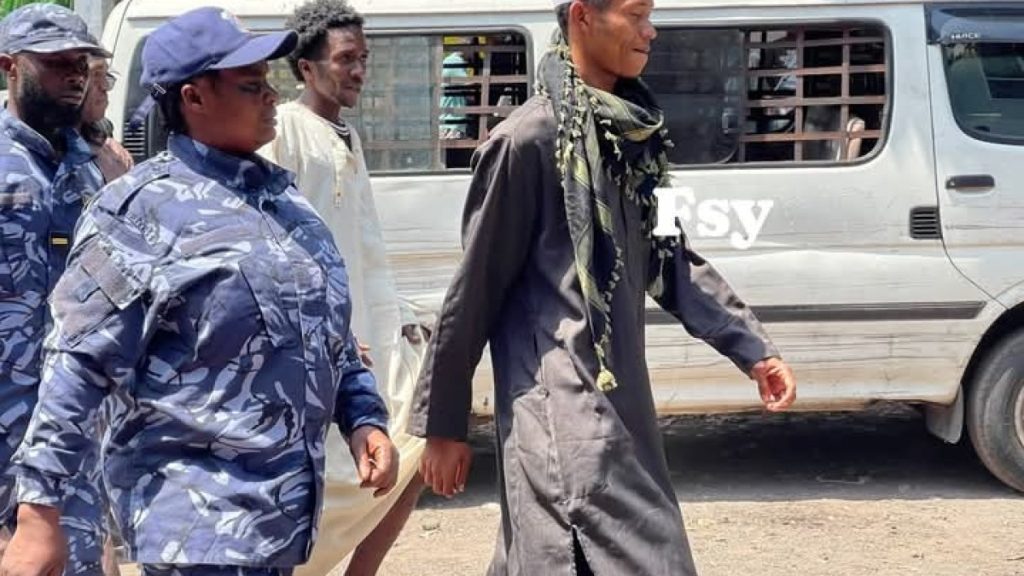
On Saturday, September 27, the Comoros held the trial of rapper Anrithi Mohamed Said, known professionally as Titi Le Forb, following weeks of controversy sparked by videos he posted on social media platforms.
The criminal court in Moroni sentenced the artist to one month in prison with a suspended sentence, in addition to a fine of 1,000 euros, after convicting him of “disturbing public order.”
The prosecution had requested a similar sentence with a fine reaching one million Comorian francs, approximately 2,600 US dollars.
The case stems from a video filmed at Hahaya International Airport, in which the artist appeared holding a gun he said was “not real,” as part of promoting a new musical work.
Although the penalty he faced could have been up to five years, he left the court free, amid cheers from hundreds of his supporters who chanted his name and carried him on their shoulders.
Controversial Arrest
Authorities arrested Titi on September 23 while he was preparing to travel to Senegal to perform at a concert, two weeks after posting the video. This move sparked criticism from his artistic circle, with his producer Aboubakar Said Tourki saying the timing of the arrest deprived him of an important opportunity in his rising career, questioning why he was not summoned immediately after posting the video or upon his return from abroad.
His lawyer, Nasser, considered that “the most important thing is that his client was released,” confirming that the defense team will not appeal the ruling, adding that his client “will learn from this experience which was not simple.”
Titi himself expressed regret, explaining that the video was merely a means to promote a new musical work dedicated to the late American rapper Tupac Shakur, and he did not expect to end up in court.
Between Freedom of Expression and National Image
The public prosecution stressed in its plea the “seriousness” of the artist’s actions, considering that his appearance with a weapon, even if fake, harms the country’s image and threatens public peace.
Conversely, his supporters see the case as revealing the fragile relationship between artistic freedom of expression and legal restrictions in the Comoros.




Recommended for you
Talib Al-Rifai Chronicles Kuwaiti Art Heritage in "Doukhi.. Tasaseem Al-Saba"
Exhibition City Completes About 80% of Preparations for the Damascus International Fair Launch
Unified Admission Applications Start Tuesday with 640 Students to be Accepted in Medicine
Al-Jaghbeer: The Industrial Sector Leads Economic Growth
Egypt Post: We Have Over 10 Million Customers in Savings Accounts and Offer Daily, Monthly, and Annual Returns
His Highness Sheikh Isa bin Salman bin Hamad Al Khalifa Receives the United States Ambassador to the Kingdom of Bahrain