



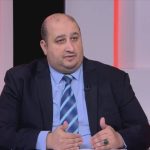


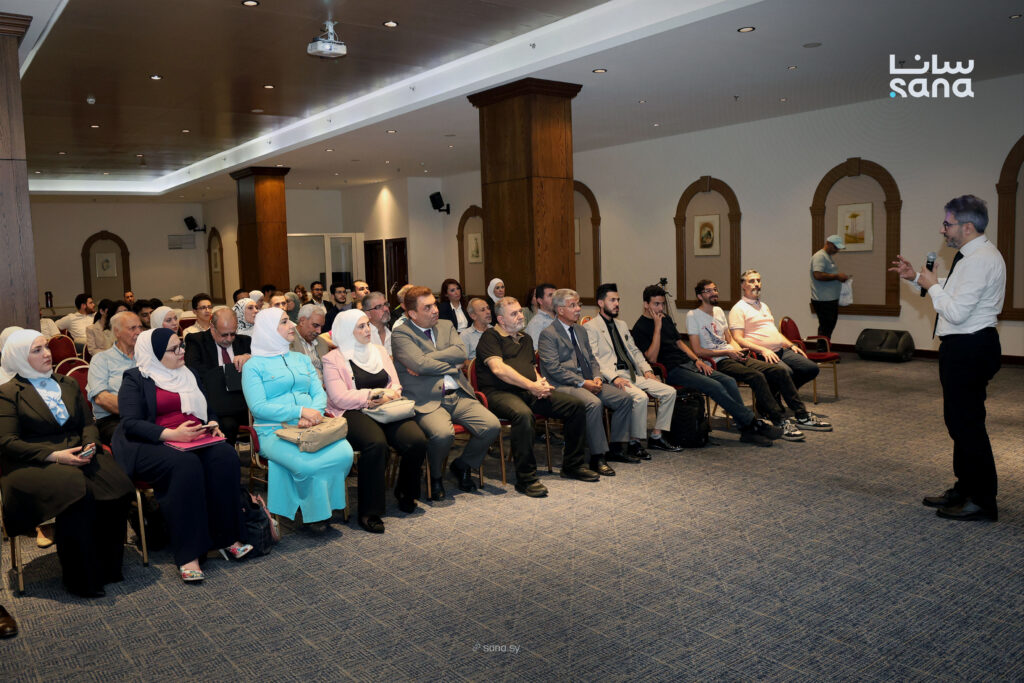
The lecture presented by Razi Mohiuddin, Director of Rawabet Business Solutions, at the Education, Training, Employment and Job Opportunities Forum held in Damascus under the title “Investment Opportunities in Syria: Excellence Strategies and Success Determinants,” focused on investment strategies in promising sectors, mechanisms to achieve success and sustainable returns within a changing investment environment, and the challenges facing investors in the Syrian market.
Mohiuddin explained that the availability of agricultural, industrial, and mineral raw materials, Syria’s strategic geographic location near regional markets, as well as future supportive factors such as the gradual return of Syrians, the revival of tourism activity, the potential gradual lifting of sanctions, and increased income levels, all contribute to enhancing the investment environment. He emphasized the importance of partnership between local investors and international experts to exchange experiences and develop administrative and human competencies.
Mohiuddin pointed out challenges that require addressing, most notably bureaucracy, complicated procedures, weak financing and liquidity, and risks of sanctions, along with weak governance in some projects. He stated that overcoming these obstacles requires administrative solutions including reliance on digitization and simplifying procedures, diversifying financing tools, building local and international partnerships, applying operational experiences before expansion, and activating governance and financial audit systems.
Al-Hallaq noted that most sectors in Syria, including trade, industry, tourism, and agriculture, suffered extensive destruction, making investment a national priority. He called for preparing a realistic investment map clarifying available project types and their estimated values to provide reassurance to investors, pointing out that capital “is not cowardly, but wise, seeking safety and real opportunities.”
Economic geography specialist Ghufran Fathi confirmed that Syria today needs projects that align with its damaged economic reality, focusing on priority sectors such as agriculture, traditional industries, tourism, and renewable energy. She noted that the country has sufficient cadres and expertise to qualify it for recovery, pointing out that the main obstacles to investment remain weak infrastructure and the need to update laws and regulations to grant investors confidence and reassurance.
Earlier today, Deputy Minister of Higher Education and Scientific Research for Student Affairs Abdul Hamid Al-Khalid inaugurated the Education, Training, Employment and Job Opportunities Forum at the Seven Gates Hotel in Damascus, with the participation of several Syrian and Arab universities.


Recommended for you
Talib Al-Rifai Chronicles Kuwaiti Art Heritage in "Doukhi.. Tasaseem Al-Saba"
Exhibition City Completes About 80% of Preparations for the Damascus International Fair Launch
Al-Jaghbeer: The Industrial Sector Leads Economic Growth
Unified Admission Applications Start Tuesday with 640 Students to be Accepted in Medicine
Egypt Post: We Have Over 10 Million Customers in Savings Accounts and Offer Daily, Monthly, and Annual Returns
His Highness Sheikh Isa bin Salman bin Hamad Al Khalifa Receives the United States Ambassador to the Kingdom of Bahrain