









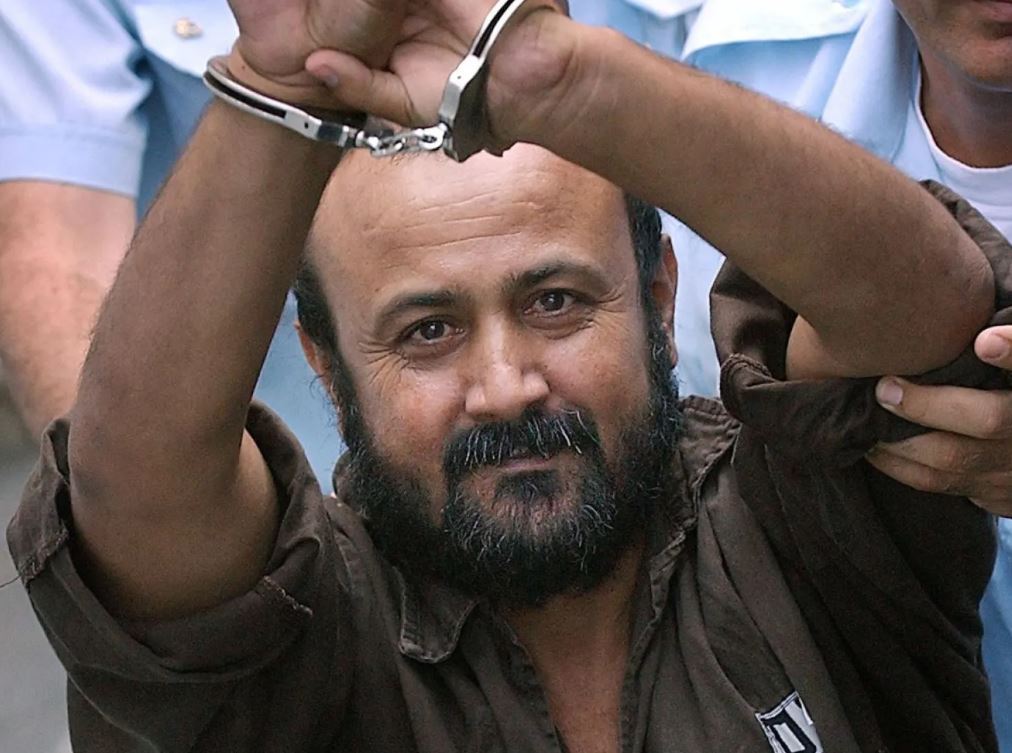
Israeli government spokeswoman Shosh Peledrosian confirmed that the Palestinian prisoner Marwan Barghouti will not be included among those to be released in the anticipated exchange deal.
This was announced during a press conference on Sunday evening, where she stated that Tel Aviv is ready to receive all hostages from Gaza, whose release process will begin on Monday morning.
She explained that the hostages will be released all at once through the International Committee of the Red Cross.
She pointed out that the hostages will be handed over in areas controlled by Israel inside Gaza, affirming that all necessary measures have been taken to receive, care for, and monitor the health of the hostages.
Earlier, informed sources told Al-Sharq channel that Hamas insists on including the “Big Seven” Palestinian prisoners in the final list of prisoners to be released, including the Fatah leader Marwan Barghouti and the Secretary-General of the Popular Front for the Liberation of Palestine, Ahmed Saadat.
The sources indicated that mediators (Egypt, Qatar, and Turkey) are exerting maximum effort to overcome contentious points and reach the final list and exchange arrangements.
One source told Al-Sharq that Palestinian factions expressed readiness during negotiations to hand over the living Israeli detainees and some bodies on Sunday, before the scheduled date on Monday, “if an agreement is reached on the list of the Big Seven leaders.”
Concerns have risen among Palestinians after Israel published a list of Palestinian prisoners who might be released in exchange for Israeli detainees, which lacks the names of prominent leaders and prisoners.
This came after reports from sources close to the Gaza war ceasefire negotiations that Israel rejected releasing about half of the prisoner list submitted by Hamas.
The names without Israeli commitment included about 25 prominent prisoners, among them Marwan Barghouti.
The term “Big Seven” refers to a group of Palestinian prisoners considered among the most prominent political and military leaders inside Israeli prisons serving life sentences.
Their affiliations vary among Fatah, Hamas, and the Popular Front for the Liberation of Palestine.
Their cases form a contentious point in the prisoner exchange negotiations between Israel and Hamas as part of the Gaza ceasefire agreement.



Recommended for you
Talib Al-Rifai Chronicles Kuwaiti Art Heritage in "Doukhi.. Tasaseem Al-Saba"
Exhibition City Completes About 80% of Preparations for the Damascus International Fair Launch
Unified Admission Applications Start Tuesday with 640 Students to be Accepted in Medicine
Al-Jaghbeer: The Industrial Sector Leads Economic Growth
Egypt Post: We Have Over 10 Million Customers in Savings Accounts and Offer Daily, Monthly, and Annual Returns
His Highness Sheikh Isa bin Salman bin Hamad Al Khalifa Receives the United States Ambassador to the Kingdom of Bahrain