








Military and strategic expert Colonel Hatem Karim Al-Falahi stated that the implementation of the ceasefire agreement in Gaza has effectively begun with the Israeli army starting to withdraw its forces from areas around Gaza City, noting that four Israeli military brigades were surrounding and operating in the city.
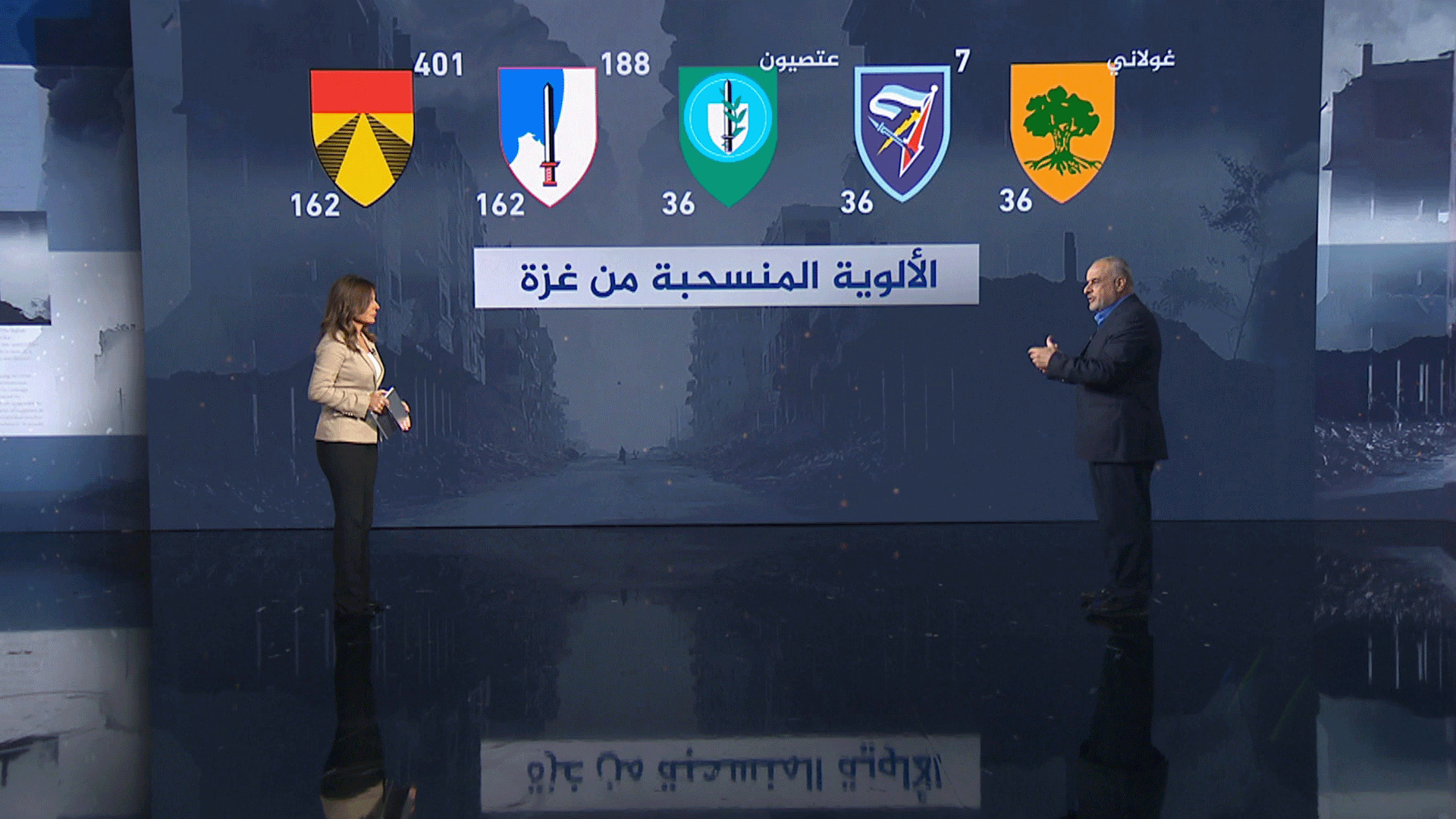
He explained that these brigades include the 36th Brigade fighting south of the city, the 162nd Brigade in northern areas, the 98th Brigade in the northern sector, and the 99th Brigade positioned in the Nitsarim axis. These heavily armed brigades, supported by armored and mechanized units, have started withdrawing to pre-agreed locations.
Al-Falahi added that the Israeli army dismantled many fortified points and sites established during recent operations, especially in the Nitsarim axis, indicating that the withdrawal moved from the “blue line” towards the “yellow line” as part of a redeployment plan after disengagement with resistance factions.
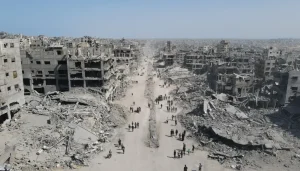
He pointed out that reopening main roads such as Al-Rashid and Salah al-Din streets is a clear indicator of the gradual return of civilian life, after rehabilitating some sections destroyed during recent battles, which facilitates the return of hundreds of thousands of displaced people who have already begun moving north towards Gaza City.
The Interior Ministry in Gaza announced that security and police forces have started spreading in areas vacated by the occupation to restore order and secure civilian movement, while the Israeli army confirmed that the withdrawal from inside cities was in implementation of the agreement sponsored by the United States, Egypt, Qatar, and Turkey.
Israeli Withdrawal
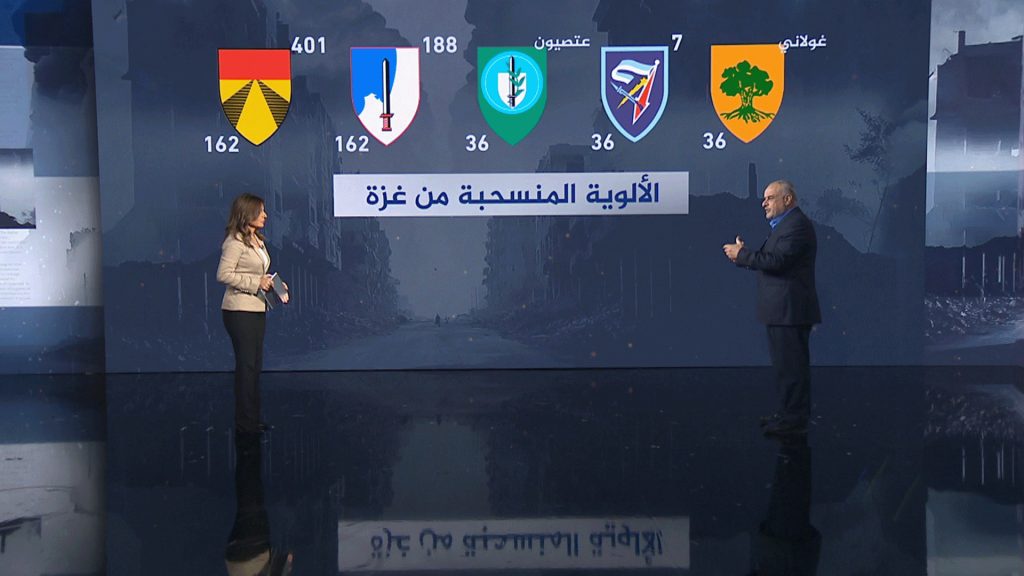
Al-Falahi explained that the Israeli withdrawal included removing most combat brigades from Gaza Strip, clarifying that the 36th Brigade withdrew with all its formations, including Golani Brigade, Etzion Brigade, the 7th Armored Brigade, and the 188th Brigade, as well as the armored 401st Brigade from the 162nd Brigade, one of its main offensive units.
He confirmed that this withdrawal means a broad repositioning within a new deployment plan, where specific units monitor sensitive points along the contact lines, while other units are pulled back for rest and preparation for any possible field developments in the coming days.
This comes amid Israeli warnings to civilians to stay away from some areas described by the army as “extremely dangerous,” while Washington, through its envoy Steve Witkoff, announced that the Israeli army completed the first phase of its withdrawal, after which a 72-hour period will begin before the prisoner exchange operation.
Al-Falahi said the current phase is one of the most important in the agreement’s course, representing the start of a comprehensive ceasefire, followed by a partial and gradual withdrawal, as well as the initiation of a prisoner exchange deal and the return of the bodies of the dead.
He explained that this process requires the withdrawal of Israeli forces from areas believed to contain bodies to allow resistance factions to search for them, noting that a joint committee including the United States, Qatar, Egypt, Turkey, and Israel will oversee these arrangements and supervise their field implementation.
He added that the three-day period may be sufficient to release living prisoners but insufficient to complete the collection of bodies scattered across several areas of the Strip, which may require a temporary extension of this clause until all field procedures are completed.
Starting Point
Al-Falahi believes that the success of the first phase of the agreement depends on the accuracy of monitoring mechanisms between the parties and adherence to breach controls, noting that any field escalation could revert the situation to square one unless clear and joint deterrence mechanisms are agreed upon.
Regarding subsequent phases, Al-Falahi explained that Israel focuses on fundamental issues, most notably disarming Hamas and preventing its participation in upcoming administrative arrangements for managing the Strip, a matter the resistance views as a red line that cannot be compromised.
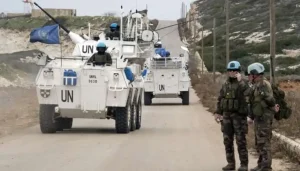
He pointed out that the plan also includes forming an international force comprising Arab units operating under a UN resolution to ensure stability, emphasizing that implementing such a proposal requires mutual approval from both sides and precise understandings about the nature of these forces’ work.
Al-Falahi considered that the upcoming visit of US President Donald Trump to the region next week will be decisive in consolidating the agreement, especially since US and international pressures were the main factors pushing Netanyahu’s government to accept the truce.
He regarded continued international support, especially from influential countries such as Qatar, Turkey, Egypt, and Pakistan, as the real guarantee against the collapse of the agreement and for completing its subsequent phases.

Recommended for you
Talib Al-Rifai Chronicles Kuwaiti Art Heritage in "Doukhi.. Tasaseem Al-Saba"
Exhibition City Completes About 80% of Preparations for the Damascus International Fair Launch
Al-Jaghbeer: The Industrial Sector Leads Economic Growth
Unified Admission Applications Start Tuesday with 640 Students to be Accepted in Medicine
Egypt Post: We Have Over 10 Million Customers in Savings Accounts and Offer Daily, Monthly, and Annual Returns
His Highness Sheikh Isa bin Salman bin Hamad Al Khalifa Receives the United States Ambassador to the Kingdom of Bahrain