









Khartoum – After nearly six months of supply cutoffs to El Fasher, the capital of North Darfur state, the Sudanese army managed to break the air siege imposed by the Rapid Support Forces on the city, dropping food aid and military equipment. Military experts considered this a significant intelligence achievement and a morale-boosting victory that will strengthen the resilience of the armed forces and allied factions fighting alongside them.
On Monday, the Sudanese army carried out a successful air drop of humanitarian and military aid in El Fasher. According to witnesses, a military cargo plane of the Antonov type flew over the city for about half an hour before dropping several boxes in the city, which hosts the Sixth Infantry Division and the joint Darfur movements supporting the army.
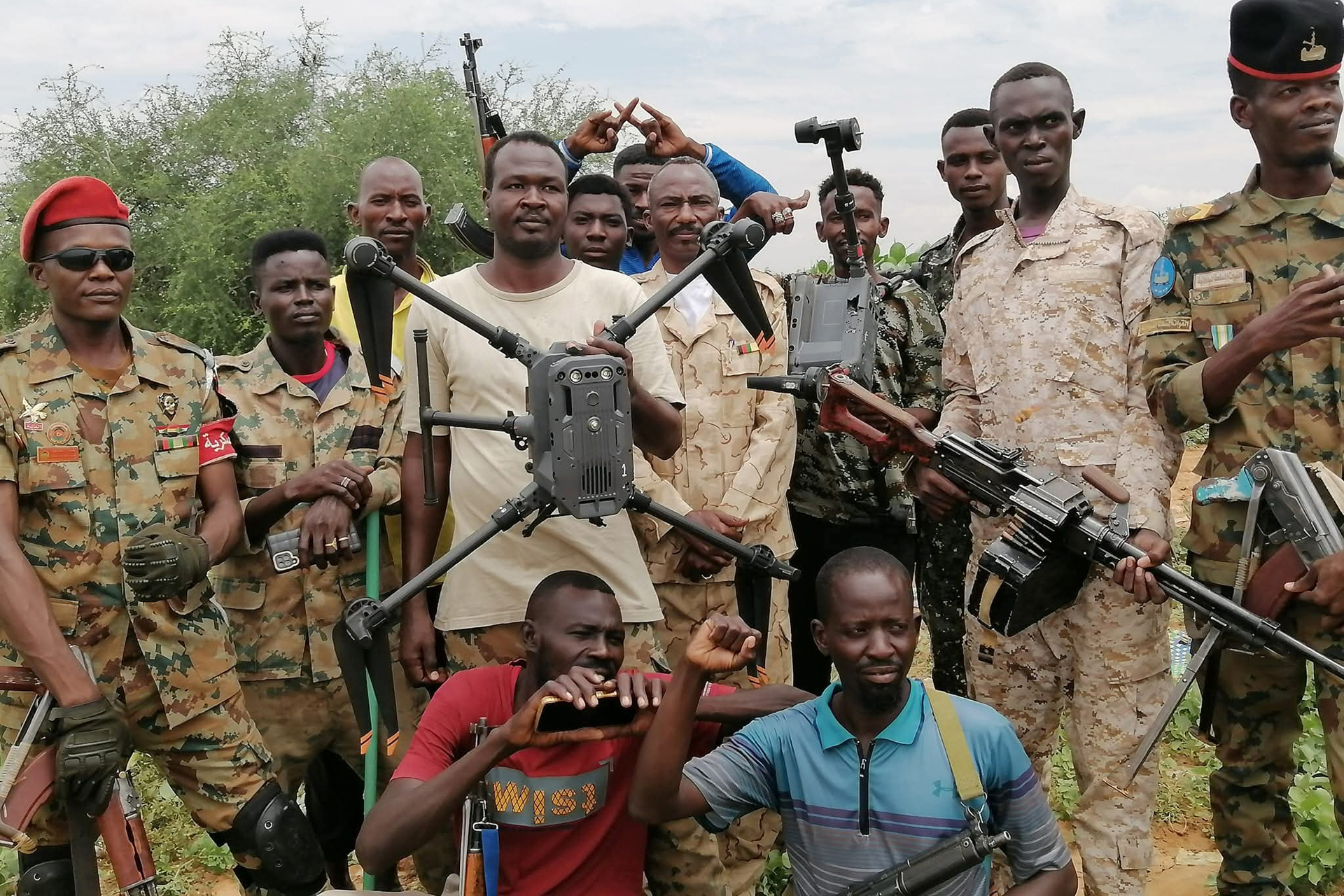
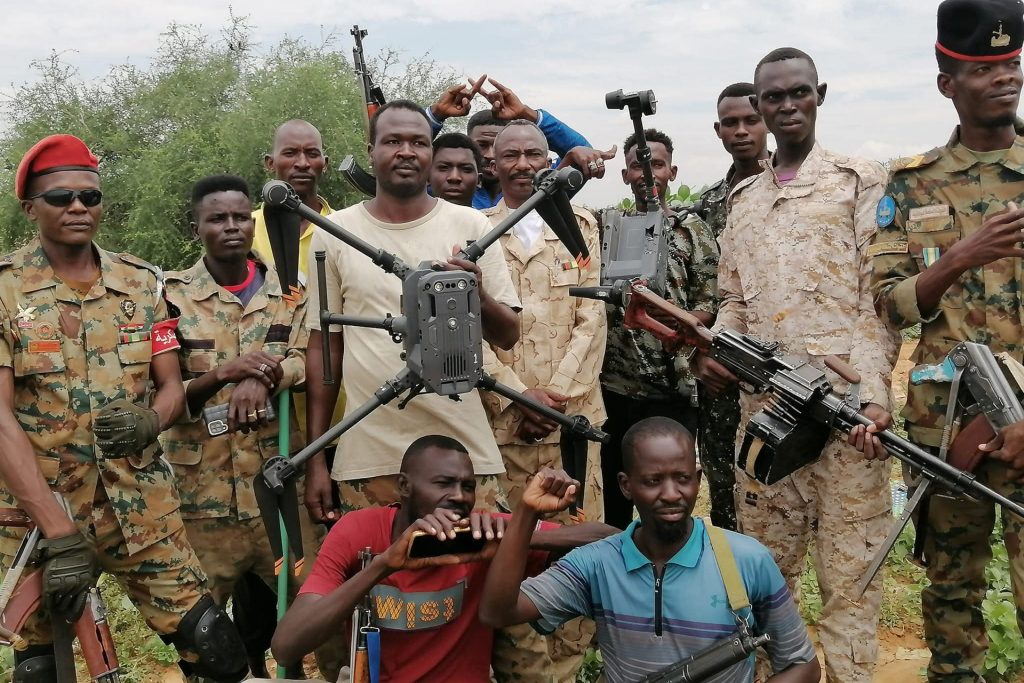
Videos showed fighters from the army and the joint forces celebrating the successful air drop and vowing to crush the Rapid Support Forces after receiving the military supplies and food provisions.
Meanwhile, platforms close to the Rapid Support Forces posted videos of their members with ammunition boxes they claimed to have seized, downplaying the army’s air drop operation and threatening to intensify attacks to control El Fasher.
Good Omens
The Sixth Infantry Division in El Fasher said the successful air drop represents an additional victory over the Rapid Support Forces in battles that have reached 247 military confrontations since the city was besieged in May 2024.
The division’s official Facebook page noted that the success of the air drop also confirmed the cohesion and unity of the armed forces and boosted the fighters’ morale.
Residents of El Fasher welcomed the army’s flight with joy, expressed through women’s ululations and chants of praise and takbir in neighborhoods. The Rapid Support Forces responded with random artillery shelling on residential areas, but citizens continued their celebrations and roaming the streets of their afflicted city.
The El Fasher Resistance Committees Coordination considered the return of the army’s warplanes after a long absence as a first sign of breaking the siege, hoping for continued air support for the besieged city, which suffers from severe shortages of food and medical supplies.
The air drop came after intensive drone activity by the army, which heavily bombarded Rapid Support Forces’ positions around El Fasher over the past four days.
The army had stopped supplying its forces in besieged El Fasher since April after Rapid Support Forces’ air defenses shot down one of its fighter jets over the city.
The Rapid Support Forces previously claimed to have installed modern air defense systems in El Fasher capable of shooting down any aircraft flying over North Darfur, while the Sudanese army accused Colombian mercenaries of operating them.
Attrition
Security and military affairs specialist, retired Brigadier General Amer Hassan Abbas, told Al Jazeera that the army’s success in air supply operations to El Fasher carries several implications, including:
- The government’s determination to support the Sixth Division, which played a major role in breaking the Rapid Support Forces’ stronghold in Darfur and neutralizing its field commanders, starting with their regional leader Ali Yacoub and many of their forces, including the injury of their deputy commander Abdel Rahim Dagalo.
- A morale boost for El Fasher citizens who have lined up to fight in defense of their city and improve their nutritional situation.
- Acceleration of attrition operations conducted by the army against the Rapid Support Forces in the city and its outskirts, which will help disrupt all administrative and operational ‘rebellion’ arrangements.
- Improvement in the Sudanese Air Force’s air mobility, which neutralizes enemy air defenses before air drop operations, striking a blow to the external qualitative support obtained by the Rapid Support Forces.
Colonel Ibrahim Al-Houri, former editor-in-chief of the Armed Forces newspaper, explained that carrying out the air drop despite jamming means the air force succeeded in a specific mission, closing a ‘temporary operational technical gap and regaining air control,’ which will affect the balance of the battle.
According to Al-Houri’s Facebook comment, the success of the air drop also has a morale effect: ‘When besieged cities see that the air force has returned and supplies have arrived after a long pause, it raises the morale of defenders and civilians and reduces the feeling of isolation.’
He added that breaking the jamming means the electronic warfare task force succeeded in temporarily overcoming the jamming technology, reflecting a major success in electronic warfare and sending a message that the army still has the ability to reach all sites and carry out supply operations, albeit limited.
Retaliatory Response
Meanwhile, military expert and former Deputy Chief of Staff of the Sudanese army, Lieutenant General Mohamed Bashir Suleiman, told Al Jazeera that what happened in El Fasher is a morale victory and an intelligence superiority that will strengthen the army and its allied joint forces’ ability to endure and defend the city, but ending the siege will not be complete without ground forces.
He added that the air drop indicates the army managed to neutralize the Rapid Support Forces’ air defense systems around El Fasher, and the ‘militia’ will need time to replace them from outside the country via eastern Libya or Chad.
Suleiman predicted that the Rapid Support Forces would carry out retaliatory operations using drones targeting El Obeid, the capital of North Kordofan, as well as civilian and military targets in Khartoum, and infrastructure and service institutions in various locations to send messages to their forces and abroad.
In this context, the Yale University Humanitarian Studies Lab reported that it monitored the Rapid Support Forces’ preparations for an imminent large-scale drone attack, documenting 43 drones and 36 launch platforms near Nyala airport as of Monday.
It noted that 23 of these resemble the ‘Shahed’ model, while 20 others were previously unobserved, warning of an imminent threat to civilians, infrastructure, and humanitarian aid in Sudan.




Recommended for you
Talib Al-Rifai Chronicles Kuwaiti Art Heritage in "Doukhi.. Tasaseem Al-Saba"
Exhibition City Completes About 80% of Preparations for the Damascus International Fair Launch
Al-Jaghbeer: The Industrial Sector Leads Economic Growth
Unified Admission Applications Start Tuesday with 640 Students to be Accepted in Medicine
Egypt Post: We Have Over 10 Million Customers in Savings Accounts and Offer Daily, Monthly, and Annual Returns
His Highness Sheikh Isa bin Salman bin Hamad Al Khalifa Receives the United States Ambassador to the Kingdom of Bahrain