




The Egyptian capital, Cairo, is set to host a comprehensive Palestinian national dialogue in the coming days to discuss the future of the Gaza Strip following the signing of a ceasefire agreement.
Palestinian sources confirmed that the conference will bring together the majority of Palestinian factions, including Hamas and Fatah. Cairo has begun preparations for this conference to determine the future of Gaza, end the division, arrange the post-war phase, and address issues related to the future of the Palestinian cause.
Participants will also discuss arrangements within the factions, especially Hamas, the Palestine Liberation Organization, rehabilitating the Palestinian Authority to suit the upcoming phase, and reaching a consensus formula among factions to enable collective work that helps address humanitarian and service conditions inside Gaza.
Hossam Badran, head of Hamas’ National Relations Office and a member of its political bureau, stated that the movement is keen on a comprehensive national dialogue in Cairo to discuss all details related to the ceasefire agreement and future plans, ensuring consensus on upcoming steps and stages. He emphasized that any Palestinian decision must express unity and include all factions, elites, and the Palestinian people.
Authority to Manage Gaza
Major General Mohamed Al-Masri, head of the Palestinian Center for Research and Strategic Studies, said the Cairo conference will not discuss the administrative authority structure that will govern Gaza after the war ends, as there was a prior agreement between Egypt, the Palestinian Authority, and factions on the names joining the authority. There are 15 names of Palestinian technocrats residing in Gaza who will participate in this authority, supervised by Dr. Majid Abu Ramadan, Palestinian Deputy Prime Minister and Minister of Health.
Al-Masri added that the issue of Hamas’ weapons was raised within a broader diplomatic and Arab movement during a conference held in New York, attended by about 22 countries, plus Turkey and Qatar, as two countries with ties and influence on the Palestinian cause.
Weapon Freeze
The expected discussion in Cairo includes proposals to freeze weapons or store them in specific warehouses under Egyptian or Arab supervision or supervisory mechanisms including Palestinians and the Authority, but these proposals are still under discussion.
Regarding Gaza’s future, Al-Masri said the final decision must be in the hands of the Palestinians themselves, considering that any external plans will remain weak in impact without Palestinian approval. He confirmed that Arab countries officially deal with the Palestinian legitimacy represented by the Palestinian Authority and its president Mahmoud Abbas. He explained that recognition of the Palestinian state and support from countries like Saudi Arabia, France, Britain, and Australia represents strong political support for the Authority and strengthens its position.
Roadmap
He pointed out that Palestinian President Mahmoud Abbas has set a roadmap for the upcoming period, including holding legislative and presidential elections one year after the ceasefire on Gaza. He added that every candidate must commit to the political program of the PLO and international agreements and resolutions, as international recognition does not accept partial or selective recognition.
Major General Al-Masri concluded by emphasizing that Palestinians must unite under the Arab umbrella, and any faction wishing to govern Gaza or the West Bank must abide by a political agreement decided by an elected leadership.
Palestinian Police
Dr. Ahmed Rafiq Awad, head of the Jerusalem Center for Studies, indicated that the Cairo conference will discuss implementing former US President Donald Trump’s plan, Israeli withdrawal, and Hamas’ weapons, which remain contentious.
He said there is an Arab vision considering the idea of holding the factions’ weapons in custody under Arab-Palestinian supervision.
He explained that a Palestinian police force will be responsible for security in the Gaza Strip under Arab and international supervision, and the conference will discuss how to support this police. He said Hamas will only hand over its weapons to a trusted Palestinian entity, which will be discussed at the conference. He added that Hamas has already begun discussing the handover idea openly.
Awad confirmed that Palestinian-Palestinian dialogue requires full Arab support and Egyptian sponsorship to discuss security arrangements and border control, with the necessity of involving other Arab parties and influential countries such as Saudi Arabia and the Gulf states. He noted that Egypt is currently involved in training the Palestinian police and forming the committee that will manage the Gaza Strip, making it essential for the Palestinian national dialogue conference to be held on its territory.
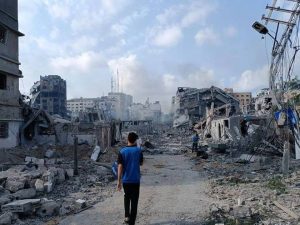
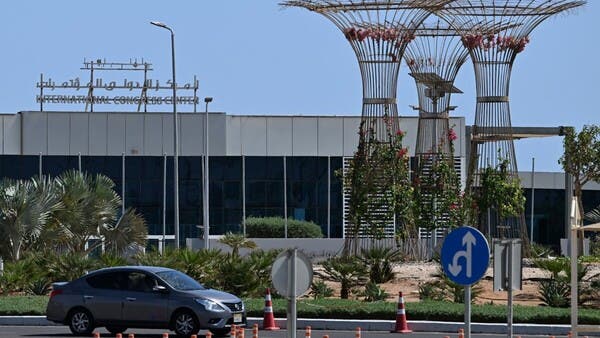
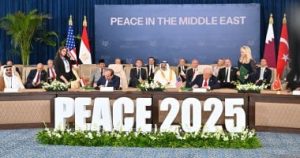
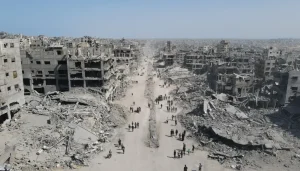
This anticipated conference follows intensive and indirect negotiations in Sharm El-Sheikh between Israel and Hamas, sponsored by mediators (Egypt, Qatar, the United States, with Turkish participation), which led to the announcement last Wednesday of agreement on the first phase of the US plan to stop the war in the devastated Palestinian sector.
Recommended for you
Talib Al-Rifai Chronicles Kuwaiti Art Heritage in "Doukhi.. Tasaseem Al-Saba"
Exhibition City Completes About 80% of Preparations for the Damascus International Fair Launch
Al-Jaghbeer: The Industrial Sector Leads Economic Growth
Unified Admission Applications Start Tuesday with 640 Students to be Accepted in Medicine
Egypt Post: We Have Over 10 Million Customers in Savings Accounts and Offer Daily, Monthly, and Annual Returns
His Highness Sheikh Isa bin Salman bin Hamad Al Khalifa Receives the United States Ambassador to the Kingdom of Bahrain