










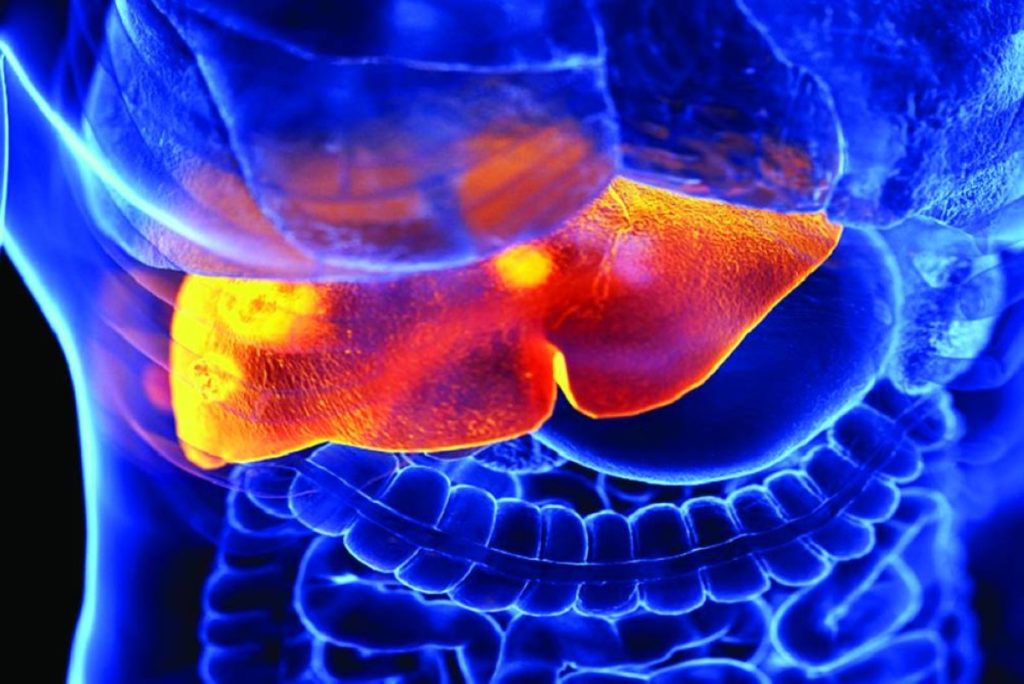
In a revolutionary step towards combating the “silent killer,” a large Swedish-Finnish study revealed a simple routine blood test with an astonishing ability to predict the risk of severe and serious liver diseases, such as cirrhosis and cancer, up to ten years before any symptoms appear. This new tool, called “CORE,” promises to end the era of late diagnosis of liver diseases.
Liver Enzymes
The liver is known for its tremendous resilience and ability to endure damage without showing clear symptoms for many years. This silence often leads to diagnosis at late stages, where irreversible scarring (fibrosis) has already worsened, significantly reducing treatment chances. Here, the “CORE” test changes the game, relying not on complex or expensive techniques but focusing on basic factors easily measured during routine health check-ups.
There are three common liver enzymes: AST, ALT, and GGT. Elevated levels of these enzymes in the blood indicate damage and inflammation in liver cells, often due to fatty liver or excessive alcohol consumption. The results of these five factors are entered into the “CORE” calculator, an advanced statistical tool. The algorithm analyzes this data to determine the likelihood of the patient developing serious liver conditions (such as cirrhosis or the need for a liver transplant) within ten years.
Unprecedented Accuracy
The study, published in a prestigious scientific journal and involving follow-up data of more than 480,000 people over 30 years, showed that the “CORE” model’s accuracy in predicting risk reached 88%, significantly outperforming currently used traditional methods like the FIB-4 calculator.
Most patients who develop serious liver diseases are only diagnosed when they arrive at the hospital with severe symptoms, too late for effective treatment. Therefore, “CORE” provides primary care physicians—who see most patients for routine check-ups—with a powerful tool to identify hidden warning signs silently accumulating inside the liver. When a patient is identified as “high risk” early, with this 10-year lead time, doctors can immediately intervene with non-surgical preventive measures, such as radical lifestyle changes (diet and exercise to reduce liver fat).
Professor Hanis Hagstrom, lead researcher at the Karolinska Institute, says “CORE” represents “an important step towards enabling early liver disease screening in primary care.” For millions worldwide at risk of fatty liver disease (due to obesity and diabetes), this simple test offers a beacon of hope to transform a “silent” disease into a “preventable” one.




Recommended for you
Talib Al-Rifai Chronicles Kuwaiti Art Heritage in "Doukhi.. Tasaseem Al-Saba"
Exhibition City Completes About 80% of Preparations for the Damascus International Fair Launch
Al-Jaghbeer: The Industrial Sector Leads Economic Growth
Unified Admission Applications Start Tuesday with 640 Students to be Accepted in Medicine
Egypt Post: We Have Over 10 Million Customers in Savings Accounts and Offer Daily, Monthly, and Annual Returns
His Highness Sheikh Isa bin Salman bin Hamad Al Khalifa Receives the United States Ambassador to the Kingdom of Bahrain