





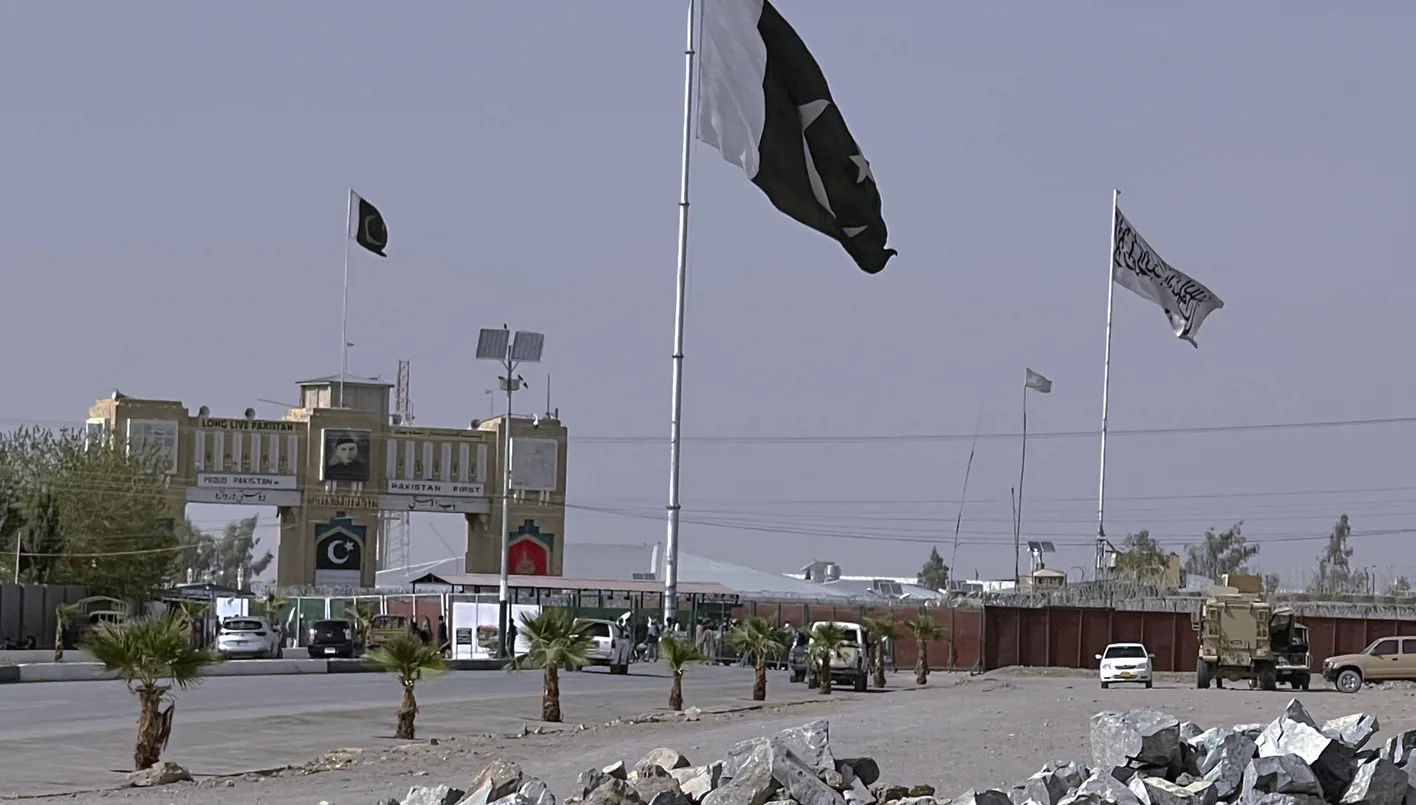
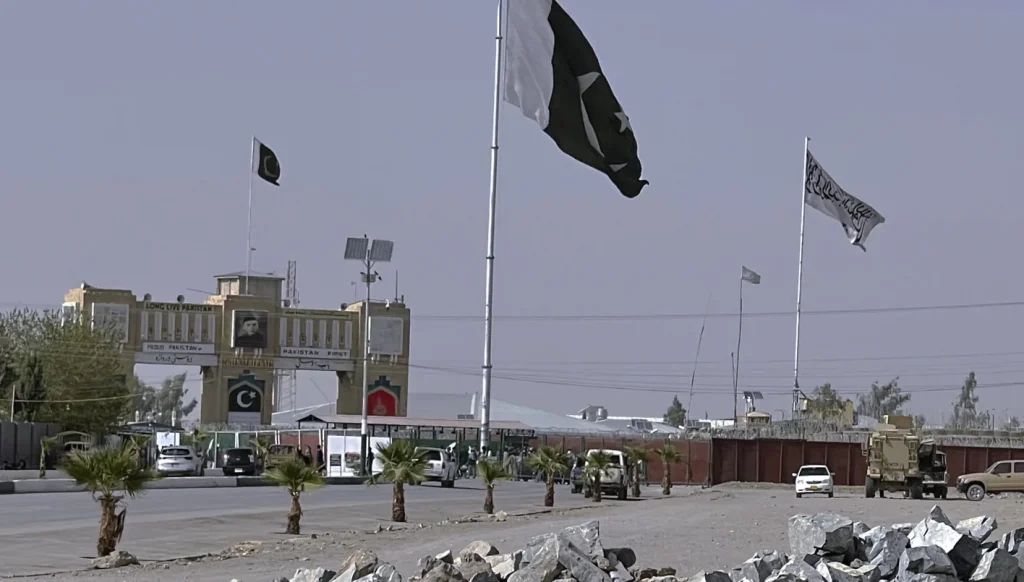
The Taliban government announced the end of the military operation launched on Saturday against Pakistan along the shared border between the two countries, in response to airstrikes attributed to Islamabad targeting Kabul, according to the Taliban Ministry of Defense via AFP.
The spokesperson for the Ministry of Defense, Inayatullah Khwarazmi, stated that the armed forces of the Islamic Emirate successfully conducted operations against Pakistani security forces along the Durand Line, in response to repeated violations and airstrikes targeting Afghan territory initiated by the Pakistani army. He added that the operation ended at midnight but warned that their forces are ready to respond firmly if Afghan territory is violated again.
Earlier, local officials in Kunar, Nangarhar, Paktia, Khost, and Helmand provinces—all located along the Durand Line—reported “intense clashes.” A senior official in Peshawar, Khyber Pakhtunkhwa province, bordering Afghanistan, said Taliban forces began using light weapons and then heavy artillery at four border sites. Pakistani forces responded with heavy fire and shot down three Afghan drones suspected of carrying explosives.
Iranian Foreign Minister Abbas Araghchi called on Afghanistan and Pakistan to exercise restraint amid the clashes, noting that stability between the two countries contributes to regional stability. Saudi Arabia also urged restraint, avoidance of escalation, and prioritizing dialogue and wisdom to reduce tensions and maintain regional security and stability.
The escalation began Thursday following two explosions in Kabul and a third in southeastern Afghanistan. On Friday, the Taliban Ministry of Defense blamed Pakistan for these attacks, accusing the neighboring state of violating its sovereignty. Islamabad denied involvement but called on Kabul to stop harboring members of the Pakistani Taliban.
Islamabad accuses the Pakistani Taliban, who share the same ideology as their Afghan counterparts and trained in Afghanistan, of causing the deaths of hundreds of soldiers since 2021. In recent months, the Pakistani Taliban have intensified violence against Pakistani security forces in mountainous areas bordering Afghanistan. Islamabad considers the Taliban’s return to power in Kabul in summer 2021 as a factor in escalating the fighting.
Kabul denies these accusations, accusing Islamabad of supporting terrorist groups, especially ISIS. A UN report earlier this year stated that the Pakistani Taliban receive significant logistical and operational support from the de facto authorities, referring to the Taliban government in Kabul.
Pakistani Defense Minister Khawaja Muhammad Asif told parliament on Thursday that multiple efforts to convince the Afghan Taliban authorities to stop supporting the Pakistani Taliban had failed. He said, “We will no longer tolerate this,” calling for unity in responding to those facilitating them, whether their hideouts are on Pakistani or Afghan soil. He warned that any response could cause collateral damage and that everyone, including those providing sanctuary, must bear the consequences.
2024 has been the deadliest year in nearly a decade for casualties caused by extremist violence in Pakistan, with over 1,600 people killed, mostly soldiers.

Recommended for you
Talib Al-Rifai Chronicles Kuwaiti Art Heritage in "Doukhi.. Tasaseem Al-Saba"
Exhibition City Completes About 80% of Preparations for the Damascus International Fair Launch
Al-Jaghbeer: The Industrial Sector Leads Economic Growth
Unified Admission Applications Start Tuesday with 640 Students to be Accepted in Medicine
Egypt Post: We Have Over 10 Million Customers in Savings Accounts and Offer Daily, Monthly, and Annual Returns
His Highness Sheikh Isa bin Salman bin Hamad Al Khalifa Receives the United States Ambassador to the Kingdom of Bahrain