






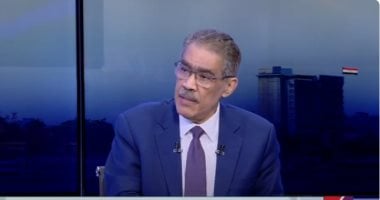
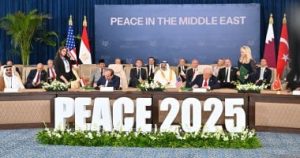
Senior journalist Diaa Rashwan affirmed that President Abdel Fattah El-Sisi’s speech during the “Sharm El-Sheikh Peace Summit” was directed not only to world leaders but also to the Israeli people, urging them to support the peace process as the only solution to end the cycle of conflict.
In an exclusive interview with the program “Studio Extra” on “eXtra news” channel, Rashwan explained that President Sisi’s phrase “True leadership is not in waging wars but in the ability to end them” summarizes Egypt’s vision of international relations. He added that true power is not only military but the “comprehensive power” that a state possesses, which deters others from waging war against it.
Rashwan emphasized that Egypt was keen to distinguish between addressing the humanitarian “tragedy” in Gaza and radically solving the Palestinian “issue.” While Egypt moved immediately to confront the humanitarian disaster, it did not neglect to propose the political track as the only solution to the conflict, which was reflected in the president’s reaffirmation of Egypt’s core positions.
Rashwan considered that President Sisi’s reiteration of Egypt’s core positions — the right to self-determination, an independent state within the 1967 borders with East Jerusalem as its capital — before U.S. President Donald Trump was a highly significant message to the world. He pointed out that President Trump, who was previously unaware of the region’s complexities, began to understand the reality of the situation through the direct communication enabled by the summit, which explains the noticeable change in his statements and his repeated affirmation that “the war is over.”
Regarding the president’s call to hold an international conference to rebuild Gaza, Rashwan described it as a “procedural and practical” step that places the world before its responsibilities. He said, “No one will rebuild something only for it to be destroyed again,” stressing that the United States’ participation as a sponsor of the conference makes it a guarantor against the outbreak of war again, paving the way for the political track.
Rashwan concluded by saying that the Sharm El-Sheikh summit, led by Egypt, was not just a diplomatic meeting but a new starting point for a real peace process in the Middle East, relying on practical and realistic solutions instead of managing the conflict.

Recommended for you
Talib Al-Rifai Chronicles Kuwaiti Art Heritage in "Doukhi.. Tasaseem Al-Saba"
Exhibition City Completes About 80% of Preparations for the Damascus International Fair Launch
Al-Jaghbeer: The Industrial Sector Leads Economic Growth
Unified Admission Applications Start Tuesday with 640 Students to be Accepted in Medicine
Egypt Post: We Have Over 10 Million Customers in Savings Accounts and Offer Daily, Monthly, and Annual Returns
His Highness Sheikh Isa bin Salman bin Hamad Al Khalifa Receives the United States Ambassador to the Kingdom of Bahrain