








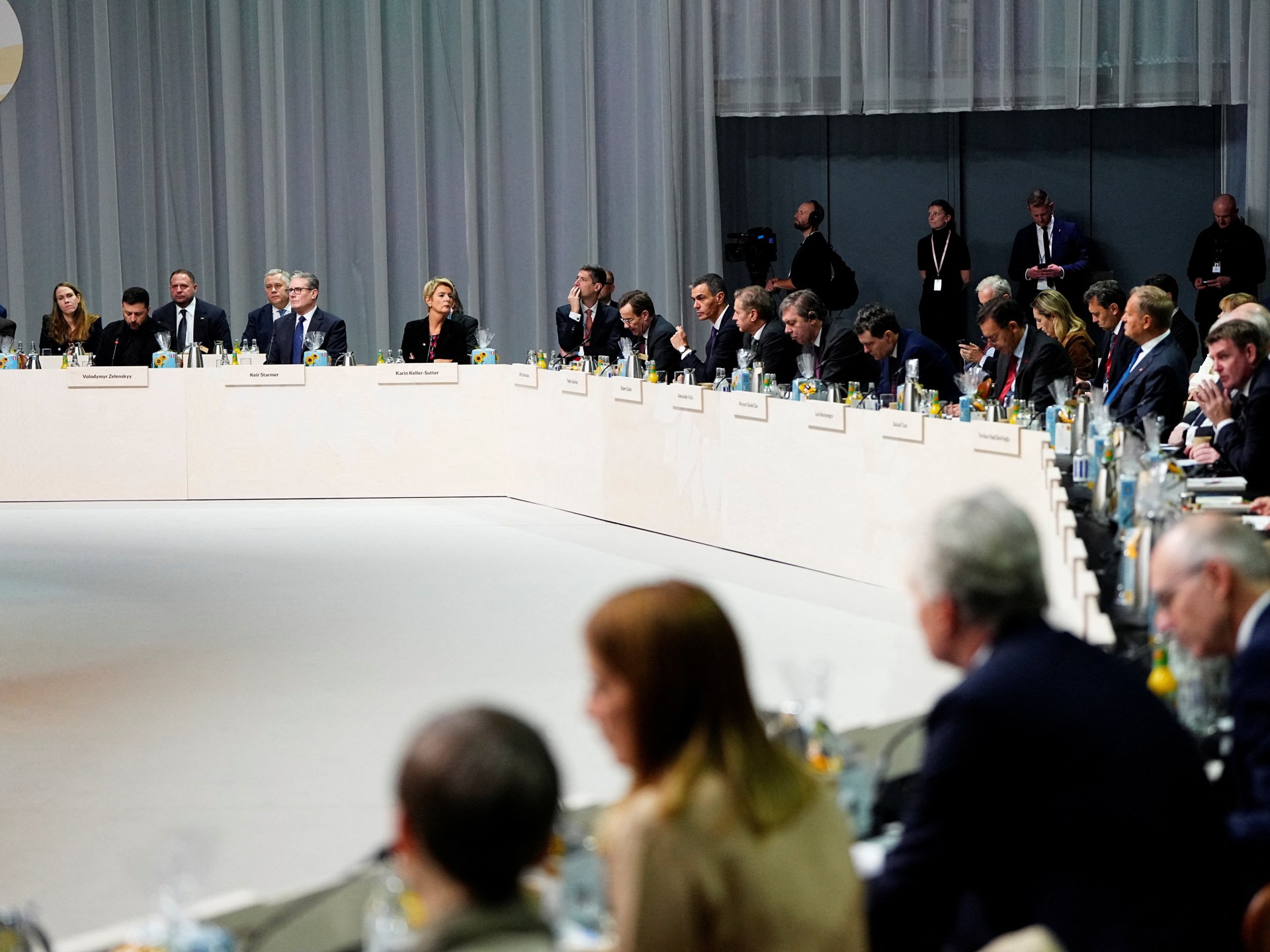
Ukrainian President Volodymyr Zelensky warned that “recent drone incursions in Europe show that Russia is seeking escalation,” urging Europeans to respond firmly.
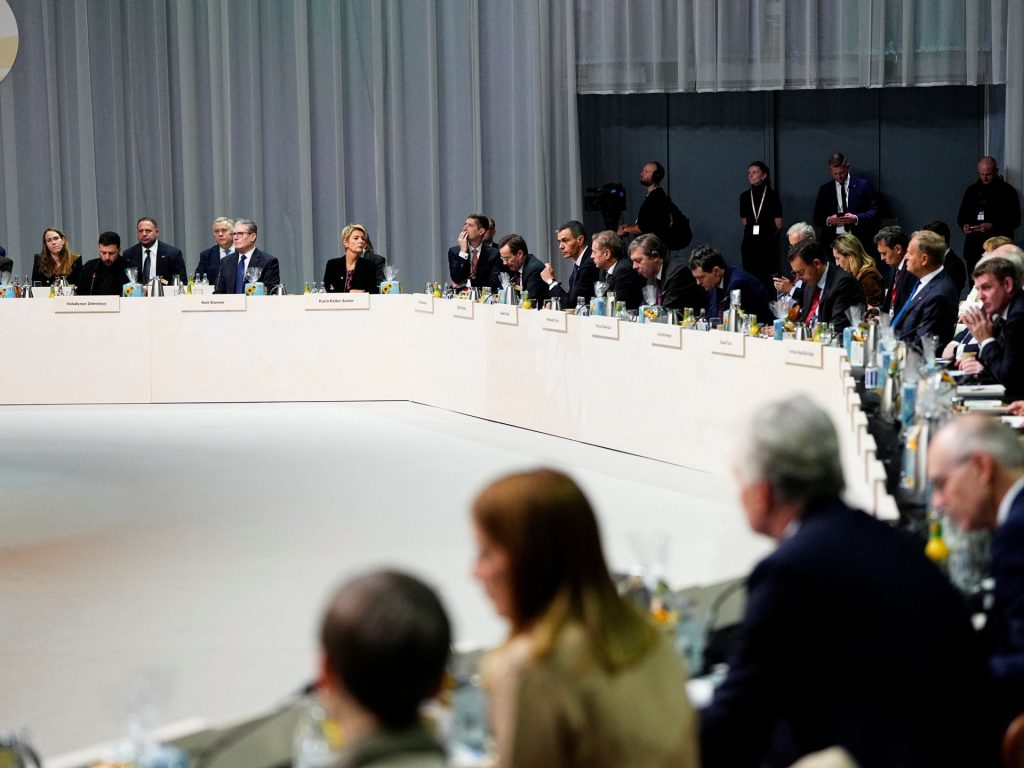
He made these remarks on Thursday during an informal European summit hosted in Copenhagen, which featured varying degrees of interventions from leaders of France, Germany, Poland, and Belgium.
Zelensky described Moscow’s strategy as “simply: to divide Europe,” stressing that the required response is “to do exactly the opposite.”
He recalled that Ukrainian soldiers were sent to Denmark to assist Copenhagen after mysterious drones were detected in its airspace, saying “this is just the beginning, the first step towards building an anti-drone wall to protect all of Europe,” referring to his country’s development of unique drones after more than three years since the Russian invasion began.
The Ukrainian president said, “When we talk about the anti-drone wall, we are talking about the whole of Europe, not just one country.”
He concluded, “Please, let’s work together on coordinated solutions to make this possible.”
These statements came after a series of incursions into European airspace, including about 20 drones in Poland, prompting Brussels to propose creating an “anti-drone wall” at the EU level.
Romanian Prime Minister Nicolae Ciucă, whose country also experienced drone breaches, pledged that his forces “will shoot down any new drone violating its airspace.”
The idea of an “anti-drone wall” received support from several member states but met with reluctance from others, including Germany, where Chancellor Friedrich Merz expressed “reservations,” questioning the project’s cost and the EU’s authority to implement it, according to a European source.
At the same summit, French President Emmanuel Macron stated that “drones violating European airspace can be destroyed. Period.”
Macron called on Europeans to closely coordinate with NATO “to increase pressure” on the shadow fleet of ships that allows Russia to export its oil despite Western sanctions.
Southern European countries expressed concern about being marginalized in the “anti-drone wall” project, which primarily focuses on countries geographically close to Russia.
In this context, the European Commission proposed using frozen Russian assets in Europe to guarantee a €140 billion loan to Ukraine.
The proposal exempts Kyiv from repaying this debt unless Russia later pays war reparations.
Although most EU countries support the proposal, Belgium, where most frozen Russian assets in Europe are concentrated, has significant reservations.
Belgian Prime Minister Bart De Wever said Thursday he is awaiting guarantees before giving his approval, warning that “if this does not happen, other means to finance Ukraine will have to be found.”
The same applies to Luxembourg, whose Prime Minister Xavier Bettel said Wednesday he still has “many questions” to ask before giving the green light.
Recommended for you
Al-Jaghbeer: The Industrial Sector Leads Economic Growth
Talib Al-Rifai Chronicles Kuwaiti Art Heritage in "Doukhi.. Tasaseem Al-Saba"
Exhibition City Completes About 80% of Preparations for the Damascus International Fair Launch
Unified Admission Applications Start Tuesday with 640 Students to be Accepted in Medicine
Egypt Post: We Have Over 10 Million Customers in Savings Accounts and Offer Daily, Monthly, and Annual Returns
His Highness Sheikh Isa bin Salman bin Hamad Al Khalifa Receives the United States Ambassador to the Kingdom of Bahrain