







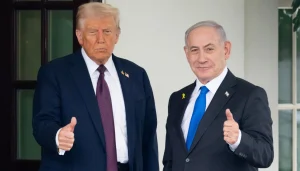



Is the Russo-Ukrainian conflict heading towards expansion? (AFP)
There is a shadow war ongoing between Russia and Europe. From mysterious drones that NATO member states accuse Moscow of launching into their airspace, to increasing European support for Ukraine, which will reach a critical turning point if Kyiv is supplied with American ‘Tomahawk’ missiles.
Accordingly, warnings multiply and accelerate. Last week, German Chancellor Friedrich Merz said: “We are not at war (with Russia), but we are not at peace.” Danish Prime Minister Mette Frederiksen described the current situation as “the toughest in Europe since World War II while time is running out for us.”
European leaders accuse Russia of waging a “hybrid” war against them, sometimes with drones, cyberattacks, and occasionally sabotage targeting facilities in European countries. Anxiety has sharply increased in recent weeks after Poland accused Russia of sending drones over its airspace, and Estonia announced that Russian fighters violated its airspace. Copenhagen and Munich airports were temporarily closed after drones were spotted flying overhead.
Russia officially denies being behind the mysterious drone flights, attributing them to hobbyists inside European countries and even blaming Kyiv itself, claiming Ukraine plans provocations to drag NATO countries into war.
NATO and the European Union are mobilizing their capabilities to build a wall against the mysterious drones. They consider Russia’s resort to this method as a sign of weakness and uncertainty, not strength and determination. It expresses Russian frustration over European support for Ukraine, which in recent months has managed to put half of Russia’s oil refineries out of service, affecting Russian energy exports, a vital lifeline for funding the war in Ukraine, in addition to imposing rationing programs on oil derivatives in Russian cities.
The situation is poised for further escalation if European countries purchase American ‘Tomahawk’ missiles from the United States and send them to Ukraine. Former US President Donald Trump, who does not hide his disappointment over Russian President Vladimir Putin’s lack of response to his efforts to stop the war, showed readiness to consider the issue of selling missiles to Europe to forward them to Kyiv.
‘Tomahawk’ missiles have a range of 2,500 kilometers, meaning they can strike targets in Moscow, St. Petersburg to the north, and Volgograd to the south. Ukrainian President Volodymyr Zelensky warned Russians to start looking for shelters now. Moscow responded by conducting strategic maneuvers with Belarus.
Putin quickly warned Washington against taking such a step that would cause a real shift in the course of the war. He said Russian-American relations would then reach their worst phase. The Kremlin did not rely only on warnings but also took a flexible approach by proposing to Trump to extend the Strategic Arms Reduction Treaty for an additional year after Russia had announced its withdrawal in response to Western sanctions.
Adding fuel to the fire was Trump’s announcement that Ukraine could expel Russian forces from all its territory. This was not his view when he returned to the White House nine months ago, when he blamed Zelensky for fueling the war and had a famous confrontation with him at the White House in February.
It is worth noting that these developments come after the failure of the summit between Trump and Putin in Alaska on August 15 last year to reach a ceasefire agreement. The US president admitted last month that he thought finding a settlement would be easy, only to discover how difficult it was.
After more than three and a half years of war, it appears that the Russo-Ukrainian conflict is not dying down but heading towards expansion with any miscalculation.


Recommended for you
Al-Jaghbeer: The Industrial Sector Leads Economic Growth
Talib Al-Rifai Chronicles Kuwaiti Art Heritage in "Doukhi.. Tasaseem Al-Saba"
Exhibition City Completes About 80% of Preparations for the Damascus International Fair Launch
Unified Admission Applications Start Tuesday with 640 Students to be Accepted in Medicine
Egypt Post: We Have Over 10 Million Customers in Savings Accounts and Offer Daily, Monthly, and Annual Returns
His Highness Sheikh Isa bin Salman bin Hamad Al Khalifa Receives the United States Ambassador to the Kingdom of Bahrain