









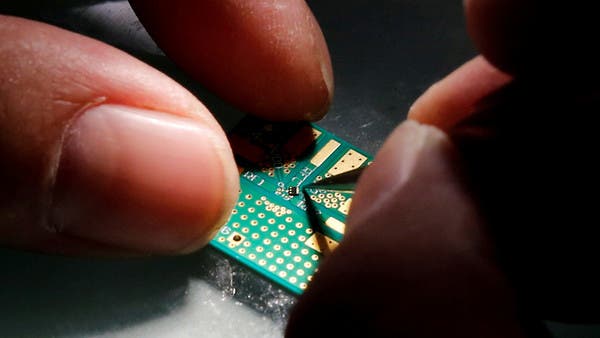
The Trump administration is pressuring Taiwan to shift its semiconductor investments and production to the United States, aiming to manufacture half of America’s chips domestically.
Washington has held discussions with Taipei about a “50-50” split in semiconductor production, which would significantly reduce the US’s reliance on Taiwan, according to US Commerce Secretary Howard Lutnick in an interview with News Nation published over the weekend.
Taiwan reportedly produces more than 90% of the world’s advanced semiconductors, a fact that concerns Lutnick due to Taiwan’s geographic distance from the US and proximity to China.
Lutnick said, “My goal, and this administration’s goal, is to bring chip manufacturing significantly back home – we need to make our own chips.”
He added, “The idea I proposed to Taiwan is: let’s get to a 50-50 split. We produce half, and you produce the other half.”
Lutnick aims to reach about 40% domestic semiconductor production by the end of President Donald Trump’s current term, which will require local investments exceeding $500 billion, he said.
Taiwan’s dominance in chip production is credited to Taiwan Semiconductor Manufacturing Company (TSMC), the world’s largest and most advanced contract chipmaker, producing for major US tech firms like Nvidia and Apple.
Taiwan’s pivotal role in global chip production is believed to have secured its defense against any direct military action from China, often referred to as the “Silicon Shield” theory.
However, in his interview with News Nation, Lutnick downplayed the “Silicon Shield” and argued that Taiwan would be safer with a more balanced chip production between the US and Taiwan.
Lutnick said, “My argument to them was: well, if you have 95% of chip production, how can I protect you? Will you transport it by plane? Or by boat?”
Under the 50-50 plan, America would still be “primarily dependent” on Taiwan but would have the capability to “do what is necessary, if needed,” he added.
More in exchange for defense
Last year, then-presidential candidate Trump stated in an interview that Taiwan should pay the US for defense and accused it of “stealing” American chip trade.
The US once led the global semiconductor market but lost market share due to industry shifts and the rise of Asian giants like TSMC and Samsung.
TSMC has been building manufacturing facilities in the US since 2020 and continues to increase its investments in the country.
It announced plans in March to invest an additional $100 billion, bringing its total planned investments to $165 billion.
The Trump administration recently proposed a 100% tariff on semiconductors but exempted companies investing in the US from the fees.
The US and Taiwan remain in trade negotiations likely to affect tariff rates imposed on Taiwanese companies.



Recommended for you
Talib Al-Rifai Chronicles Kuwaiti Art Heritage in "Doukhi.. Tasaseem Al-Saba"
Exhibition City Completes About 80% of Preparations for the Damascus International Fair Launch
Al-Jaghbeer: The Industrial Sector Leads Economic Growth
Unified Admission Applications Start Tuesday with 640 Students to be Accepted in Medicine
Egypt Post: We Have Over 10 Million Customers in Savings Accounts and Offer Daily, Monthly, and Annual Returns
His Highness Sheikh Isa bin Salman bin Hamad Al Khalifa Receives the United States Ambassador to the Kingdom of Bahrain