




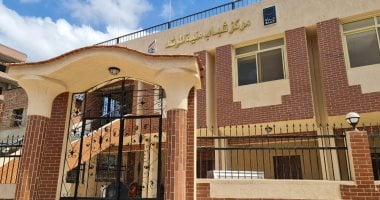
The state has revitalized the Hayah Kareema villages across all Egyptian governorates, especially in Matoubes center. After years of neglect and abandonment, residents had not seen such diverse service projects. The villages now resemble new towns, meeting residents’ needs without traveling to district centers or the governorate. All services are provided through technology centers, along with natural gas and fiber optic connections, improved drinking water, and housing units for families living in substandard homes that do not protect them from winter cold or rain.
Matoubes villages in Kafr El Sheikh Governorate are witnessing a radical transformation through the implementation of more than 603 projects under the presidential program “Hayah Kareema” across 12 service sectors in 18 villages and 187 affiliated areas within Matoubes center. This initiative aims to develop the Egyptian countryside as directed by President Abdel Fattah El-Sisi. The state exerts great efforts in rural development with a 98% completion rate. Four other centers in the second phase—Kafr El Sheikh, Desouk, Sidi Salem, and Hamoul—are awaiting the start of the second phase projects under continuous supervision by Major General Dr. Alaa Abdel Moti, Governor of Kafr El Sheikh.
Matoubes center includes 18 villages distributed over 5 local units with a total of 187 villages and affiliated areas, housing 357,530 people, about 10% of the governorate’s population. Rural residents constitute 93.6% of the population (330,164 people). The center covers an area of 363.73 km², about 10% of the governorate’s area. Its administrative borders are 38 km north on the Mediterranean Sea, south by Fouh and Sidi Salem cities, 42 km west along the Nile River’s Rosetta branch, and 35 km east along Lake Burullus.
The land allocation status for Hayah Kareema projects is divided into three types, with a total of 319 land plots requested. The completion rate for the 603 projects is 98%.
The projects cover 12 sectors, including 54 schools (24 new and expansions, 30 comprehensive maintenance), 45 sanitation projects, 15 canal lining projects, 26 bridges, and 22 drinking water improvement projects.
Service complexes were built with 100% completion in villages such as Al-Jazeera Al-Khadra, Al-Battarat, Barnbal, Menyet Al-Morshed, and Bani Bakar. Agricultural complexes were also completed at 100% in Menyet Al-Morshed, Bani Bakar, Barnbal, and Al-Jazeera Al-Khadra. Youth and sports projects include 17 initiatives such as youth centers and artificial turf fields, all completed at 100%. Six ambulance units were established, and in the medical sector, 10 health units were renovated, and 23 health units and medical centers were developed or built. Natural gas projects number 18, and 7 social solidarity units were established in family development centers in Babiana, Al-Jazeera Al-Khadra, Al-Rous, Abu Donia, and Bani Bakar.
18 residential buildings were completed: 9 in Al-Jazeera Al-Khadra, 3 in Barnbal, 5 in Menyet Al-Morshed, and 1 in Al-Qani. Five fire units were built in Barnbal, Al-Battarat, Bani Bakar, Menyet Al-Morshed, and Al-Jazeera Al-Khadra. Four bus stops with shelters are under construction in Barnbal, Bani Bakar, Menyet Al-Morshed, and Al-Jazeera Al-Khadra.
The villages also saw the establishment of unified government headquarters as part of the national program to develop Egyptian rural villages “Hayah Kareema”, including Bani Bakar and Al-Basrat villages. Bridges are being constructed and renovated alongside canal lining, sanitation, and water improvement works.
Communications, Post Offices, Electricity Upgrades, and Rural Unit Development Projects
Matoubes villages are witnessing 18 projects in the communications sector, 20 projects to improve and upgrade electricity including transformer installations, 9 post offices, and 14 projects related to local development and upgrading village council sites, including 5 civil protection units, 5 model markets, and 4 bus stops currently under construction. Road paving and rehabilitation are ongoing.
Road paving plans for main roads between villages and within all villages have been reviewed. Fiber optic connections and equipment availability have been checked with emphasis on accelerating work and increasing execution rates in unfinished villages. Civil protection units, markets, and bus stop projects were reviewed, and obstacles to implementation at some sites were removed.
The Matoubes Central Hospital is under construction with a cost exceeding 1 billion Egyptian pounds on an area of 12,000 square meters to serve Matoubes center and nearby areas under the comprehensive health insurance system. The hospital will have 182 beds, 24 incubators, 40 dialysis chairs, and 5 operating rooms (2 general surgery, 1 specialized, 1 orthopedic, 1 cesarean). It also includes an outpatient clinic building and a nursing school.
Major General Dr. Alaa Abdel Moti, Governor of Kafr El Sheikh, said the presidential initiative “Hayah Kareema” is the cornerstone of comprehensive development in the governorate. It started in Matoubes center covering 18 rural local units with a total of 187 villages and affiliated areas benefiting more than 350,000 people. He confirmed that 603 projects have been implemented across 12 different sectors.
Mohamed Gamal Mohamed, a fisherman from Al-Jazeera Al-Khadra village, said, “We did not expect the state to care about our villages, especially since they are at the end of water outlets and lacked services. We used to go to Rashid in Beheira Governorate instead of Matoubes due to poor services and difficult road conditions. Now the state has revived our villages after years of neglect, and we see many service projects.”
Laila Mohamed Gaber, a teacher, added, “We feel improvements in services in Matoubes villages, including drinking water, sanitation projects, health units, and natural gas connections. Without the Hayah Kareema initiative and President Abdel Fattah El-Sisi’s directives, Matoubes villages would have remained marginalized. The most important change we noticed is the reduction of illegal immigration, which caused some families to lose their youth in deadly journeys. The closest site used by illegal immigration mafias has turned into the Galyoun fish farm project.”
Mohamed Abdullah Al-Bahlawan, a fisherman, confirmed, “No matter how much I describe the changes in Matoubes villages, I cannot fully express it. It used to repel youth due to lack of services but has become attractive to them. We no longer go to Rashid for our needs; the village has become a hub for multiple services, including technology centers, education, health, youth, and sports sectors.”

Recommended for you
Talib Al-Rifai Chronicles Kuwaiti Art Heritage in "Doukhi.. Tasaseem Al-Saba"
Al-Jaghbeer: The Industrial Sector Leads Economic Growth
Exhibition City Completes About 80% of Preparations for the Damascus International Fair Launch
Unified Admission Applications Start Tuesday with 640 Students to be Accepted in Medicine
Egypt Post: We Have Over 10 Million Customers in Savings Accounts and Offer Daily, Monthly, and Annual Returns
His Highness Sheikh Isa bin Salman bin Hamad Al Khalifa Receives the United States Ambassador to the Kingdom of Bahrain