








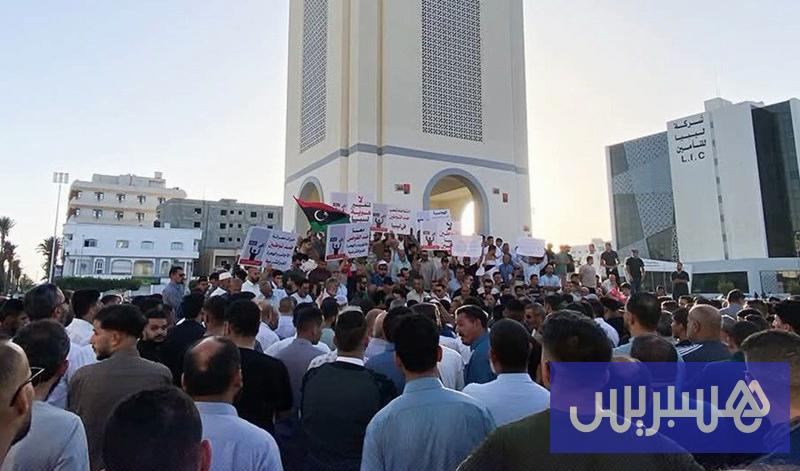
Libya is currently experiencing unprecedented social tension following angry protests last week in the cities of Misrata and Tripoli, denouncing the growing number of migrants in the country and raising slogans such as “Libya for Libyans.” These events were accompanied by mass assaults on foreign workers of African nationalities in a market in Misrata, and calls from politicians to take a firm stance on the migrant issue and ban the employment or sheltering of those without official papers.
The escalating hostile rhetoric against migrants in Libya has raised concerns among several foreign communities in this Maghreb country, including the Moroccan community, especially since many of its members have not yet regularized their legal status. This has sparked genuine fears among them that these charged atmospheres, fueled by some racist voices, could lead to harassment or targeting, either by individuals or authorities.
Reacting to this issue, Mahmoud Al-Saqotri, Mayor of Misrata, told the press that “the large increase in the number of illegal migrants is unbearable for the city, and the main responsible party is the one securing the southern borders of the country.” He added, “There are calls aimed at destabilizing the country by settling unwanted Africans in Europe, but our actions might give the green light for military intervention inside Libya.”
Meanwhile, Jaballah Al-Shaibani, a member of the Libyan House of Representatives, posted on his Facebook account that “not dealing in any way with those without official papers and legal entry into Libya contributes to eliminating migrant settlement.”
In a related context, Ahmed Abdel Hakim Hamza, President of the National Institution for Human Rights, stated in a post that “organizing the migration file is not done through violence or chaos, but by having a strong state and unified legitimate institutions. The real solution begins with pressure to build the state, so it can organize this file and not compromise its continued existence. The dignity of the homeland is preserved when its institutions are preserved, and its sovereignty is respected when its affairs are managed with wisdom, not anger.”
Regarding the concerns of Moroccans in Libya, Mohamed Hassan Al-Wathiq, Executive Director of the “Libyan-Moroccan Friendship Association,” said that “a number of Moroccans without residence papers who have spent many years in Libya now live in constant fear of assaults or harassment, especially amid recent events in some Libyan cities and intensified security campaigns targeting migrants’ residences.”
Al-Wathiq added in an interview with Hespress electronic newspaper that “the migration file in Libya is very complex because Libyan authorities lack the capabilities to manage it or even deport irregular migrants on their territory, which increases social tension within Libyan society, especially among unemployed youth who see migrants as competitors for jobs and employment positions.” He highlighted that “this issue has only recently arisen following the increase in the number of African migrants in Libya and accusations of their involvement in criminal activities.”
The same speaker noted that “the frequent news about assaults and random arrests targeting foreign migrants has made many Moroccans without residence papers consider returning home, but new laws preventing departure without paying fines for failing to regularize their legal status and renew residency prevent this.” He considered that “Moroccan authorities have not taken any notable steps or intervened with their Libyan counterparts to find a solution to this situation.”
Mohamed Jghlaf, a Moroccan resident in Libya, told Hespress electronic newspaper that “the feeling of fear has become constant among members of the Moroccan community, especially after the rise of the anti-migrant wave in Libya and the lack of residence documents for most Moroccans, which exposes us to any inspection or harassment.”
The same speaker pointed out “the growing calls among Libyans to deport foreign migrants, as they believe migrants live at their expense and benefit from some public services for free, and that their financial situation is better than that of native citizens. However, this is not true because all obligations incumbent on Libyan citizens also fall on migrants.” He emphasized that “the tightening of Moroccan authorities’ visa procedures for Libyans has exacerbated societal rejection of Moroccans in Libya.”
The migrant added that “recent decisions and measures taken by Libyan authorities, such as increasing residency renewal fees, imposing fines for non-renewal, and depriving children without official documents from schooling, indicate a general trend to restrict migrants.” He confirmed that “there are serious fears among various communities of a repeat of tragic events like those in Al-Zawiya, which led to the death of dozens of foreigners after clashes between them and Libyan citizens.”


Recommended for you
Talib Al-Rifai Chronicles Kuwaiti Art Heritage in "Doukhi.. Tasaseem Al-Saba"
Al-Jaghbeer: The Industrial Sector Leads Economic Growth
Exhibition City Completes About 80% of Preparations for the Damascus International Fair Launch
Unified Admission Applications Start Tuesday with 640 Students to be Accepted in Medicine
Egypt Post: We Have Over 10 Million Customers in Savings Accounts and Offer Daily, Monthly, and Annual Returns
His Highness Sheikh Isa bin Salman bin Hamad Al Khalifa Receives the United States Ambassador to the Kingdom of Bahrain