








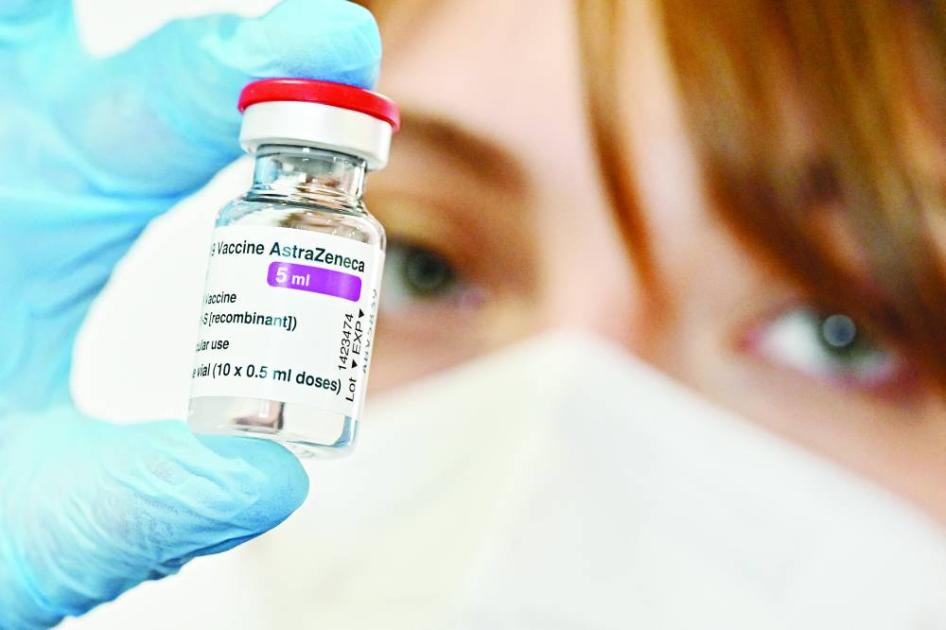
On Friday, U.S. President Donald Trump announced an agreement with the British company AstraZeneca, stating it would lead to a significant reduction in domestic drug prices in exchange for granting the pharmaceutical giant a tax exemption.
Under this agreement, which follows a similar deal announced last month with the American giant Pfizer, AstraZeneca will offer prices that adhere to the “most favored nation” principle, linking U.S. drug prices to the lowest prices in other wealthy countries, for the Medicaid program aimed at low-income Americans.
Officials added that the British pharmaceutical company agreed to participate in an online platform called “TrumpRx” that allows consumers to purchase certain drugs directly at discounted prices.
Mohamed Awad, the Trump-appointed head of Medicaid and Medicare services, said AstraZeneca will also provide significantly discounted drugs for lung diseases.
In return, Trump administration officials agreed to postpone imposing new tariffs on AstraZeneca for three years.
The company had previously announced plans to invest $50 billion in the U.S. in response to imminent tariff threats.
AstraZeneca CEO Pascal Soriot, who appeared with Trump, Awad, and other officials at a White House event on Friday, said, “Most of our products are made locally, but we need to move the remaining part to this country.”
This agreement follows a deal with Pfizer on September 30, in which the U.S. administration granted the company a three-year tariff exemption in exchange for voluntarily lowering drug prices in the United States.
High drug prices have sparked outrage in the U.S., leading to numerous legislative and administrative measures whose impact is difficult to assess.
The White House announcement related to Pfizer did not include all drugs expected to have reduced prices. An information sheet issued by the administration listed only three drugs and did not include any of Pfizer’s best-selling products in the U.S.
Pfizer and other pharmaceutical stocks rose after the September 30 announcement, indicating the measures are not seen as a major burden on these companies’ profits.
Research analyst Sil Hardy from CFRI said, “From the company’s perspective, there is a clearer vision for the future,” adding, “They know they will not face tariffs for three years.”
Part of this will be determined by negotiations in November to price 15 major drugs under legislation signed by former President Joe Biden in 2022.


Recommended for you
Talib Al-Rifai Chronicles Kuwaiti Art Heritage in "Doukhi.. Tasaseem Al-Saba"
Exhibition City Completes About 80% of Preparations for the Damascus International Fair Launch
Al-Jaghbeer: The Industrial Sector Leads Economic Growth
Unified Admission Applications Start Tuesday with 640 Students to be Accepted in Medicine
Egypt Post: We Have Over 10 Million Customers in Savings Accounts and Offer Daily, Monthly, and Annual Returns
His Highness Sheikh Isa bin Salman bin Hamad Al Khalifa Receives the United States Ambassador to the Kingdom of Bahrain