







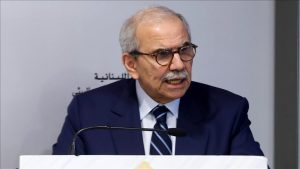
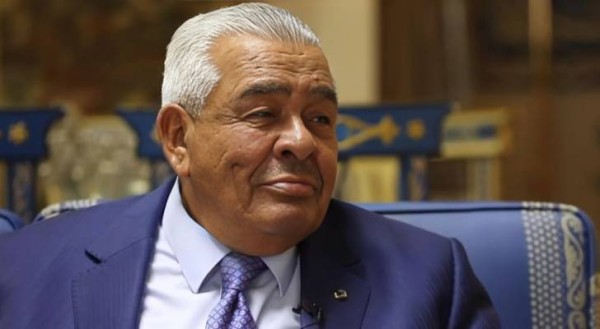
The eighth Abila Cultural Tourism Festival kicked off this evening in the town of Hartha in the Bani Kinanah district under the theme “Passion and Identity,” organized by the Yarmouk Authority for Cultural and Social Development, under the patronage of former Prime Minister Dr. Abdul Raouf Al-Rawabdeh.
During the ceremony, Al-Rawabdeh expressed his pride in being among the people of Bani Kinanah, saying, “It is my pleasure and pride to be in the Hartha Al-Kafarat area, this land rich in manhood and Arabism, which has always been a main tributary of this homeland and the depth of its nation.” He added, “On this land, the first movement to defend Palestine was launched, led by the martyr Kaid Al-Maflah Al-Obeidat, along with a group of his relatives and comrades.
On this land, too, Jordanian leaders gathered in Umm Qais to issue the first Arab decision calling for the establishment of a Jordanian state and confronting Zionist aggression before others realized its danger.” Al-Rawabdeh confirmed that the festival organizers’ choice of the theme “Passion and Identity” was successful and expressive because it reminds Jordanians of the roots of Arabism in their consciousness, explaining that Jordanian passion has always been genuinely Arab, and that Jordan was the arena and fuel of the Great Arab Revolt, carrying the banner of liberation to Damascus, where Jordanians participated in building the Faisal state and had deputies who drafted its independence document.
He pointed out that Jordan remained a warm embrace for free Arabs, opening its arms to all who sought refuge from the nation’s sons, never closing its door to an Arab afflicted by aggression, affirming that Jordan has always stood on the side of just Arab causes, enduring pain and stance with honor and dignity.
Speaking about national identity, Al-Rawabdeh noted that some historical phases witnessed a decline in the awareness of Jordanian national self-identity because Jordanians remained loyal to their Arabism. He said, “Our brothers proudly held Syrian, Lebanese, Palestinian, and Egyptian identities, while we carried the banner of Arabism without declaring our own national identity until the time came in the 1960s when we revived this identity on our land, marking the beginning of the formation of modern Jordanian self-awareness.”
He explained that when Jordan was established in 1921, it did not carry its current name but was called the “Government of the Arab East” because the goal was to liberate Greater Syria. He added that the first government, which included seven ministers, had only one Jordanian, while the rest were from Lebanon, Syria, Hejaz, and Palestine. Nevertheless, they were not seen as strangers but as members of one nation united by the dream of Arabism.
He stated that seventeen governments were formed during the British Mandate without a single Jordanian heading them, yet Jordanians embraced everyone with love and faith in the unity of the Arab destiny until the dawn of the modern Jordanian identity, which embodied the values of belonging, dignity, and independence.
In concluding his speech, Al-Rawabdeh rejected the phrase “the unifying national identity” if it excludes the word “Jordanian,” saying, “The Jordanian national identity does not exclude anyone, nor does it distance or exclude; it embraces all races, religions, origins, and roots, bringing them together as one loving family. What we want is to be proud of the Jordanian national identity, not to dissolve it into a vague generality without features.”
Meanwhile, Khaled Iskandar Obeidat, head of the Yarmouk Authority for Cultural and Social Development, welcomed the patron and attendees from official, academic, and cultural figures, expressing his pride in Dr. Al-Rawabdeh’s patronage of this national cultural event that reflects the authority’s message in enhancing awareness of Jordanian identity and the region’s rich history.
Obeidat said, “Today, we are honored to celebrate together in the historic Abila, this city that has carried the fragrance of civilization and the message of the authentic Jordanian human throughout the ages, and to simultaneously honor our cultural heritage and national identity in a festival that has become an annual tradition reflecting the spirit of belonging and giving.” He added that the Abila Cultural Tourism Festival embodies the meeting of past and present, aiming to highlight the historical and touristic heritage of the Kafarat area, rich with archaeological sites and stunning nature, alongside showcasing Jordanian creativity in poetry, art, music, and theater, affirming that “the Jordanian identity is our deep root from which we draw steadfastness, dignity, and pride.”
The festival concluded with diverse artistic and folkloric performances expressing the diversity and richness of Jordanian identity and culture, including folkloric shows, national songs, and Nabati poetry, portraying the unity of land and people in a tableau of creativity and belonging.




Recommended for you
Talib Al-Rifai Chronicles Kuwaiti Art Heritage in "Doukhi.. Tasaseem Al-Saba"
Exhibition City Completes About 80% of Preparations for the Damascus International Fair Launch
Al-Jaghbeer: The Industrial Sector Leads Economic Growth
Unified Admission Applications Start Tuesday with 640 Students to be Accepted in Medicine
Egypt Post: We Have Over 10 Million Customers in Savings Accounts and Offer Daily, Monthly, and Annual Returns
His Highness Sheikh Isa bin Salman bin Hamad Al Khalifa Receives the United States Ambassador to the Kingdom of Bahrain