







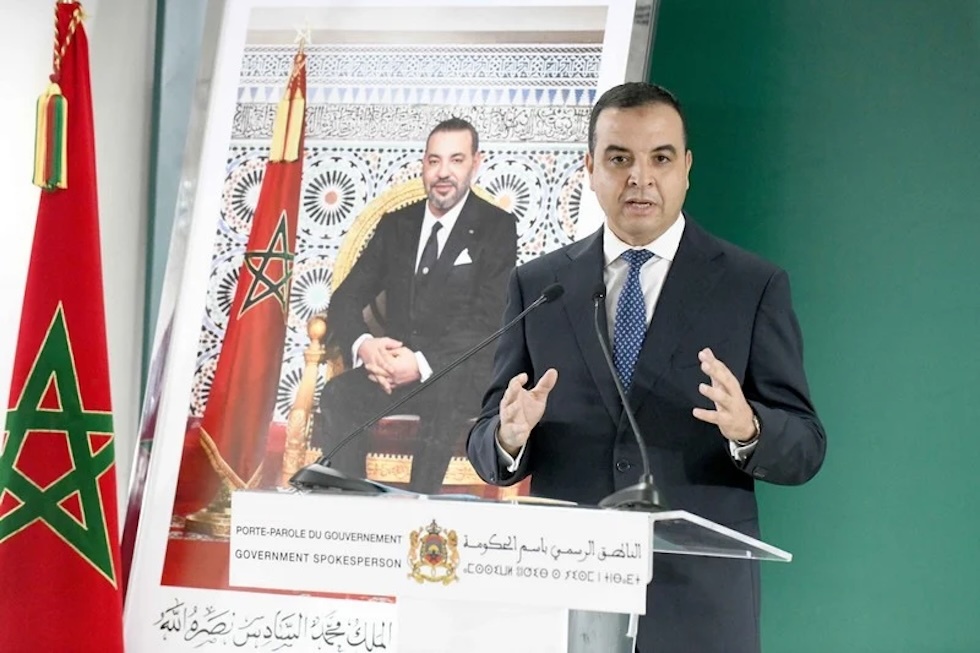
Moroccan government spokesperson Mustafa Baytas confirmed that the government was frank and clear in its response to the protests by the “Generation Z” movement, noting that it has heard the message of these young people and responded seriously.
Baytas said at a press conference following a government meeting on Thursday: “The government clearly received the message and has previously confirmed that it listened to the demands of these young people and responded seriously; it is working at a high pace and mobilizing available resources. However, dialogue, as you know, requires two parties. Until the youth representative body is available and the conditions for dialogue are met, the government continues to work at a high pace to accelerate various ongoing projects, especially in health, education, and employment sectors.”
Baytas explained that the first constitutional session of the House of Representatives in the autumn session will be held next Monday, attended by both the Minister of National Education and the Minister of Higher Education to respond to questions and discuss issues related to the two sectors. Sectoral parliamentary committee meetings will also be held during the same week or the following one to continue discussions on various files.
The government official added: “His Majesty the King will preside over the opening of the parliamentary session on Friday, as an occasion to present the government’s work report as well as the parliamentary work related to it.” He added: “Next week, we will return to this press conference to provide precise data on committee meetings, the number of attending ministers, and various recorded interactions in this regard.”
Meanwhile, voices of dozens of Moroccan youth from “Generation Z” returned to demand in front of the parliament on Thursday evening the “right to health, education, justice, and social equity, fighting corruption, and the government’s departure,” after a two-day pause, according to the Moroccan newspaper “Hespress.”
The protesters raised a new document containing their demands, considering that the government “failed to fulfill its constitutional commitments stipulated in Article 31, failed to translate the royal high vision into effective public policies, and failed to achieve the strategic goals outlined by the new development model,” confirming that reports from the Supreme Audit Institution, the High Commission for Planning, and the Integrity Authority constitute “official testimony to this failure.”
One protester told “Hespress”: “We await the King’s speech tomorrow with great anticipation,” adding that the movement “represents a new generation of peaceful protest with clear and simple demands.”
In a statement published via the “Discord” app, the movement emphasized that its demands “are based on the supreme references of the state, from the constitution to royal speeches and official reports,” and that its primary demand is “the immediate release of opinion detainees and youth arrested due to their participation in peaceful demonstrations.”
It added: “We have proven with official evidence the existence of systematic and comprehensive failure in vital sectors, and we applied the principle of linking responsibility with accountability stipulated in the constitution. If the government is responsible for this failure, it must bear its political responsibility and step down.”
This comes amid popular protests led by youth who call themselves “Generation Z-212,” denouncing the deterioration of health and education services, accusations of administrative corruption, and social marginalization.
The popular protests led by youth calling themselves “Generation Z-212” started in response to the deterioration of health and education services, accusations of administrative corruption, and social marginalization, following the death of eight women at Hassan II Hospital in Agadir, southern Morocco, an incident that sparked widespread anger and turned into national demands to prioritize social sectors instead of investing heavily in sports infrastructure, especially with preparations underway to host the 2026 Africa Cup of Nations and the 2030 World Cup in partnership with Spain and Portugal.
Despite their peaceful start, the demonstrations turned into violent clashes in several parts of the country, notably in Qlaiaa near Agadir, Salé near Rabat, and Oujda in the east, resulting in the deaths of three people and injuries to dozens, according to media sources.
The Moroccan health sector has suffered for years from a lack of funding, qualified personnel, and equipment, while citizens sharply criticize what they see as systematic neglect of public hospitals in favor of supporting the private sector, based on recommendations from international financial institutions.



Recommended for you
Talib Al-Rifai Chronicles Kuwaiti Art Heritage in "Doukhi.. Tasaseem Al-Saba"
Exhibition City Completes About 80% of Preparations for the Damascus International Fair Launch
Al-Jaghbeer: The Industrial Sector Leads Economic Growth
Unified Admission Applications Start Tuesday with 640 Students to be Accepted in Medicine
Egypt Post: We Have Over 10 Million Customers in Savings Accounts and Offer Daily, Monthly, and Annual Returns
His Highness Sheikh Isa bin Salman bin Hamad Al Khalifa Receives the United States Ambassador to the Kingdom of Bahrain