








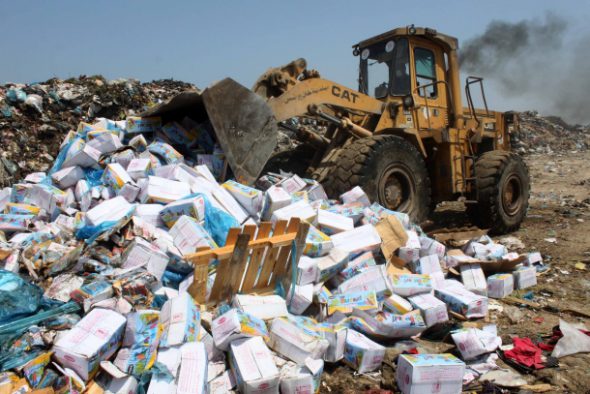
Le Dr Yasser Abdullah, assistant du ministre de l’Environnement et directeur général de l’Autorité de régulation de la gestion des déchets, a déclaré que l’Égypte dispose d’un plan stratégique complet pour la gestion des déchets au niveau des gouvernorats. Il a indiqué que le volume des déchets en Égypte atteint environ 100 millions de tonnes par an, comprenant les déchets ménagers, agricoles, industriels et autres, les déchets agricoles seuls dépassant 50 millions de tonnes.
Il a ajouté lors d’une intervention via Zoom dans l’émission “Kol Al Ab’ad” sur la chaîne Extra News que le plan national de gestion des déchets comprend le développement des infrastructures, l’attraction des investissements et le renforcement de la coopération avec le secteur privé, tout en définissant le rendement des opérations de recyclage. Il a expliqué que le ministère de l’Environnement et ses partenaires ont commencé à établir des infrastructures pour gérer les déchets ménagers, ce qui a porté le taux de recyclage entre 37 % et 40 %, contre seulement 10 % auparavant gérés par le secteur informel.
Abdullah a souligné que ce taux atteindra 60 % d’ici 2026, confirmant l’existence d’une stratégie parallèle pour traiter différents types de déchets et les recycler de manière à servir l’environnement et la santé publique.
Il a expliqué que la loi sur l’investissement a offert des incitations importantes aux entreprises travaillant dans le domaine du recyclage utilisant une technologie indigène, telle que le “traitement biologique mécanique”, qui produit du compost organique et du combustible alternatif pour les cimenteries. Il a salué la décision ministérielle obligeant les cimenteries à utiliser 10 % de leur énergie provenant de combustibles dérivés des déchets.
Il a poursuivi en disant que la production de compost a contribué à soutenir les projets de réforme agricole, ajoutant qu’il existe des partenariats en cours avec le ministère des Finances pour accorder des droits d’usufruit foncier aux investisseurs dans les usines de recyclage des déchets. Il a noté qu’il y a 27 cimenteries en Égypte, dont 24 prévoient d’utiliser des combustibles alternatifs, tandis que 7 usines investissent déjà dans des projets de recyclage des déchets.



Recommended for you
طالب الرفاعى يؤرخ لتراث الفن الكويتى فى "دوخى.. تقاسيم الصَبا"
مدينة المعارض تنجز نحو 80% من استعداداتها لانطلاق معرض دمشق الدولي
الجغبير: القطاع الصناعي يقود النمو الاقتصادي
تقديم طلبات القبول الموحد الثلاثاء و640 طالبا سيتم قبولهم في الطب
البريد المصري: لدينا أكثر من 10 ملايين عميل في حساب التوفير.. ونوفر عوائد يومية وشهرية وسنوية
سمو الشيخ عيسى بن سلمان بن حمد آل خليفة يستقبل سفير الولايات المتحدة الأمريكية لدى مملكة البحرين