








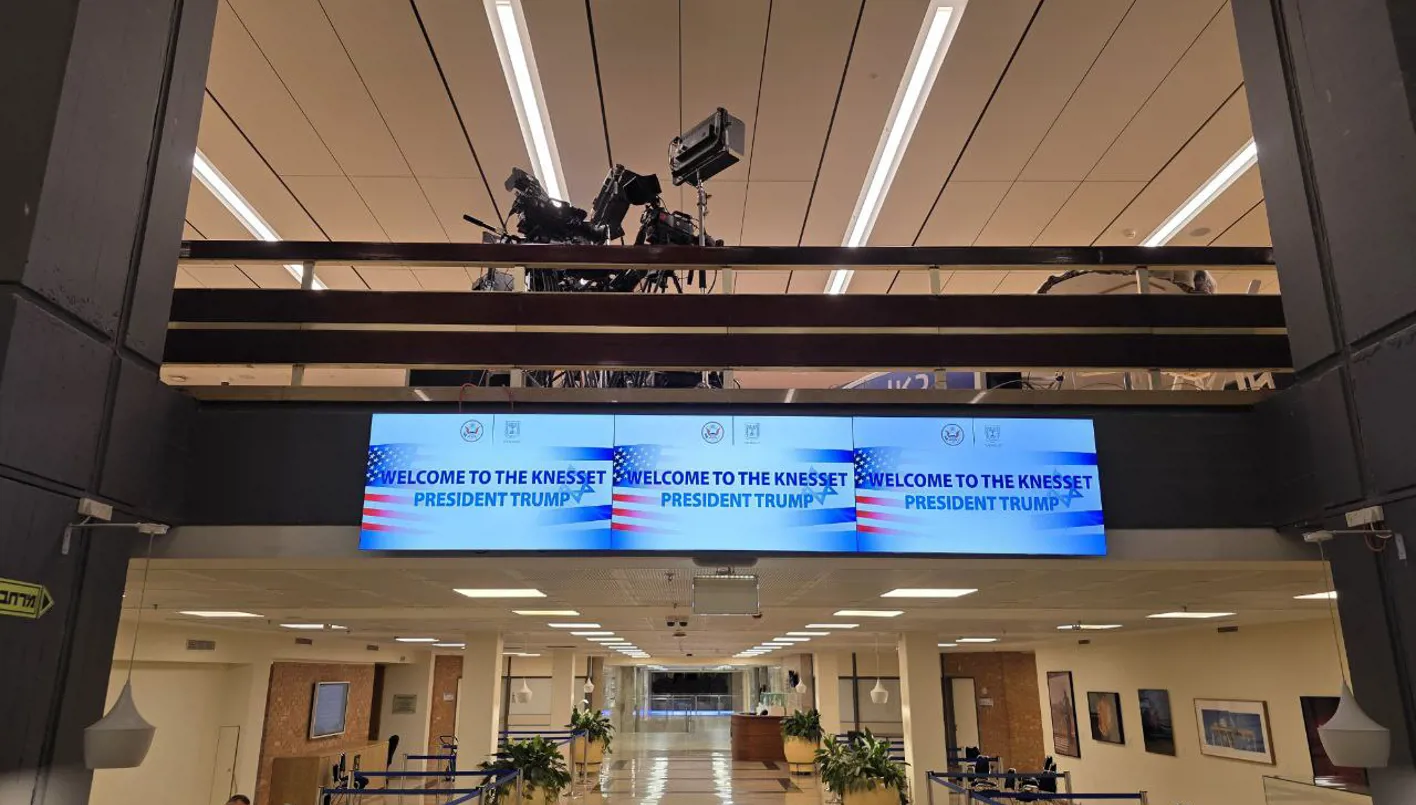

Accueil chaleureux à la Knesset pour la visite de Trump (Chaîne israélienne 14).
Le président américain Donald Trump sera accueilli comme un “héros” à la Knesset israélienne ce lundi, alors que le cessez-le-feu à Gaza, qu’il a aidé à médiatiser, entre dans son quatrième jour. La libération prévue des otages israéliens et des prisonniers palestiniens représente des étapes initiales dans un conflit de longue date qui a résisté à la résolution.
Le discours de Trump devant la Knesset intervient deux ans après la guerre déclenchée par l’attaque du Mouvement de résistance islamique palestinien (Hamas) le 7 octobre 2023, qui a causé environ 1 200 morts et la capture de 251 otages selon les statistiques israéliennes.
Trump a déclaré aux journalistes à bord de l’Air Force One au début de son voyage de Washington vers Israël : “La guerre est terminée.” Interrogé sur les perspectives futures pour la région, Trump a dit : “Je pense que les choses reviendront à la normale.”
Les Nations Unies ont rapporté une augmentation de l’aide humanitaire avec l’arrivée de gaz de cuisson à Gaza pour la première fois depuis mars et une extension de la livraison de nourriture et de fournitures médicales.
La paix durable reste insaisissable
La trêve et l’échange d’otages et de prisonniers ont donné une lueur d’espoir, mais malgré l’optimisme de Trump, les pertes en vies humaines, la destruction et le traumatisme ont confirmé que la paix durable reste hors de portée. Les progrès dépendent désormais des engagements mondiaux qui pourraient être pris lors d’un sommet plus tard aujourd’hui réunissant plus de 20 dirigeants mondiaux, dont Trump, au complexe de Sharm El-Sheikh en Égypte.
Un correspondant d’Axios a rapporté dimanche, citant un haut responsable palestinien, que le président palestinien Mahmoud Abbas assistera au sommet en Égypte. La porte-parole du gouvernement israélien, Shosh Pedroso, a déclaré qu’aucun responsable israélien n’y assistera.
Pedroso a déclaré qu’Israël s’attend à ce que le retour des otages restants commence tôt lundi avec la libération simultanée de vingt otages vivants, suivie de la remise des corps des 28 otages restants.
Elle a ajouté que 1 700 Palestiniens détenus depuis le 7 octobre 2023, ainsi que 22 mineurs et les corps de 360 combattants, ne seront libérés qu’après le retour sain et sauf des otages israéliens.
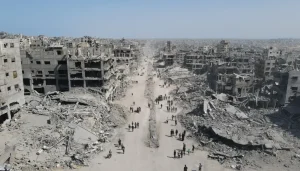
Sur le terrain, les Palestiniens revenant dans le nord de Gaza ont décrit des scènes de destruction massive.
Rami Mohammed Ali (37 ans) a déclaré après avoir marché 15 kilomètres à pied avec son fils de Deir al-Balah à Gaza : “Nous n’avons pas pu comprendre l’ampleur de la destruction que nous avons vue.”
Il a ajouté, décrivant les restes éparpillés sur les routes : “Nous sommes heureux de revenir à Gaza, mais en même temps, nos sentiments sont amers à cause de la destruction.”
En Israël… Huées pour Netanyahu et acclamations pour Trump
Les foules rassemblées tard samedi sur la place des otages à Tel Aviv ont acclamé Trump lors d’un discours de son envoyé spécial Steve Witkoff, mais ont hué bruyamment lorsque Witkoff a tenté de remercier le Premier ministre israélien Benjamin Netanyahu pour son rôle dans les efforts de cessez-le-feu.
Trump deviendra le quatrième président américain à s’adresser à la Knesset, après Jimmy Carter en 1979, Bill Clinton en 1994 et George W. Bush en 2008.
Le président de la Knesset israélienne, Amir Ohana, a écrit dans une lettre la semaine dernière invitant Trump à prononcer un discours officiel : “Le peuple d’Israël vous considère comme le plus grand ami et allié de la nation juive dans l’histoire moderne.”
Les critiques de Netanyahu en Israël, y compris les familles des otages, l’accusent d’avoir délibérément prolongé le conflit pour apaiser ses partenaires de coalition d’extrême droite, dont le soutien est crucial pour sa survie politique. La Cour pénale internationale a émis l’année dernière des mandats d’arrêt contre Netanyahu pour crimes de guerre et crimes contre l’humanité, ce que nie Israël.
Netanyahu a déclaré dans une déclaration télévisée dimanche : “Demain marque le début d’un nouveau chemin. Un chemin de construction et de récupération, et j’espère que ce sera un chemin pour unir les cœurs.”
Les États-Unis, avec l’Égypte, le Qatar et la Turquie, ont médiatisé ce qui a été décrit comme un accord de première phase entre Israël et le Hamas. La phase suivante du plan de Trump appelle à la formation d’un organe international, un “Conseil de paix”, dirigé par Trump et rejoint par l’ancien Premier ministre britannique Tony Blair pour jouer un rôle dans la gestion de Gaza après la guerre.
Beaucoup de questions restent en suspens. D’autres étapes du plan en 20 points de Trump n’ont pas encore été convenues, notamment la manière dont Gaza sera gouvernée après la fin des combats et le sort final du Hamas, qui a rejeté les demandes d’Israël de se désarmer.
Le ministère de l’Intérieur dirigé par le Hamas a déclaré qu’il déploierait des forces de sécurité dans les zones évacuées par l’armée israélienne. Il n’est pas clair si les militants reviendront en grand nombre dans les rues, ce que Israël pourrait considérer comme une provocation.
Recommended for you
طالب الرفاعى يؤرخ لتراث الفن الكويتى فى "دوخى.. تقاسيم الصَبا"
مدينة المعارض تنجز نحو 80% من استعداداتها لانطلاق معرض دمشق الدولي
الجغبير: القطاع الصناعي يقود النمو الاقتصادي
تقديم طلبات القبول الموحد الثلاثاء و640 طالبا سيتم قبولهم في الطب
البريد المصري: لدينا أكثر من 10 ملايين عميل في حساب التوفير.. ونوفر عوائد يومية وشهرية وسنوية
سمو الشيخ عيسى بن سلمان بن حمد آل خليفة يستقبل سفير الولايات المتحدة الأمريكية لدى مملكة البحرين