







Des archéologues à Chypre, lors de la première saison de fouilles sur le site préhistorique chalcolithique d’Erimi Pampoula, ont découvert le sol d’un grand bâtiment et une rare statue partiellement conservée en forme de croix, fabriquée en picrolite, selon greekreporter.
Les fouilles ont eu lieu en juillet 2025, dirigées par une équipe de l’Université nationale et capodistrienne d’Athènes (NKUA) sous la supervision du professeur Giorgos Favoranakis, visant à redéfinir la chronologie du site, qui a prospéré entre 3500 et 2900 avant J.-C.
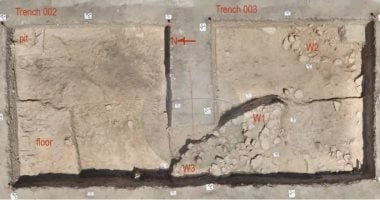
L’équipe a découvert un sol de maison bien conservé, complet avec une plateforme construite et une fosse de stockage, ainsi qu’un mur d’un second bâtiment circulaire et une partie d’un monument rectangulaire.
Parmi les découvertes les plus importantes figure une statue partiellement conservée en forme de croix, une forme distinctive et très précieuse de l’art chypriote datant des périodes néolithique et chalcolithique, fabriquée en picrolite. Cette découverte, ainsi que des bijoux et d’autres matières premières en picrolite, souligne le rôle potentiel d’Erimi Pampoula comme centre de production artisanale.
Au-dessus des structures principales, des fragments de poterie monochromes caractéristiques de la fin de la période chalcolithique ont été trouvés, fournissant une preuve cruciale indiquant la poursuite de l’activité humaine sur le site jusqu’à la première moitié du troisième millénaire avant J.-C.
Les archéologues ont également découvert de nombreux outils en pierre polie tels que des haches, des herminettes et des meules, ainsi que des grattoirs en pierre cassés. De grandes quantités d’os d’animaux, en particulier des os de cerfs, ont été trouvées, y compris une fosse contenant des os de cerfs brûlés et des parties de bois de cerf, suggérant des activités de traitement spécifiques ou des rituels.
Les découvertes archéologiques comprennent des milliers de pièces de poterie, dont beaucoup décorées avec la technique rouge sur blanc distinctive, caractéristique de cette époque.
Le Département des Antiquités du Ministère de la Culture a salué les résultats de cette saison inaugurale, qui devrait enrichir considérablement la base de connaissances existante sur ce site préhistorique chypriote important.




Recommended for you
طالب الرفاعى يؤرخ لتراث الفن الكويتى فى "دوخى.. تقاسيم الصَبا"
مدينة المعارض تنجز نحو 80% من استعداداتها لانطلاق معرض دمشق الدولي
الجغبير: القطاع الصناعي يقود النمو الاقتصادي
تقديم طلبات القبول الموحد الثلاثاء و640 طالبا سيتم قبولهم في الطب
البريد المصري: لدينا أكثر من 10 ملايين عميل في حساب التوفير.. ونوفر عوائد يومية وشهرية وسنوية
سمو الشيخ عيسى بن سلمان بن حمد آل خليفة يستقبل سفير الولايات المتحدة الأمريكية لدى مملكة البحرين