





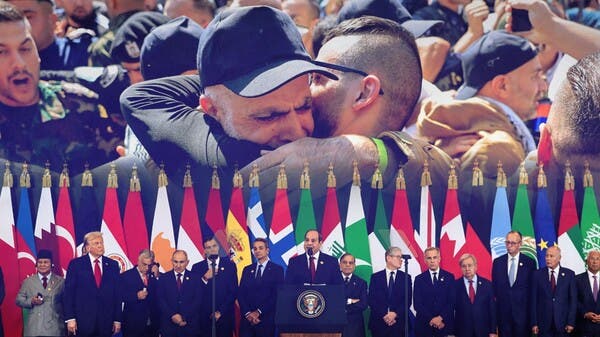
Le lundi, le Hamas a libéré les derniers prisonniers vivants de la bande de Gaza dans le cadre d’un cessez-le-feu, tandis qu’Israël a envoyé des bus transportant des prisonniers palestiniens. Le président américain Donald Trump a déclaré la fin d’une guerre de deux ans qui a bouleversé le Moyen-Orient.
Quelques heures plus tard, Trump a rencontré des dirigeants musulmans et européens en Égypte pour discuter de l’avenir de Gaza et de la possibilité d’une paix régionale plus large, bien que le Hamas et Israël, absents de la réunion, ne se soient pas encore mis d’accord sur les prochaines étapes.
L’armée israélienne a annoncé avoir reçu les 20 prisonniers vivants transférés par la Croix-Rouge depuis Gaza. Des milliers de personnes les ont accueillis par des acclamations, des accolades et des larmes à leur arrivée sur la “Place des Otages” à Tel Aviv.
À Gaza, de nombreux proches se sont rassemblés, beaucoup pleurant de joie dans un hôpital où sont arrivés des bus transportant des prisonniers palestiniens libérés par Israël. Israël devrait libérer environ 2 000 prisonniers et détenus au total.
Trump a déclaré à la Knesset israélienne : « Le ciel est clair, les canons sont silencieux, les sirènes sont calmes et le soleil se lève sur une terre sainte enfin en paix. » Il a décrit la guerre comme un « long cauchemar » pour Israéliens et Palestiniens, mais a affirmé qu’elle était maintenant terminée.
Les États-Unis, l’Égypte, le Qatar et la Turquie ont joué un rôle de médiation dans ce qui a été décrit comme la première phase d’un accord entre Israël et le Hamas pour un cessez-le-feu et la libération des prisonniers.
Plus de 20 dirigeants mondiaux au Sommet pour la Paix
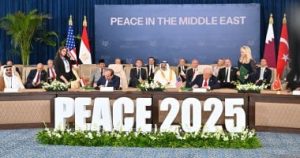
Plus tard dans la journée, à la station balnéaire égyptienne de Charm el-Cheikh, Trump et le président Abdel Fattah el-Sissi ont accueilli plus de 20 dirigeants mondiaux lors d’un sommet visant à consolider la trêve.
Au début du sommet, Trump a signé un document avec les dirigeants d’Égypte, du Qatar et de Turquie saluant les accords relatifs à Gaza et s’engageant à « travailler collectivement à la mise en œuvre et à la pérennisation de cet héritage ».
La présidence égyptienne a indiqué que les discussions portaient sur la gouvernance, la sécurité et la reconstruction de Gaza.
Trump a déclaré lors du sommet : « Maintenant commence la reconstruction », prononçant un long discours dans lequel il a qualifié l’accord de Gaza qu’il a aidé à négocier de « peut-être le plus grand des accords ».
El-Sissi a également exprimé l’espoir que l’accord « clôture un chapitre douloureux de l’histoire de l’humanité et ouvre la porte à une nouvelle ère de paix et de stabilité au Moyen-Orient ».
Il a ajouté : « Nous réaffirmons notre soutien et notre aspiration à mettre en œuvre ce plan, créant l’horizon politique nécessaire à la mise en œuvre de la solution à deux États, considérée comme la seule voie pour réaliser les aspirations légitimes des peuples palestinien et israélien à tourner la page du conflit et à vivre en sécurité. »
Aucun représentant d’Israël ni du Hamas n’a assisté au sommet. Avant la signature, Trump a serré la main du président de l’Autorité palestinienne Mahmoud Abbas, qui a longuement parlé avec le président américain. L’Autorité palestinienne souhaite jouer un rôle important dans l’administration future de Gaza malgré l’opposition d’Israël.
Obstacles persistants
Les prisonniers israéliens libérés aujourd’hui étaient les derniers survivants parmi 251 captifs pris lors d’une attaque menée par le Hamas le 7 octobre 2023, qui a fait 1 200 morts et déclenché la guerre.
Le cessez-le-feu et le retrait partiel israélien convenus la semaine dernière ont stoppé l’une des plus grandes offensives israéliennes de la guerre, une attaque massive sur la ville de Gaza qui tuait des dizaines de personnes chaque jour.
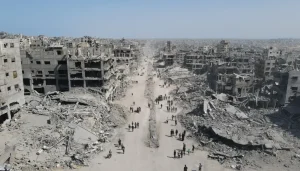
Des milliers de Palestiniens sont retournés dans les ruines de leurs maisons à Gaza. Les autorités sanitaires de Gaza affirment que la campagne militaire israélienne a tué environ 68 000 personnes, et de vastes zones de Gaza ont été réduites en décombres.
Cependant, des obstacles importants subsistent pour maintenir le cessez-le-feu et parvenir à une paix durable plus large. Parmi les questions urgentes non résolues figure la récupération des restes de 26 prisonniers et la détermination du sort de deux autres.
Le Hamas affirme que la récupération des restes prendra du temps en raison de l’incertitude des lieux d’inhumation. L’armée israélienne a déclaré avoir accompagné 40 cercueils contenant les restes de prisonniers morts en Israël et tente d’identifier les propriétaires des restes.
Les fournitures d’aide devraient affluer à un rythme plus élevé à Gaza dans le cadre du plan de cessez-le-feu. Le coordinateur humanitaire de l’ONU, Tom Fletcher, a souligné la nécessité de « fournir un abri et du carburant à ceux qui en ont le plus besoin, et d’augmenter considérablement les quantités de nourriture, de médicaments et d’autres fournitures entrant dans la bande. »
Par ailleurs, les deux parties ne se sont pas encore mises d’accord sur d’autres étapes qui ont précédemment entravé les efforts de trêve, telles que la gestion de la bande de Gaza dévastée après la fin des combats, et le sort final du Hamas, qui refuse les demandes d’Israël de déposer les armes.
Un responsable de la sécurité palestinienne a déclaré lundi que les forces de sécurité du Hamas ont tué 32 membres d’un “gang” dans la ville de Gaza lors d’une campagne lancée après le retrait des forces israéliennes.
Trump a déclaré lors de son vol vers la région que le Hamas avait reçu un feu vert temporaire pour maintenir l’ordre, « Ils veulent arrêter les problèmes, ils sont ouverts à cela, et nous leur avons donné l’autorisation pour une période de temps. »
La guerre a remodelé le Moyen-Orient à travers des conflits impliquant Israël, l’Iran, le Hezbollah libanais et les Houthis yéménites.
Trump a également évoqué l’idée d’un accord de paix entre l’Iran et Israël dans son discours à la Knesset, disant qu’il pense que l’Iran le souhaite et ajoutant, « Ne serait-ce pas agréable ? »
Joie et soulagement des deux côtés
Deux prisonniers ont salué joyeusement et soulagés depuis l’intérieur de camions à des foules qui les attendaient avant de se diriger vers un hôpital israélien.
Des images vidéo émouvantes ont montré des familles recevant des appels téléphoniques des prisonniers lors de leur libération.
Vicky Cohen, mère du prisonnier Nimrod Cohen, a déclaré en se rendant à la base militaire israélienne où les otages seraient transférés : « Je suis très excitée. Je suis submergée de bonheur. Il est difficile de décrire ce que je ressens en ce moment. Je n’ai pas dormi de la nuit. »
Des Palestiniens se sont précipités pour embrasser les prisonniers libérés à leur arrivée en bus en Cisjordanie occupée et dans la bande de Gaza lundi.
Des milliers se sont rassemblés à l’intérieur et autour de l’hôpital Nasser à Khan Younis, dans le sud de Gaza, en attendant l’arrivée des prisonniers libérés. Certains agitaient le drapeau palestinien, d’autres tenaient des photos de leurs proches.
Umm Ahmed, retenant ses larmes, a déclaré que malgré sa joie pour leur libération, elle ressentait encore des émotions mitigées à propos de cette journée.
Elle a déclaré à Reuters dans un message vocal : « Je suis heureuse pour nos enfants qui sont libérés, mais en même temps, nous avons de la douleur à cause de toutes les personnes qui ont été martyrisées et tuées par l’occupation et à cause de toute la destruction qui s’est produite. »
Les prisonniers libérés ont brandi des signes de victoire depuis les fenêtres des bus à leur arrivée.
L’apparition des combattants du Hamas lundi à l’hôpital Nasser a mis en lumière la difficulté de dissiper les craintes israéliennes concernant le maintien du contrôle du groupe armé sur Gaza, qu’il gouverne depuis 2007.
Selon l’accord, Israël libérera 250 Palestiniens condamnés à la prison à vie, en plus de 1 700 détenus palestiniens détenus à Gaza depuis le début de la guerre.
Recommended for you
طالب الرفاعى يؤرخ لتراث الفن الكويتى فى "دوخى.. تقاسيم الصَبا"
الجغبير: القطاع الصناعي يقود النمو الاقتصادي
مدينة المعارض تنجز نحو 80% من استعداداتها لانطلاق معرض دمشق الدولي
تقديم طلبات القبول الموحد الثلاثاء و640 طالبا سيتم قبولهم في الطب
البريد المصري: لدينا أكثر من 10 ملايين عميل في حساب التوفير.. ونوفر عوائد يومية وشهرية وسنوية
سمو الشيخ عيسى بن سلمان بن حمد آل خليفة يستقبل سفير الولايات المتحدة الأمريكية لدى مملكة البحرين