






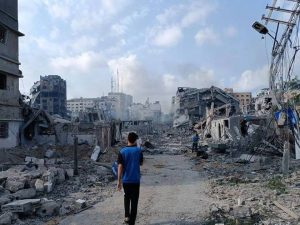


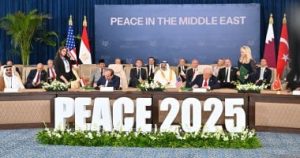
At first glance, it is difficult for any analyst to believe that Trump’s plan, prepared with active participation from the Israeli side, especially senior aides to the Israeli Prime Minister who oppose a Palestinian state, could lead to the establishment of an independent Palestinian state. The plan explicitly rejects any state for the Palestinian Authority and does not grant the Palestinian leadership any role (even indirect) in selecting the technocratic committee that will oversee Gaza after the war ends and the Israeli occupation army withdraws. So why did the Palestinian leadership in Ramallah welcome the plan and publish its statement in both Arabic and English through the official Palestinian news agency (WAFA)?
Officials in Ramallah say the optimism stems from what happened in New York during the UN General Assembly session. A senior official told the American site Al-Monitor that “September was a great month for Palestine,” referring to the recognition of Palestine by France, the United Kingdom, Australia, and Canada. He added, “If the agreement had been announced earlier in Washington, we would be in a much worse position.” Another official in Ramallah explained that the Palestinian leadership now has partners worldwide, not only in the Arab and Islamic worlds, and that “these recognitions have strengthened a broad alliance supporting the Palestinian state.” According to the official, every step taken from now on will be coordinated with this alliance, which includes Arab, Islamic, and Western countries.
In detail, the senior official explained that public sector employees in Gaza who receive their salaries from Ramallah are expected to fill the vacant administrative positions under the new arrangements. The plan does not include provisions for legislating laws or policies specific to Gaza, which Ramallah considers a strong indicator of the continued application of Palestinian law there. It is rumored that Arab countries, along with Turkey, which strongly supported the return of the Palestinian Authority to Gaza, will participate in the international stabilization force responsible for the sector’s security during the transitional period. This gives Ramallah confidence that it will have a significant voice in Gaza’s future. However, the Palestinian Authority faces serious obstacles, as its finances are under great pressure, and accusations of incompetence and lack of legitimacy continue due to repeatedly postponed elections during President Mahmoud Abbas’s tenure.
But according to the same official, the Authority has pledged to implement fundamental reforms and align governance with international expectations, including holding elections within a year after the ceasefire decision in Gaza.
The recent wave of recognitions of Palestine at the United Nations, many of which are linked to these reform commitments, provides Ramallah with additional incentive to proceed with reforms to enhance broader international support. Regarding US calls for the Palestinian Authority to halt its unilateral actions in international forums, including the UN and the International Court of Justice, the Palestinian official said the leadership currently does not plan to file new cases before international legal bodies.
More than ever, a sincere and serious national dialogue is required to integrate Hamas into the Palestine Liberation Organization and reach a formula whereby decisive decisions related to war and peace are made from the broadest possible Palestinian umbrella, granting those decisions real legitimacy and popular credibility. The world is more ready than ever to support the establishment of an independent Palestinian state, but Palestinians require not to monopolize strategic decision-making and to involve Palestinian factions and various segments of the people in shaping the Palestinian state on logical and feasible foundations.
The step of reinstating Nasser Al-Qudwa to his position in Fatah reflected an important development, not only internally but also internationally, due to the former Palestinian Foreign Minister’s political network in influential international capitals. However, much more is required to restore sincere and effective national cohesion. Will attempts to achieve national unity finally succeed now?
Recommended for you
Talib Al-Rifai Chronicles Kuwaiti Art Heritage in "Doukhi.. Tasaseem Al-Saba"
Exhibition City Completes About 80% of Preparations for the Damascus International Fair Launch
Al-Jaghbeer: The Industrial Sector Leads Economic Growth
Unified Admission Applications Start Tuesday with 640 Students to be Accepted in Medicine
Egypt Post: We Have Over 10 Million Customers in Savings Accounts and Offer Daily, Monthly, and Annual Returns
His Highness Sheikh Isa bin Salman bin Hamad Al Khalifa Receives the United States Ambassador to the Kingdom of Bahrain