









US President Donald Trump acknowledged that Israel has lost much international support, telling Axios: “Bibi went too far in Gaza, and Israel lost a lot of support in the world,” adding that he will restore “all that support.”
Indeed, two years after the October 7 attack, Israel emerged militarily stronger but more internationally isolated. Internally, political and societal divisions have deepened, threatening its stability and weakening its position in facing complex future challenges.
Series of Military Victories and Growing International Isolation
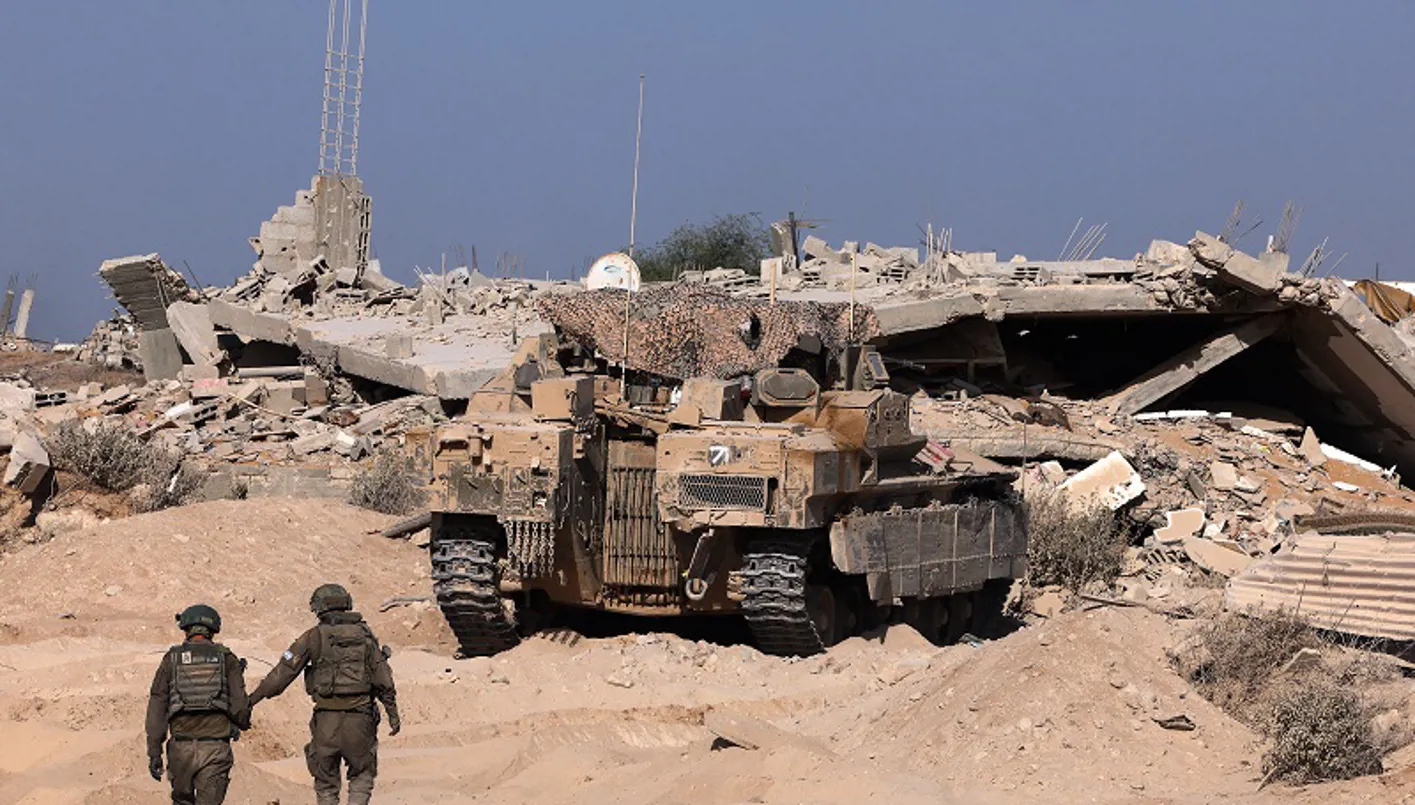
After Hamas’s attack on October 7, 2023, the Israeli army launched a series of devastating strikes against its strategic enemies.
Hamas’s capabilities in Gaza and Hezbollah in Lebanon were significantly destroyed, the Assad regime in Syria collapsed, and Iran’s military leadership and missile and nuclear programs were severely damaged.
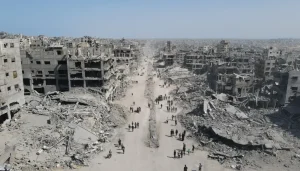
However, the killing of more than 67,000 Palestinians in Gaza revived global calls for the establishment of a Palestinian state, with Western countries including France, Britain, and Canada finally recognizing it.
Experts and major human rights organizations accused Israel of committing genocide, and the International Criminal Court issued arrest warrants for Israeli Prime Minister Benjamin Netanyahu and his former Defense Minister Yoav Galant.
Dr. Imad Salameh, head of International and Political Studies at the Lebanese American University, told An-Nahar that after two years of war between Hamas and Israel, “it can be said that Israel emerged militarily stronger but diplomatically weaker. While it enhanced its field capabilities and expanded deterrence in the region, it now faces unprecedented international isolation due to accusations of war crimes and increasing international recognition of the State of Palestine.”
Political writer and researcher Dr. Murad Harfoush told An-Nahar: “There is no doubt that the ongoing war in Gaza deeply affected Israel’s image and strength, which has long promoted itself as possessing an invincible army equipped with the latest military technology and politically and financially supported by the United States, with aid during the recent war reaching approximately $21 billion, in addition to unlimited backing from several Western countries.” He added, “But this enormous power has failed to achieve its strategic goals against the Palestinian people and resistance forces, who remain steadfast and determined to defend themselves with relatively simple local capabilities compared to the massive arsenal of the Israeli army.”
Anger towards Israel spread from the Islamic world to Europe and increasingly to the United States, where large factions of the Democratic Party and part of the MAGA movement opposed US aid to Israel, according to The Wall Street Journal.
While Trump remained a supporter of Israel, its new isolation gave him unusual influence, which he used to block West Bank annexation plans, force Prime Minister Netanyahu to apologize for the Qatar strike, and make Israel agree to the recent Gaza ceasefire plan.
Solidarity with the Palestinian cause has also become a political hallmark of the new generation, from American university campuses to European schools, according to The Journal.
Harfoush said: “As scenes of killings of children and women by the Israeli army continue, and the massive destruction of Gaza’s infrastructure persists, international voices have risen in rejection of these crimes. Many countries condemned the military operations and called for their immediate halt, while countries like Spain froze military agreements with Israel… These accumulating stances have led Israel to face growing international isolation, clearly reflected in many delegations leaving the UN General Assembly hall during Netanyahu’s speech, a symbolic message expressing global rejection of his policies. Even Trump acknowledged that Tel Aviv is experiencing unprecedented international isolation.”
Internal Division
Internally, the war and Netanyahu’s failure to end it in exchange for releasing remaining hostages have led to sharp divisions in the society that existed before October 7, according to The New York Times.
Many Israelis claim Netanyahu prolonged the war, abandoning ceasefire opportunities even after the assassination of Hamas leaders, to maintain the cohesion of his right-wing coalition and extend his grip on power.
The Associated Press reported that the failure to recover hostages left the country deeply divided, with weekly mass protests against Netanyahu.
Salameh said: “Internally, the war deepened divisions within Israeli society, especially regarding Netanyahu’s performance and the government’s responsibility for the security failures on October 7. But strong support from President Trump for Netanyahu’s government helped ease this division and gave the far right a new legitimacy boost. Also, scare campaigns and scattered tactical victories helped temporarily unify public opinion around the right, keeping the ruling current cohesive despite rising internal tensions.”
Moreover, the ongoing conflict forced reservist soldiers to serve long periods, draining the economy and disrupting their lives, while fueling long-standing resentment among ultra-Orthodox Jews exempt from military service.
Harfoush told An-Nahar: “Internally, Israeli society faces a real division over the war’s continuation. According to polls, about 70% of Israelis demand its end, while the opposition accuses Netanyahu and his ruling coalition of prolonging the war to serve narrow political and partisan agendas without achieving any clear strategic goal. The military establishment also confirms that conditions are ripe for a truce and that ongoing operations no longer yield real field gains.”
He added: “These disputes intensify with the escalating controversy over the Haredi law threatening government stability, alongside wide changes Netanyahu made within military and security leadership due to disagreements over war management, which will have a profound impact on political-military relations in the near and medium term.”
Despite its military superiority, Israel faces increasing isolation, serious international accusations, and deep internal divisions that weaken its strategic position and threaten its cohesion in the long term.
Recommended for you
Talib Al-Rifai Chronicles Kuwaiti Art Heritage in "Doukhi.. Tasaseem Al-Saba"
Exhibition City Completes About 80% of Preparations for the Damascus International Fair Launch
Al-Jaghbeer: The Industrial Sector Leads Economic Growth
Unified Admission Applications Start Tuesday with 640 Students to be Accepted in Medicine
Egypt Post: We Have Over 10 Million Customers in Savings Accounts and Offer Daily, Monthly, and Annual Returns
His Highness Sheikh Isa bin Salman bin Hamad Al Khalifa Receives the United States Ambassador to the Kingdom of Bahrain