








Germany, France, and Italy, the largest economies in the European Union within the G7, have called on the United States and Japan to join a plan to use frozen Russian assets to finance new financial support for Ukraine, amid growing European concerns about the impact of this move on the global standing of the euro.
Politico Europe reported that the three European countries pushed strongly for a unified position within the group regarding Russian assets, but the final statement stopped short of a joint step, merely noting that using Russian resources is one of the options considered to meet Kyiv’s financial needs.
The G7, which includes the United States, Japan, Canada, the United Kingdom, alongside European powers, is exploring a wide range of options to financially support Ukraine, including tapping into approximately 140 billion euros of frozen Russian assets within Europe, to be used as an interest-free compensation loan for Kyiv.
The European Central Bank (ECB) warned that seizing Russian assets could threaten the euro’s global credibility, especially since most of these assets are held within the EU, placing Europe at the center of legal and economic risks.
The ECB requested clarifications from the European Commission on how to ensure that this step would not undermine global confidence in the single currency, but the Commission confirmed that national guarantees from member states would suffice to secure the loan, noting that funds could be returned to Moscow if the war ends and Russia pays compensation.
Politico also reported that the White House is pressuring Brussels to activate its plan, although it has not yet decided whether to use the roughly $7 billion of Russian assets held in the United States under the same framework. Japan appeared cautious according to the report but is likely to follow the US stance if it becomes official.
Meanwhile, the United Kingdom announced it is considering using billions of pounds of frozen Russian funds to finance new loans to Kyiv, while Canada’s finance minister confirmed the country is “fully aligned with the European initiative.”
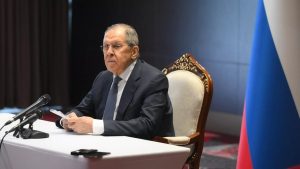
In response, the Kremlin threatened to nationalize and quickly sell foreign-owned assets under a new privatization mechanism as a retaliatory step if the EU proceeds with confiscating frozen Russian assets abroad, according to an informed source.
President Vladimir Putin signed a decree on Tuesday allowing the accelerated sale of state-owned assets through a special procedure.
Kremlin spokesman Dmitry Peskov did not immediately respond to requests for comment but earlier on Wednesday described the EU’s asset plan as an illegal seizure of Russian property, calling it theft.
Putin warned that the global financial system would be at risk if the West proceeds with confiscating frozen Russian reserves abroad, which were banned in response to the invasion of Ukraine in February 2022.
G7 finance ministers are scheduled to meet on October 15 in Washington on the sidelines of the IMF annual meetings to continue discussions on the future of Russian assets and mechanisms for using them to finance the Ukrainian war.
Brussels is preparing to allocate about 45 billion euros of frozen Russian funds to repay a previous G7 loan to Ukraine from 2023, reassuring allies and markets that the funds will be managed within clear legal frameworks.

Recommended for you
Talib Al-Rifai Chronicles Kuwaiti Art Heritage in "Doukhi.. Tasaseem Al-Saba"
Exhibition City Completes About 80% of Preparations for the Damascus International Fair Launch
Al-Jaghbeer: The Industrial Sector Leads Economic Growth
Unified Admission Applications Start Tuesday with 640 Students to be Accepted in Medicine
Egypt Post: We Have Over 10 Million Customers in Savings Accounts and Offer Daily, Monthly, and Annual Returns
His Highness Sheikh Isa bin Salman bin Hamad Al Khalifa Receives the United States Ambassador to the Kingdom of Bahrain