







Despite US President Donald Trump’s fluctuating stance towards Europe, last week witnessed notable positive developments in European security. Unexpectedly, Trump’s hesitation and repeated insistence on distancing the US from the continent’s problems have motivated European allies to take their security responsibilities more seriously and effectively.
Trump was recently asked by a journalist whether he believed European countries should shoot down Russian planes violating their airspace within NATO countries. He quickly and decisively replied, “Yes, I support that,” a firm response compared to his previous positions, which largely ignored Russian incursions into Eastern European airspace.
However, this decisive stance was not without reservations. When asked if the US would militarily support its European allies in such a scenario, Trump cautiously responded, “It depends on the circumstances,” adding, “As you know, we are very committed to NATO.”
Encouraging Factor
This ambiguity or leniency was interpreted as encouragement for Russian President Vladimir Putin to continue testing NATO’s limits, increasing the likelihood of serious incidents spiraling out of control. In this context, drones were spotted over five Danish airports—both civilian and military—believed to be of Russian origin, possibly launched from Russian ships stationed in the Baltic Sea.
On the other hand, this growing challenge seems to have awakened Europe. European powers have taken concrete steps showing their readiness to assume greater responsibility for the continent’s defense. Last week, three clear signals confirmed this serious shift.
A Clear Message
The first signal came from a meeting in Moscow, where envoys from Britain, France, and Germany met their Russian counterparts and sent a clear message that they are prepared to shoot down Russian planes violating NATO airspace. According to press reports, the Russian side took detailed notes, indicating Putin wanted to assess the Europeans’ seriousness, who for the first time showed readiness to speak for themselves, away from the usual American cover.
“Drone Wall”
The second signal was the first planning meeting for the newly launched “Drone Wall” initiative, aiming to build a coordinated air defense network along Europe’s eastern flank to counter cheap and effective Russian drones. Despite the usual bureaucratic nature of such meetings, the attendance list was notable, including Ukraine, which has significant combat and technological expertise, and NATO was granted observer status. Ukrainian expertise is expected to enhance the project’s effectiveness, and Israel may be invited in the future, especially after it recently announced the readiness of its “Iron Beam” system, a laser weapon against drones.
German Plans
The third and most important signal came from Germany, Europe’s largest economic power, which has long spoken about playing a bigger security role without notable practical steps. However, last week saw a real shift as a leaked budget revealed Germany plans to spend over $90 billion on military purchases next year, a massive increase in size and scope. Most of this spending will benefit European defense companies, with only 8% allocated for US weapons purchases.
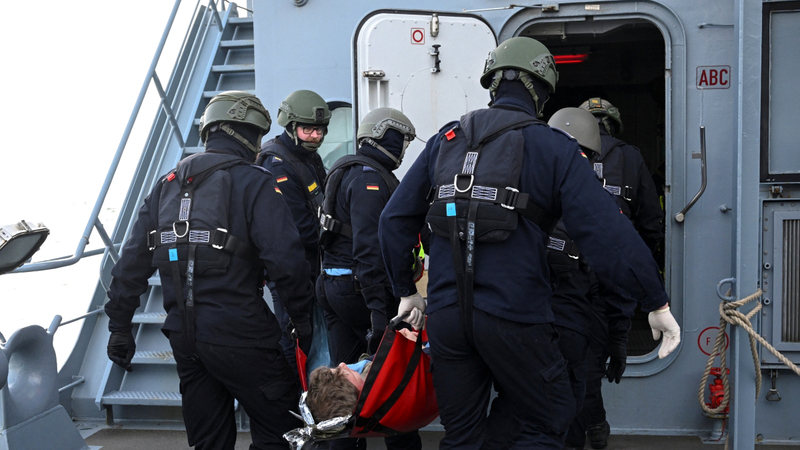
Alongside the budget announcement, the German armed forces conducted large-scale military exercises lasting three days named “Red Storm Bravo,” simulating a response to a possible Russian aggression in the Baltic Sea. Chancellor Friedrich Merz also announced his support for seizing frozen Russian assets to fund Ukraine’s defense efforts, reflecting a qualitative political shift in how Europe deals with the Russian challenge.
Gradual Liberation
Through these developments, Europe appears to be steadily advancing toward strengthening its self-defense capabilities, gradually freeing itself from full reliance on American protection, which can be seen as a direct result of Trump’s isolationist and inward-looking policies.
As American influence in Europe gradually wanes due to the Trump administration’s stances, European plans, especially German ones, indicate that the continent’s security future may witness greater autonomy and broader internal cooperation, reshaping international alliances. Reported by “The Washington Post”.
Balancing Relations
Europeans may find themselves compelled to thank President Donald Trump, not for his support, but because he inadvertently pushed them to build their defense capabilities and think about their national security from a more realistic and independent perspective. With intensified European efforts, the US may be able to reduce its military commitments in the Old Continent without completely abandoning it, opening the door to a new balance in transatlantic relations.

Recommended for you
Talib Al-Rifai Chronicles Kuwaiti Art Heritage in "Doukhi.. Tasaseem Al-Saba"
Exhibition City Completes About 80% of Preparations for the Damascus International Fair Launch
Al-Jaghbeer: The Industrial Sector Leads Economic Growth
Unified Admission Applications Start Tuesday with 640 Students to be Accepted in Medicine
Egypt Post: We Have Over 10 Million Customers in Savings Accounts and Offer Daily, Monthly, and Annual Returns
His Highness Sheikh Isa bin Salman bin Hamad Al Khalifa Receives the United States Ambassador to the Kingdom of Bahrain